
 Wildlife
of USA
Sharp-tailed Sandpiper
Shorebirds & Sandpipers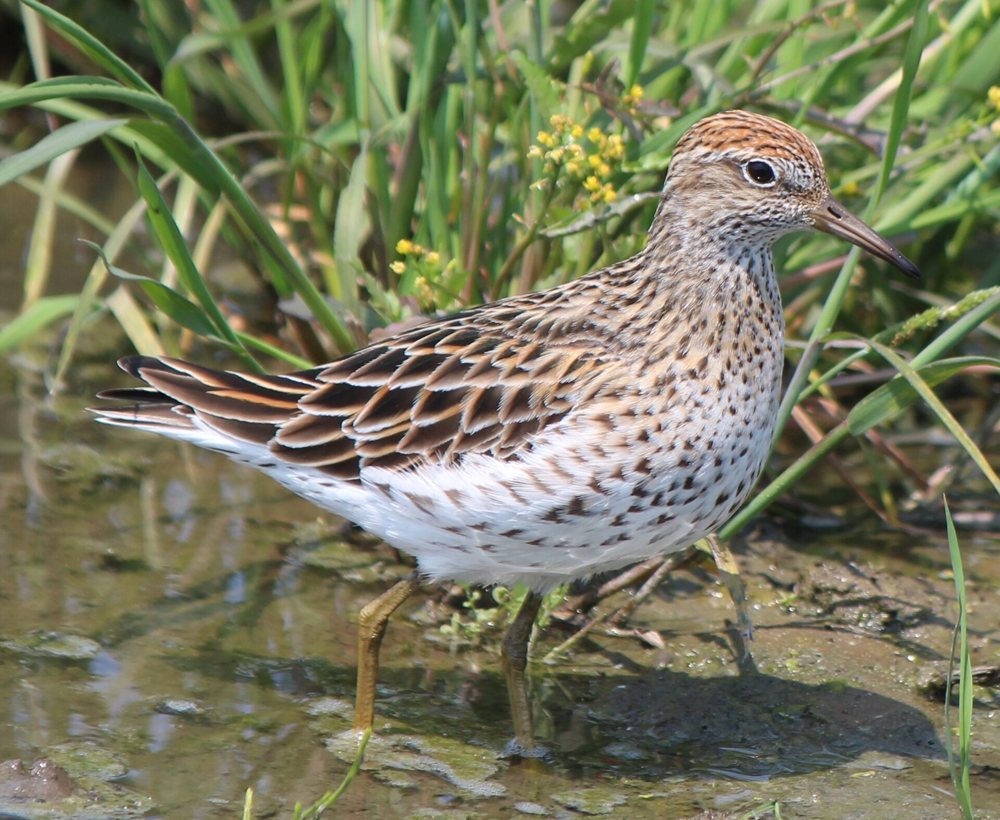
Photo: Alpsdake · CC BY-SA 4.0 (May be cropped or resized)
Calidris acuminata
U.S. national list: unknown
Basic stats
Diet
Mainly aquatic insects and other invertebrates, with some seeds
Habitat
Breeding tundra; shallow fresh or brackish wetlands, mudflats and wet grassland outside breeding
Range
Breeds in eastern Siberia; most winter in Australasia
Clutch size
Usually 4 eggs
Weight
Averages about 66g
The Sharp-tailed Sandpiper is a compact, medium-small wader with a chestnut crown, strong pale eyebrow and mottled brown upperparts. Breeding birds show especially rich colour and arrow-shaped markings across the lower breast and flanks; juveniles are also bright, whereas winter adults are duller. Olive to yellowish legs and a straight dark bill complete its appearance. It averages about 66 g and is most easily confused with the Pectoral Sandpiper (Wikipedia, general species account; AVONET, Tobias et al. 2022).
Across its range, the species breeds on peat-hummock and lichen tundra in eastern Siberia, then migrates chiefly through eastern Asia to Australasia. Passage and winter habitats include muddy margins of shallow fresh or brackish wetlands, inundated grass and sedges, saltmarsh, lagoons and coastal flats. It picks visible prey from the surface and also probes wet substrates, taking mostly aquatic insects and other invertebrates, with seeds contributing a smaller share. A ground scrape concealed with leaves and grass normally holds four eggs (Wikipedia, general species account; EltonTraits, Wilman et al. 2014).
Where to see Sharp-tailed Sandpiper in the USA
GBIF records grouped by protected area. They show where the species has been reported, not that it is there now, and they are not population counts.
Recorded in 90 protected areas (1870–2026). The 8 with the most records:
- James Campbell National Wildlife Refuge: 279 records (1988–2023)
- Hawaiian Islands Humpback Whale National Marine Sanctuary: 237 records (1988–2025)
- U.S. Naval Base, Pearl Harbor: 215 records (1979–2026)
- Bombay Hook National Wildlife Refuge: 190 records (1983–2025)
- Pearl Harbor National Wildlife Refuge: 190 records (1982–2026)
- Galilee Bird Sanctuary: 174 records (2021)
- Monterey Bay National Marine Sanctuary: 168 records (1970–2017)
- Elkhorn Slough Ecological Reserve: 148 records (1982–2017)
Quick answers
- What does the Sharp-tailed Sandpiper eat?
- Mainly aquatic insects and other invertebrates, with some seeds
- What habitat does the Sharp-tailed Sandpiper live in?
- Breeding tundra; shallow fresh or brackish wetlands, mudflats and wet grassland outside breeding
- Where is the Sharp-tailed Sandpiper found?
- Breeds in eastern Siberia; most winter in Australasia
- How many eggs does the Sharp-tailed Sandpiper lay?
- Usually 4 eggs
- How much does the Sharp-tailed Sandpiper weigh?
- Averages about 66g