
 Wildlife
of USA
Red-necked Stint
Shorebirds & Sandpipers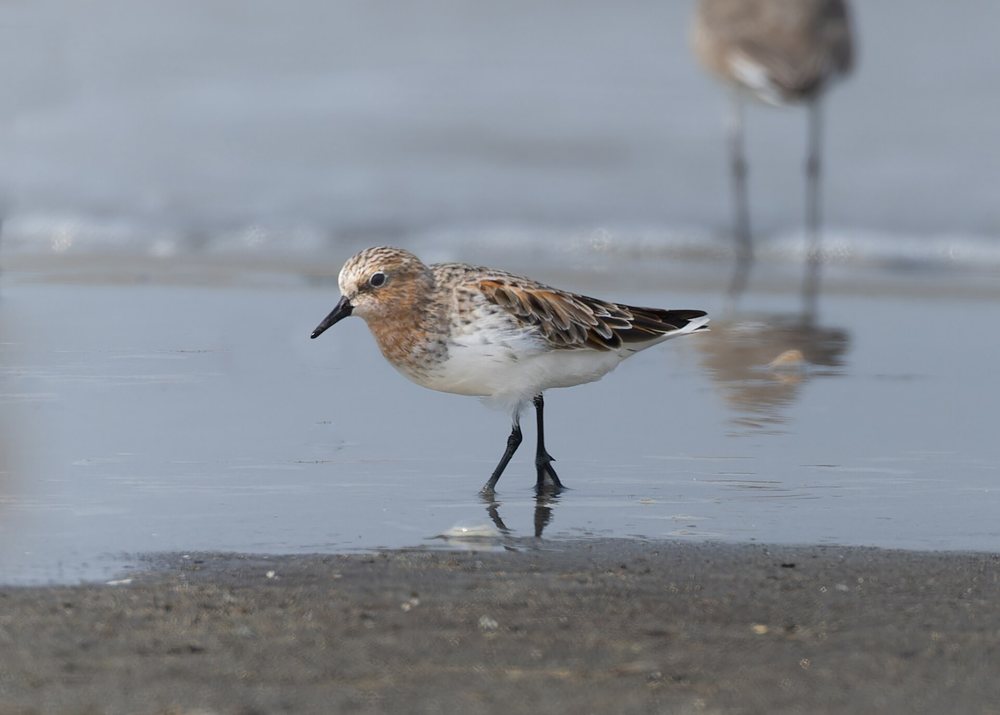
Photo: Tisha Mukherjee · CC BY-SA 4.0 (May be cropped or resized)
Calidris ruficollis
U.S. national list: unknown
Basic stats
Diet
Invertebrates and seeds
Habitat
Arctic tundra when breeding; coastal mudflats, beaches and wetlands otherwise
Range
Breeds in northeastern Russia; winters along coasts from Southeast Asia to Australasia
Size
13–17cm
Weight
Averages about 27g
The Red-necked Stint is a tiny migratory sandpiper, 13–17 cm long, with a straight dark bill and dark legs. Breeding adults develop a rich reddish neck and patterned upperparts, whereas non-breeding birds are grey above and white below. Juveniles show warm-edged feathers and pale mantle lines. Its compact size and proportions help distinguish it among the small Calidris waders (Wikipedia, general species account).
The species nests in the tundra of northeastern Russia and migrates to coastal regions from Southeast Asia through Australia and New Zealand. Mudflats, sandy shores and shallow wetlands provide feeding ground outside the breeding season. Birds pick or probe for small invertebrates, while seeds also make up a substantial part of the dataset diet (Wikipedia, general species account; EltonTraits, Wilman et al. 2014). AVONET reports a mean mass that rounds to about 27 g (AVONET, Tobias et al. 2022).
Records of Red-necked Stint in the USA
This bird's natural range lies outside the USA (AviList v2026), so these are records of wandering, escaped or introduced birds, not places to expect it.
GBIF records grouped by protected area. They show where the species has been reported, not that it is there now, and they are not population counts.
Recorded in 34 protected areas (1922–2024). The 8 with the most records:
- National Petroleum Reserve–Alaska: 761 records (1922–2024)
- Alaska Maritime National Wildlife Refuge: 278 records (1974–2024)
- Santa Monica Mountains National Recreation Area: 154 records (2021)
- Gateway National Recreation Area: 85 records (1985–2008)
- Ebey's Landing National Historical Reserve: 77 records (2017)
- Parker River National Wildlife Refuge: 41 records (1999–2019)
- Monomoy National Wildlife Refuge: 39 records (1980–2010)
- San Jacinto / Lake Perris Core Reserve: 34 records (2016)
Quick answers
- What does the Red-necked Stint eat?
- Invertebrates and seeds
- What habitat does the Red-necked Stint live in?
- Arctic tundra when breeding; coastal mudflats, beaches and wetlands otherwise
- Where is the Red-necked Stint found?
- Breeds in northeastern Russia; winters along coasts from Southeast Asia to Australasia
- How big is the Red-necked Stint?
- 13–17cm
- How much does the Red-necked Stint weigh?
- Averages about 27g