
 Wildlife
of USA
Ruff
Shorebirds & Sandpipers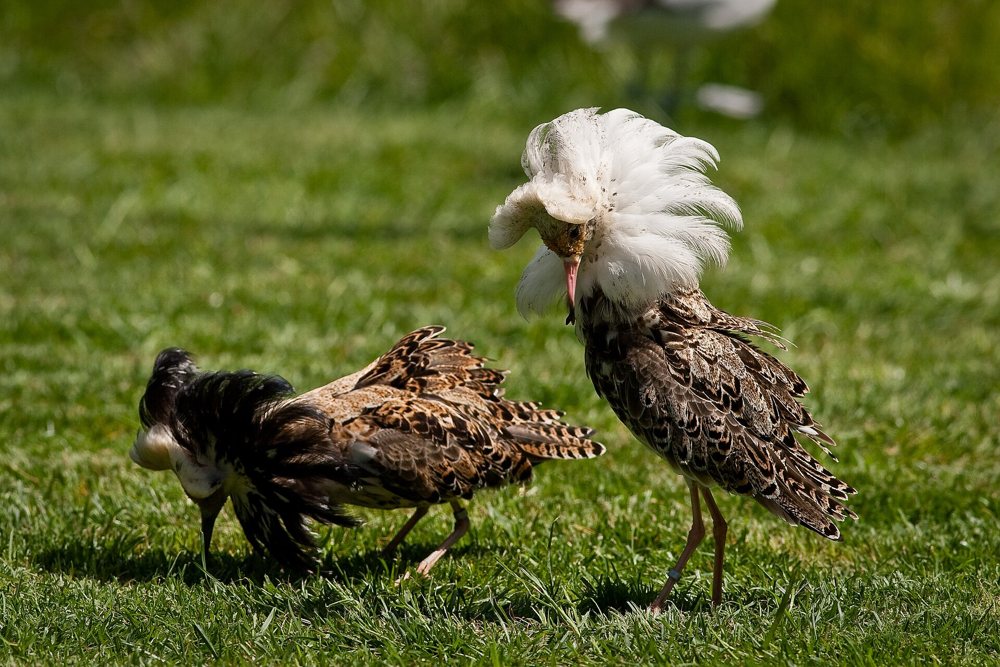
Photo: Arjan Haverkamp · CC BY 2.0 (May be cropped or resized)
Calidris pugnax
U.S. national list: unknown
Basic stats
Diet
Mainly invertebrates, with seeds and other plant matter
Habitat
Wet grassland, marshes and tundra when breeding; shallow wetlands and flooded fields at other seasons
Range
Breeds across northern Eurasia; winters mainly in Africa and southern Asia
Weight
Averages about 132g
The Ruff is a long-necked, small-headed wader with marked differences between the sexes. Breeding males grow extravagant neck ruffs and head tufts in highly variable colours, while females remain much smaller and retain subdued brown plumage. Outside the display season both sexes are mottled brown above and pale below, with long yellowish or orange legs. The species averages about 131.7 g, though males are substantially heavier than females (Wikipedia, general species account; AVONET, Tobias et al. 2022).
The species breeds across northern Eurasia in wet grasslands, marshes and tundra, then migrates chiefly to Africa and southern Asia. Shallow wetlands, lake margins, flooded fields and muddy ground are used during passage and winter. Birds take invertebrates from the ground and water, supplementing them with seeds and other plant material. Males gather at traditional display grounds, where their ornate plumage and postures attract females; females alone undertake nesting and care of the young (Wikipedia, general species account; EltonTraits, Wilman et al. 2014).
Records of Ruff in the USA
This bird's natural range lies outside the USA (AviList v2026), so these are records of wandering, escaped or introduced birds, not places to expect it.
GBIF records grouped by protected area. They show where the species has been reported, not that it is there now, and they are not population counts.
Recorded in 250 protected areas (1932–2026). The 8 with the most records:
- Don Edwards San Francisco Bay National Wildlife Refuge: 902 records (1983–2025)
- Pinelands National Reserve: 712 records (1932–2024)
- Bombay Hook National Wildlife Refuge: 601 records (1968–2024)
- Brigantine National Wildlife Refuge: 443 records (1971–2024)
- Jacques Cousteau National Estuarine Research Reserve: 425 records (1971–2024)
- Jocelyn Nungaray National Wildlife Refuge: 286 records (2003–2015)
- Coyote Hills Regional Park: 272 records (2001–2025)
- Montezuma National Wildlife Refuge: 266 records (1973–2022)
Quick answers
- What does the Ruff eat?
- Mainly invertebrates, with seeds and other plant matter
- What habitat does the Ruff live in?
- Wet grassland, marshes and tundra when breeding; shallow wetlands and flooded fields at other seasons
- Where is the Ruff found?
- Breeds across northern Eurasia; winters mainly in Africa and southern Asia
- How much does the Ruff weigh?
- Averages about 132g