
 Wildlife
of USA
Long-billed Dowitcher
Shorebirds & Sandpipers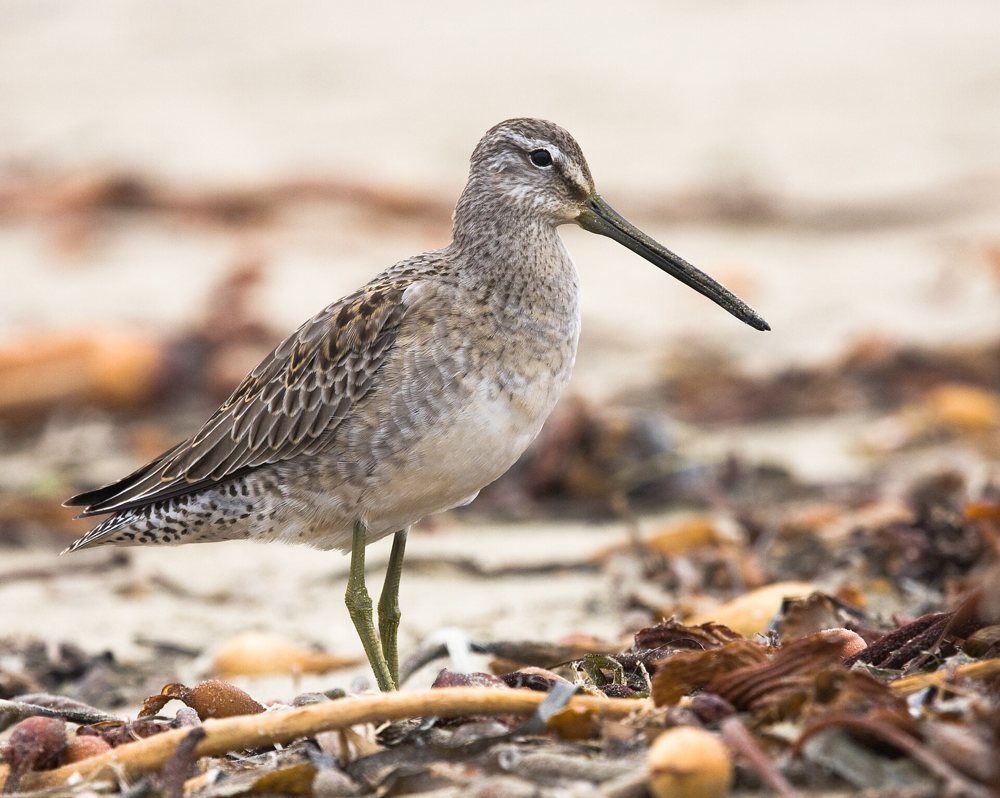
Photo: Mike Baird from Morro Bay, USA · CC BY 2.0 (May be cropped or resized)
Limnodromus scolopaceus
U.S. national list: unknown
Basic stats
Diet
Aquatic invertebrates, seeds and plant material
Habitat
Wet tundra and freshwater meadows when breeding; shallow wetlands and mudflats in winter
Range
Breeds in northeastern Siberia, Alaska and northern Canada; winters mainly in North and Central America
Clutch size
4 eggs
Incubation period
About 20 days
Size
27–30cm
Weight
Averages about 104g
The Long-billed Dowitcher is a stocky migratory sandpiper with a very long, straight bill, a pale eyebrow and a white rump extending well up the back. Breeding adults are richly rufous below with dark bars, whereas winter birds are mostly grey. Females tend to have longer bills and greater mass than males. Adults measure about 27–30 cm and average roughly 104 g (Wikipedia, general species account; AVONET, Tobias et al. 2022).
The species breeds in northeastern Siberia, Alaska and northern Canada, using wet tundra, sedge meadows and freshwater marshes. In winter it frequents shallow wetlands, flooded fields and mudflats, mainly in North and Central America. Aquatic invertebrates dominate its diet, supplemented by seeds and other plant matter. AnAge reports a clutch of four eggs and incubation near 20 days (Wikipedia, general species account; EltonTraits, Wilman et al. 2014; AnAge).
Where to see Long-billed Dowitcher in the USA
GBIF records grouped by protected area. They show where the species has been reported, not that it is there now, and they are not population counts.
Recorded in 1,855 protected areas (1869–2026). The 8 with the most records:
- Estero Llano Grande State Park: 14,423 records (1991–2026)
- Santa Ana National Wildlife Refuge: 8,420 records (1962–2024)
- Don Edwards San Francisco Bay National Wildlife Refuge: 7,131 records (1962–2026)
- Jocelyn Nungaray National Wildlife Refuge: 6,903 records (1967–2026)
- Port Aransas Nature Preserve: 6,652 records (1988–2026)
- Yolo Bypass Wildlife Area: 6,569 records (1960–2026)
- Arcata Marsh and Wildlife Sanctuary: 6,220 records (1968–2026)
- Bosque del Apache National Wildlife Refuge: 6,030 records (1971–2026)
Quick answers
- What does the Long-billed Dowitcher eat?
- Aquatic invertebrates, seeds and plant material
- What habitat does the Long-billed Dowitcher live in?
- Wet tundra and freshwater meadows when breeding; shallow wetlands and mudflats in winter
- Where is the Long-billed Dowitcher found?
- Breeds in northeastern Siberia, Alaska and northern Canada; winters mainly in North and Central America
- How many eggs does the Long-billed Dowitcher lay?
- 4 eggs
- How long are the eggs of the Long-billed Dowitcher incubated?
- About 20 days
- How big is the Long-billed Dowitcher?
- 27–30cm
- How much does the Long-billed Dowitcher weigh?
- Averages about 104g