
 Wildlife
of USA
White-rumped Sandpiper
Shorebirds & Sandpipers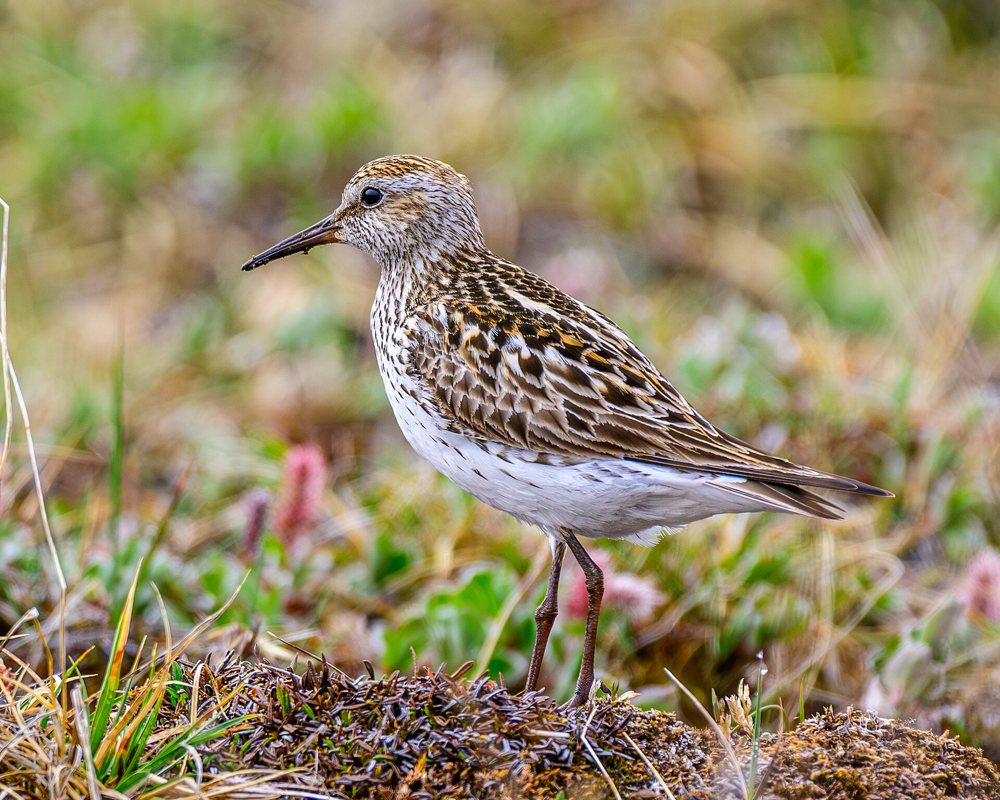
Photo: Stephan Sprinz · CC BY 4.0 (May be cropped or resized)
Calidris fuscicollis
U.S. national list: unknown
Basic stats
Diet
Mostly invertebrates, with seeds
Habitat
Arctic tundra, marshes, lagoons and estuaries
Range
Breeds in Arctic Canada and Alaska; winters mainly in southern South America and the Caribbean
Clutch size
Averages about 4 eggs
Incubation period
Averages about 22 days
Size
15–18cm
Wingspan
36–38cm
Weight
Averages about 43g
The White-rumped Sandpiper is a small shorebird, 15–18 cm long with a 36–38 cm wingspan. It is grey-brown above and white below, with a pale supercilium, dark legs and a slim dark bill. Long wings project beyond the tail at rest, while the white rump is conspicuous in flight. AVONET records an average mass of about 43 g (Wikipedia, general species account; AVONET, Tobias et al. 2022).
It breeds on marshy, vegetated tundra in Arctic Canada and Alaska and migrates to southern South America and the Caribbean. Migrants and wintering birds use freshwater and saline wetlands, especially marshes, lagoons and estuaries. Aquatic invertebrates dominate the diet, with seeds also recorded. Birds pick prey from wet ground and shallow water. AnAge records averages of four eggs and 22 days of incubation (Wikipedia, general species account; EltonTraits, Wilman et al. 2014; AnAge).
Where to see White-rumped Sandpiper in the USA
GBIF records grouped by protected area. They show where the species has been reported, not that it is there now, and they are not population counts.
Recorded in 1,120 protected areas (1879–2026). The 8 with the most records:
- Parker River National Wildlife Refuge: 9,389 records (1964–2026)
- Pinelands National Reserve: 9,249 records (1928–2026)
- Jacques Cousteau National Estuarine Research Reserve: 7,790 records (1928–2026)
- Brigantine National Wildlife Refuge: 7,710 records (1951–2026)
- Edwin B. Forsythe National Wildlife Refuge: 7,676 records (1957–2026)
- Gateway National Recreation Area: 4,843 records (1956–2025)
- Jamaica Bay Unit: 4,724 records (1956–2025)
- Jamaica Bay Wildlife Refuge: 4,279 records (1956–2025)
Quick answers
- What does the White-rumped Sandpiper eat?
- Mostly invertebrates, with seeds
- What habitat does the White-rumped Sandpiper live in?
- Arctic tundra, marshes, lagoons and estuaries
- Where is the White-rumped Sandpiper found?
- Breeds in Arctic Canada and Alaska; winters mainly in southern South America and the Caribbean
- How many eggs does the White-rumped Sandpiper lay?
- Averages about 4 eggs
- How long are the eggs of the White-rumped Sandpiper incubated?
- Averages about 22 days
- How big is the White-rumped Sandpiper?
- 15–18cm
- What is the wingspan of the White-rumped Sandpiper?
- 36–38cm
- How much does the White-rumped Sandpiper weigh?
- Averages about 43g