
 Wildlife
of USA
Eurasian Whimbrel
Shorebirds & Sandpipers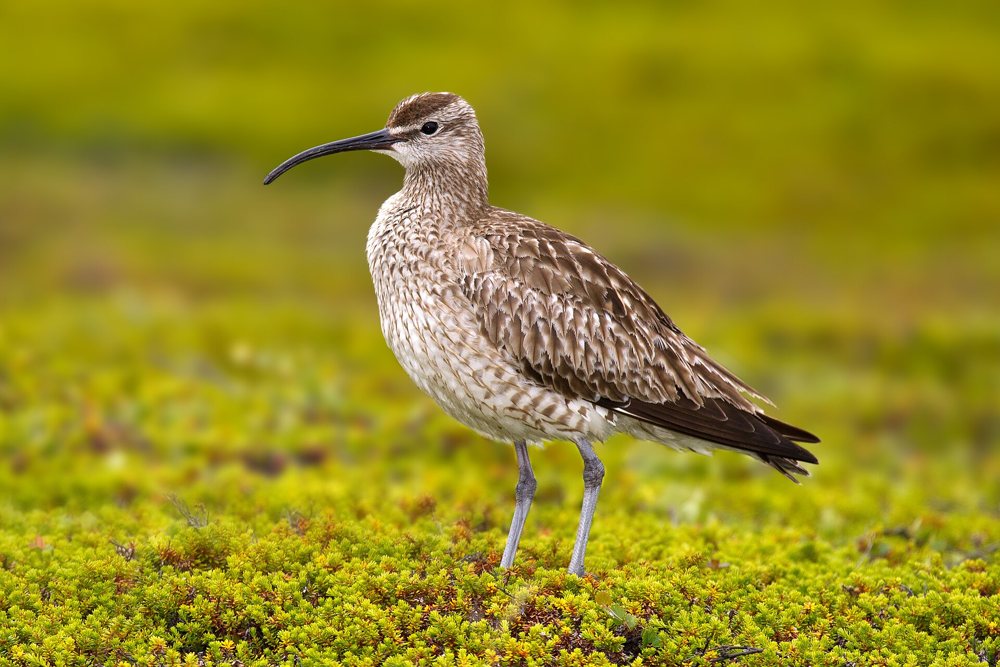
Photo: Andreas Trepte · CC BY-SA 2.5 (May be cropped or resized)
Numenius phaeopus
U.S. national list: unknown
Basic stats
Diet
Mainly invertebrates, supplemented by berries, seeds and other plant matter
Habitat
Tundra, moorland and wet grassland when breeding; chiefly coasts and mudflats at other seasons
Range
Breeds across the subarctic Palearctic; winters in Africa, southern Asia and Australasia
Clutch size
Usually 4 eggs
Incubation period
About 22 days
Size
37–47cm
Wingspan
75–90cm
Weight
Averages about 365g
The Eurasian Whimbrel is a medium-sized curlew with grey-brown plumage and a long bill whose downward curve is noticeably kinked. A pale supercilium and dark crown stripes pattern the head, and most Eurasian forms show a white lower back and rump in flight. Its rippling whistle may be extended into a trill. Adults measure 37–47 cm, span 75–90 cm and average about 365 g (Wikipedia, general species account; AVONET, Tobias et al. 2022).
The species breeds across subarctic Eurasia in tundra, moorland and low wet grassland, then migrates to coastal wintering areas in Africa, southern Asia and Australasia. It probes soft mud for invertebrates and picks crabs and similar prey from the surface; berries and other plant foods become important before migration. The nest is a simple ground scrape among low vegetation or moss, generally holding four eggs that are incubated for about 22 days (Wikipedia, general species account; EltonTraits, Wilman et al. 2014; AnAge).
Records of Eurasian Whimbrel in the USA
This bird's natural range lies outside the USA (AviList v2026), so these are records of wandering, escaped or introduced birds, not places to expect it.
GBIF records grouped by protected area. They show where the species has been reported, not that it is there now, and they are not population counts.
Recorded in 1,046 protected areas (1909–2026). The 8 with the most records:
- Monterey Bay National Marine Sanctuary: 41,464 records (1965–2024)
- Greater Farallones National Marine Sanctuary: 19,449 records (1969–2024)
- Southeast Farallon Island State Marine Reserve: 14,275 records (1969–2024)
- Pinelands National Reserve: 11,647 records (1925–2024)
- Jacques Cousteau National Estuarine Research Reserve: 11,254 records (1928–2024)
- Brigantine National Wildlife Refuge: 10,688 records (1951–2024)
- Edwin B. Forsythe National Wildlife Refuge: 10,641 records (1952–2024)
- Bolsa Chica Ecological Reserve: 10,129 records (1969–2024)
Quick answers
- What does the Eurasian Whimbrel eat?
- Mainly invertebrates, supplemented by berries, seeds and other plant matter
- What habitat does the Eurasian Whimbrel live in?
- Tundra, moorland and wet grassland when breeding; chiefly coasts and mudflats at other seasons
- Where is the Eurasian Whimbrel found?
- Breeds across the subarctic Palearctic; winters in Africa, southern Asia and Australasia
- How many eggs does the Eurasian Whimbrel lay?
- Usually 4 eggs
- How long are the eggs of the Eurasian Whimbrel incubated?
- About 22 days
- How big is the Eurasian Whimbrel?
- 37–47cm
- What is the wingspan of the Eurasian Whimbrel?
- 75–90cm
- How much does the Eurasian Whimbrel weigh?
- Averages about 365g