
 Wildlife
of USA
Long-billed Curlew
Shorebirds & Sandpipers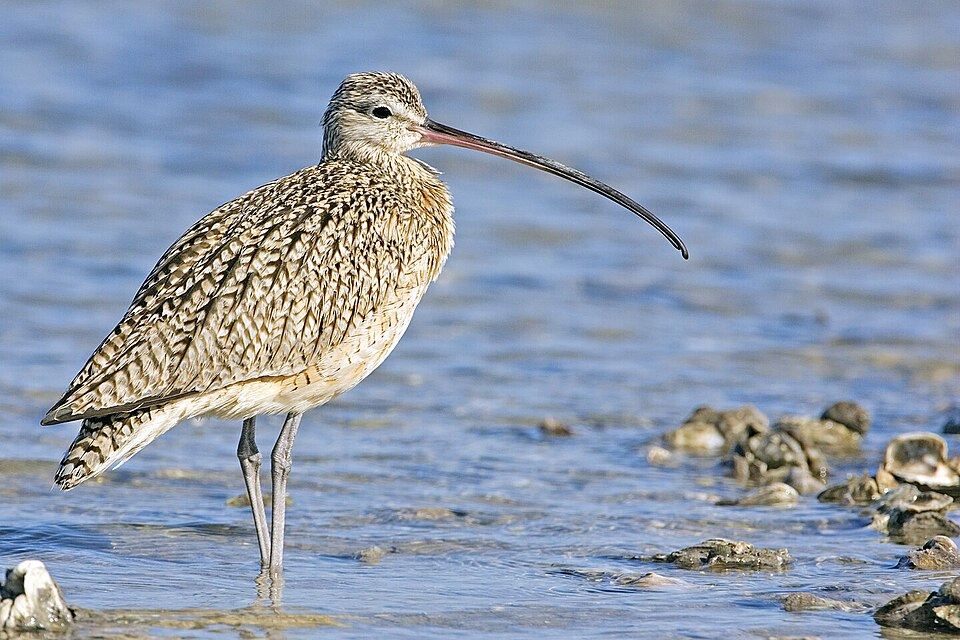
Photo: Alan D. Wilson, www.naturespicsonline.com · CC BY-SA 2.5 (May be cropped or resized)
Numenius americanus
U.S. national list: unknown
The long-billed curlew (Numenius americanus) is a large Scolopacidae shorebird from North America. Older names include sicklebird and candlestick bird. It nests in the continent’s central and western areas, then migrates south and toward the coasts for winter. Among sandpipers regularly present in North America, it is the largest. (Wikipedia, general species account)
Its length is 50–65 cm, its wings span 62–90 cm and its mass is 490–950 g. The bird has a small head atop a long neck. Cinnamon tones colour the neck and underside, while brown streaks mark the crown. Females exceed males in size and have a substantially longer bill, a reversal of the usual pattern in many sandpipers. (Wikipedia, general species account)
Where to see Long-billed Curlew in the USA
GBIF records grouped by protected area. They show where the species has been reported, not that it is there now, and they are not population counts.
Recorded in 884 protected areas (1896–2026). The 8 with the most records:
- Bolsa Chica Ecological Reserve: 17,810 records (1908–2026)
- Monterey Bay National Marine Sanctuary: 17,090 records (1932–2026)
- Laguna Atascosa National Wildlife Refuge: 10,012 records (1962–2026)
- Great Salt Lake State Park: 8,750 records (1919–2026)
- Arcata Marsh and Wildlife Sanctuary: 7,355 records (1966–2026)
- Morro Bay State Marine Recreational Management Area: 7,273 records (1918–2026)
- Greater Farallones National Marine Sanctuary: 7,118 records (1968–2026)
- Morro Bay State Park: 7,031 records (1918–2026)