
 Wildlife
of USA
Tundra Swan
Waterfowl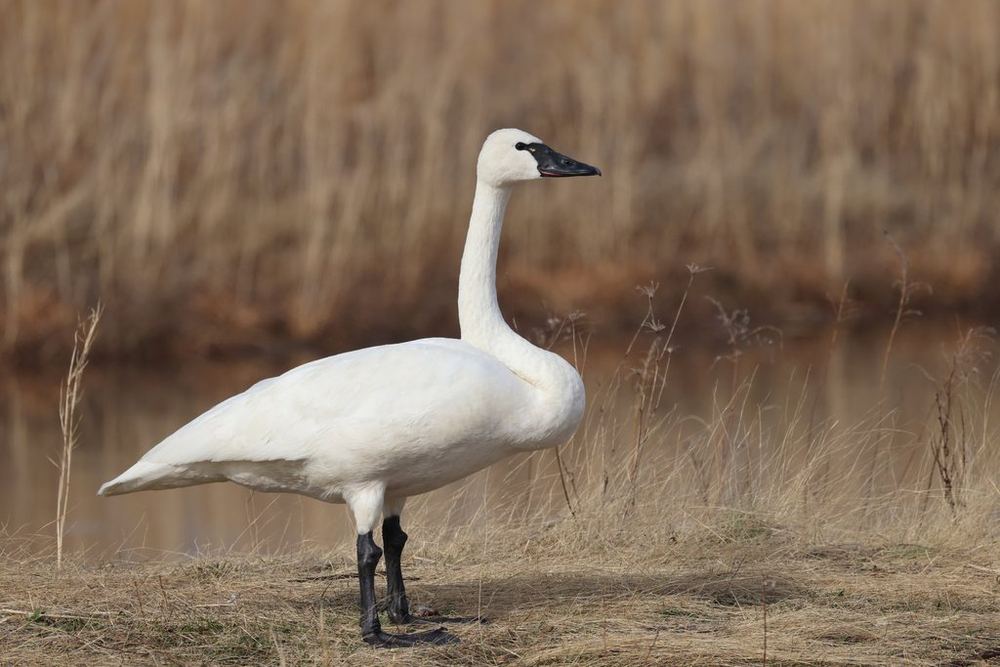
Photo: no rights reserved · CC0
Cygnus columbianus
U.S. national list: unknown
Basic stats
Diet
Aquatic plants and crops
Habitat
Tundra pools, marshes, lakes and sheltered coasts
Range
Arctic Eurasia and North America, wintering farther south
Clutch size
Averages about 4 eggs
Incubation period
Averages about 31 days
Size
115–150cm
Wingspan
168–211cm
Weight
Averages about 6378g
The Tundra Swan is the smallest Holarctic swan, measuring 115–150 cm and spanning 168–211 cm. Adults are white with black feet and a mainly black bill whose yellow area varies between populations; a narrow pink line follows the mouth. The neck is comparatively short and the head rounded. AVONET gives an average mass of about 6,378 g (Wikipedia, general species account; AVONET, Tobias et al. 2022).
Across its range, the species nests beside pools and marshes on Arctic tundra, then migrates to lakes, flooded ground, coastal marshes and sheltered shores farther south. Aquatic vegetation dominates in summer, while wintering birds also graze and take leftover crops. Pairs form lasting bonds and build plant nests near water. Clutches average about four eggs and incubation about 31 days (Wikipedia, general species account; EltonTraits, Wilman et al. 2014; AnAge).
Where to see Tundra Swan in the USA
GBIF records grouped by protected area. They show where the species has been reported, not that it is there now, and they are not population counts.
Recorded in 2,188 protected areas (1887–2026). The 8 with the most records:
- Yukon Delta National Wildlife Refuge: 41,647 records (1950–2024)
- National Petroleum Reserve–Alaska: 12,786 records (1936–2025)
- Pea Island National Wildlife Refuge: 11,049 records (1964–2026)
- Bombay Hook National Wildlife Refuge: 10,765 records (1951–2026)
- Pinelands National Reserve: 8,991 records (1914–2026)
- Blackwater National Wildlife Refuge: 8,966 records (1951–2026)
- Harriet Tubman Underground Railroad National Monument: 8,670 records (1951–2026)
- State Game Lands Number 46: 8,033 records (1971–2026)
Quick answers
- What does the Tundra Swan eat?
- Aquatic plants and crops
- What habitat does the Tundra Swan live in?
- Tundra pools, marshes, lakes and sheltered coasts
- Where is the Tundra Swan found?
- Arctic Eurasia and North America, wintering farther south
- How many eggs does the Tundra Swan lay?
- Averages about 4 eggs
- How long are the eggs of the Tundra Swan incubated?
- Averages about 31 days
- How big is the Tundra Swan?
- 115–150cm
- What is the wingspan of the Tundra Swan?
- 168–211cm
- How much does the Tundra Swan weigh?
- Averages about 6378g