
 Wildlife
of USA
Fulvous Whistling-Duck
Waterfowl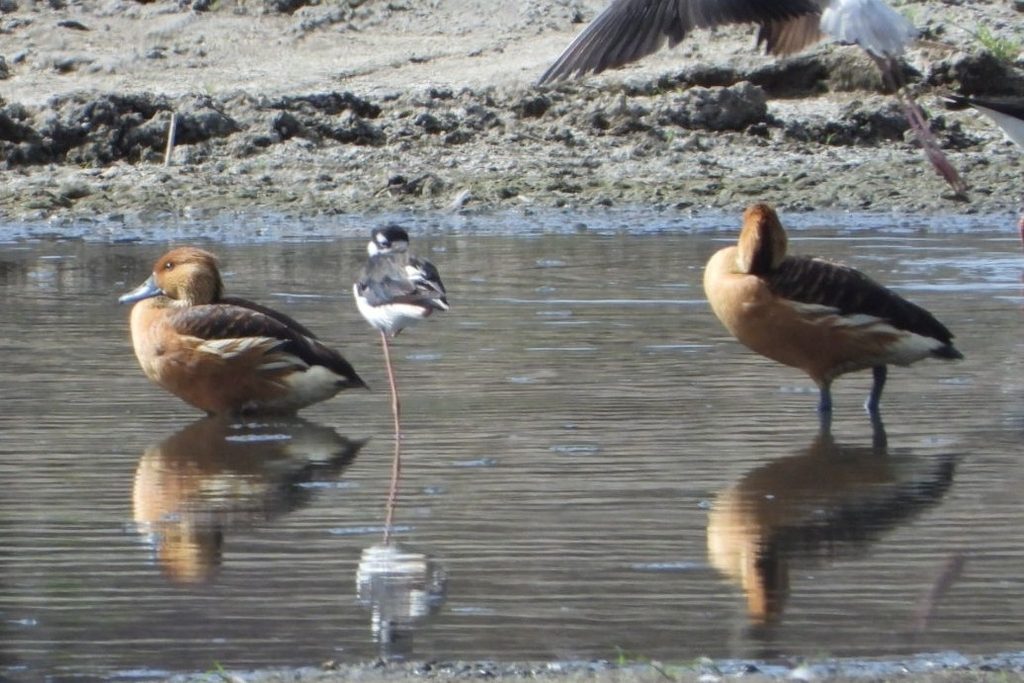
Photo: Ricardo Betancourt Sánchez · CC BY 4.0 (May be cropped or resized)
Dendrocygna bicolor
U.S. national list: unknown
Basic stats
Diet
Seeds, fruit and other plant material
Habitat
Shallow, densely vegetated wetlands and rice fields
Range
Tropical parts of the Americas, Africa and the Indian subcontinent
Clutch size
About 10 eggs
Incubation period
24–29 days
Size
45–53cm
Wingspan
85–93cm
Weight
Averages about 756g
The Fulvous Whistling-Duck is a long-legged, warm reddish-brown duck with a long grey bill and a dark stripe running down the crown and hindneck. Pale flank lines and a white crescent above the black tail stand out in flight. The sexes are similar, though females average slightly smaller and duller. Its clear whistled call is given both on the ground and in flight. Adults measure 45–53 cm, span 85–93 cm and average about 756 g (Wikipedia, general species account; AVONET, Tobias et al. 2022).
Across tropical parts of the Americas, Africa and the Indian subcontinent, the species occupies shallow lakes, rice fields and other densely vegetated wetlands. It feeds by day or night on seeds, fruit and other plant material. Pairs may remain together for life, and both adults incubate and guard the young. An unlined plant nest is hidden in dense vegetation or placed in a tree cavity. About ten eggs are typical and hatch after 24–29 days (Wikipedia, general species account; EltonTraits, Wilman et al. 2014).
Where to see Fulvous Whistling-Duck in the USA
GBIF records grouped by protected area. They show where the species has been reported, not that it is there now, and they are not population counts.
Recorded in 202 protected areas (1900–2026). The 8 with the most records:
- Lake Apopka Restoration Area: 12,499 records (1977–2026)
- Jocelyn Nungaray National Wildlife Refuge: 11,253 records (1967–2026)
- Estero Llano Grande State Park: 6,406 records (1988–2026)
- Santa Ana National Wildlife Refuge: 2,467 records (1962–2024)
- Stormwater Treatment Area 5/6: 1,679 records (1997–2024)
- Cattail Marsh: 1,501 records (1995–2025)
- Brazos Bend State Park: 1,343 records (1982–2024)
- Arthur R. Marshall Loxahatchee National Wildlife Refuge: 1,317 records (1972–2025)
Quick answers
- What does the Fulvous Whistling-Duck eat?
- Seeds, fruit and other plant material
- What habitat does the Fulvous Whistling-Duck live in?
- Shallow, densely vegetated wetlands and rice fields
- Where is the Fulvous Whistling-Duck found?
- Tropical parts of the Americas, Africa and the Indian subcontinent
- How many eggs does the Fulvous Whistling-Duck lay?
- About 10 eggs
- How long are the eggs of the Fulvous Whistling-Duck incubated?
- 24–29 days
- How big is the Fulvous Whistling-Duck?
- 45–53cm
- What is the wingspan of the Fulvous Whistling-Duck?
- 85–93cm
- How much does the Fulvous Whistling-Duck weigh?
- Averages about 756g