
 Wildlife
of USA
Black Scoter
Waterfowl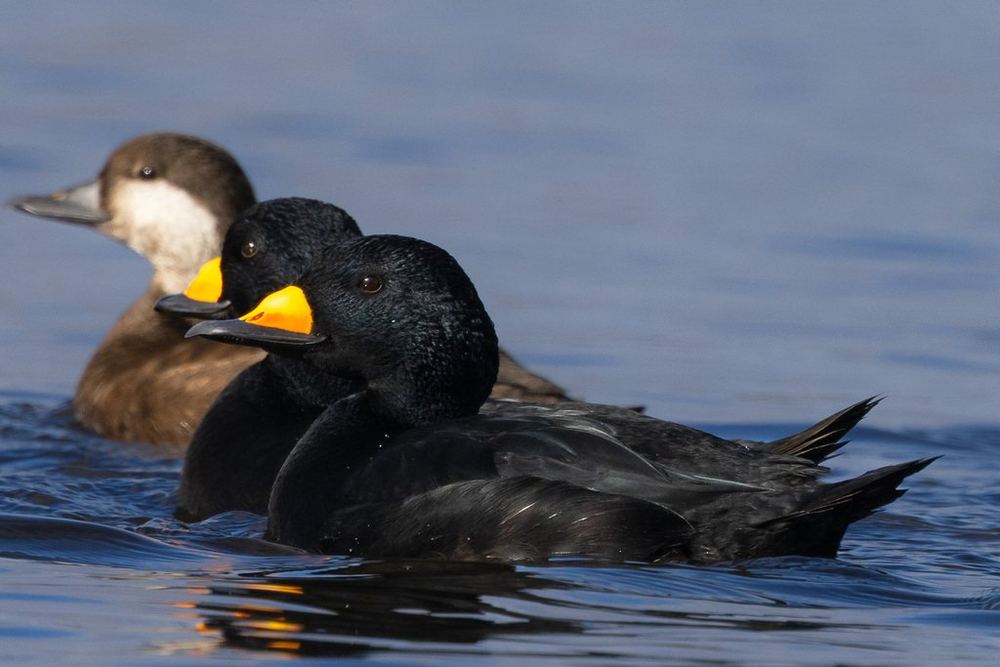
Photo: (c) Bjoern Rost, some rights reserved (CC BY) · CC BY 4.0 (May be cropped or resized)
Melanitta americana
U.S. national list: unknown
Basic stats
Diet
Aquatic invertebrates, fish eggs and some vegetation
Habitat
Northern tundra lakes and pools; inshore coastal waters in winter
Range
Breeds across northern North America and northeastern Siberia; winters on temperate North American and East Asian coasts
Clutch size
5–7 eggs
Incubation period
About 27–31 days
Size
43–49cm
Weight
Averages about 1117g
The Black Scoter is a bulky sea duck measuring 43–49 cm. Adult males are entirely black and have a swollen bill marked bright yellow, whereas females are brown with contrasting pale cheeks. Unlike most other scoters, males show no white plumage. AVONET records an average mass of about 1,117 g, close to the male average stated in the species account (Wikipedia, general species account; AVONET, Tobias et al. 2022).
It breeds around tundra lakes and rivers across northern North America and northeastern Siberia, then winters on temperate coasts of North America and eastern Asia. Coastal flocks dive for molluscs and crustaceans; breeding birds also take insects, larvae, fish eggs and some aquatic plants. A down-lined ground nest near water holds five to seven eggs, incubated for 27–31 days. Winter birds often form dense flocks on sheltered inshore waters (Wikipedia, general species account; Collins Birds of the World).
Where to see Black Scoter in the USA
GBIF records grouped by protected area. They show where the species has been reported, not that it is there now, and they are not population counts.
Recorded in 1,081 protected areas (1881–2026). The 8 with the most records:
- Parker River National Wildlife Refuge: 10,497 records (1963–2026)
- Jones Beach State Park: 8,866 records (1954–2026)
- Acadia National Park: 6,735 records (1971–2026)
- Sandy Hook Unit: 5,715 records (1980–2026)
- Cape Henlopen State Park: 5,201 records (1967–2026)
- Cape May Point State Park: 4,678 records (1930–2026)
- Halibut Point State Park: 3,741 records (1962–2026)
- Sachuest Point National Wildlife Refuge: 3,707 records (1975–2026)
Quick answers
- What does the Black Scoter eat?
- Aquatic invertebrates, fish eggs and some vegetation
- What habitat does the Black Scoter live in?
- Northern tundra lakes and pools; inshore coastal waters in winter
- Where is the Black Scoter found?
- Breeds across northern North America and northeastern Siberia; winters on temperate North American and East Asian coasts
- How many eggs does the Black Scoter lay?
- 5–7 eggs
- How long are the eggs of the Black Scoter incubated?
- About 27–31 days
- How big is the Black Scoter?
- 43–49cm
- How much does the Black Scoter weigh?
- Averages about 1117g