
 Wildlife
of USA
Sanderling
Shorebirds & Sandpipers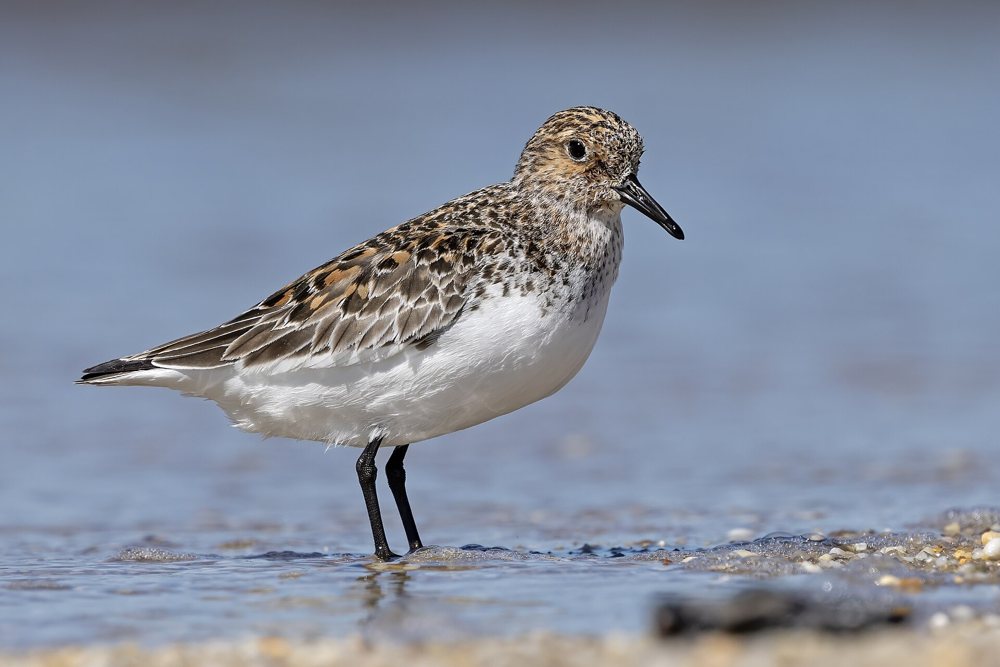
Photo: Chuck Homler, Focus On Wildlife · CC BY-SA 4.0 (May be cropped or resized)
Calidris alba
U.S. national list: unknown
Basic stats
Diet
Mostly small invertebrates, with some plant material and occasional scavenged food
Habitat
High Arctic tundra when breeding; sandy beaches, tidal flats and other shores at other seasons
Range
Breeds around the High Arctic; winters along coasts into southern latitudes
Clutch size
Usually 4 eggs
Incubation period
About 27 days
Size
18–20cm
Weight
Averages about 52g
The Sanderling is a small, plump sandpiper with a thickish bill, dark legs and no hind toe. Non-breeding adults look unusually pale, whereas breeding birds develop rusty tones on the head and breast; juveniles are crisply patterned black and white. A broad white wingbar shows in flight. The species is also recognisable by its rapid leg action as it follows retreating surf. It measures 18–20 cm and averages about 51.7 g (Wikipedia, general species account; AVONET, Tobias et al. 2022).
Across its range, the species breeds on cold, sparsely vegetated High Arctic tundra and migrates to marine shores across much of the world. Sandy beaches are especially favoured, though birds also use tidal flats, mudflats and lake or river margins. They probe softened sand at the waterline for small invertebrates and may also consume plant matter or scavenged food. Wintering birds often gather in large flocks. Nests are ground scrapes, commonly with four eggs; incubation averages about 27 days (Wikipedia, general species account; EltonTraits, Wilman et al. 2014; AnAge).
Where to see Sanderling in the USA
GBIF records grouped by protected area. They show where the species has been reported, not that it is there now, and they are not population counts.
Recorded in 1,550 protected areas (1871–2026). The 8 with the most records:
- Monterey Bay National Marine Sanctuary: 27,664 records (1891–2026)
- Bolivar Flats Shorebird Sanctuary: 13,296 records (1973–2026)
- Pinelands National Reserve: 12,653 records (1925–2026)
- Chincoteague National Wildlife Refuge: 12,114 records (1934–2026)
- Jones Beach State Park: 10,224 records (1926–2026)
- Pea Island National Wildlife Refuge: 10,119 records (1968–2026)
- Gateway National Recreation Area: 10,039 records (1947–2026)
- Jamaica Bay Unit: 9,856 records (1947–2026)
Quick answers
- What does the Sanderling eat?
- Mostly small invertebrates, with some plant material and occasional scavenged food
- What habitat does the Sanderling live in?
- High Arctic tundra when breeding; sandy beaches, tidal flats and other shores at other seasons
- Where is the Sanderling found?
- Breeds around the High Arctic; winters along coasts into southern latitudes
- How many eggs does the Sanderling lay?
- Usually 4 eggs
- How long are the eggs of the Sanderling incubated?
- About 27 days
- How big is the Sanderling?
- 18–20cm
- How much does the Sanderling weigh?
- Averages about 52g