
 Wildlife
of USA
Great Knot
Shorebirds & Sandpipers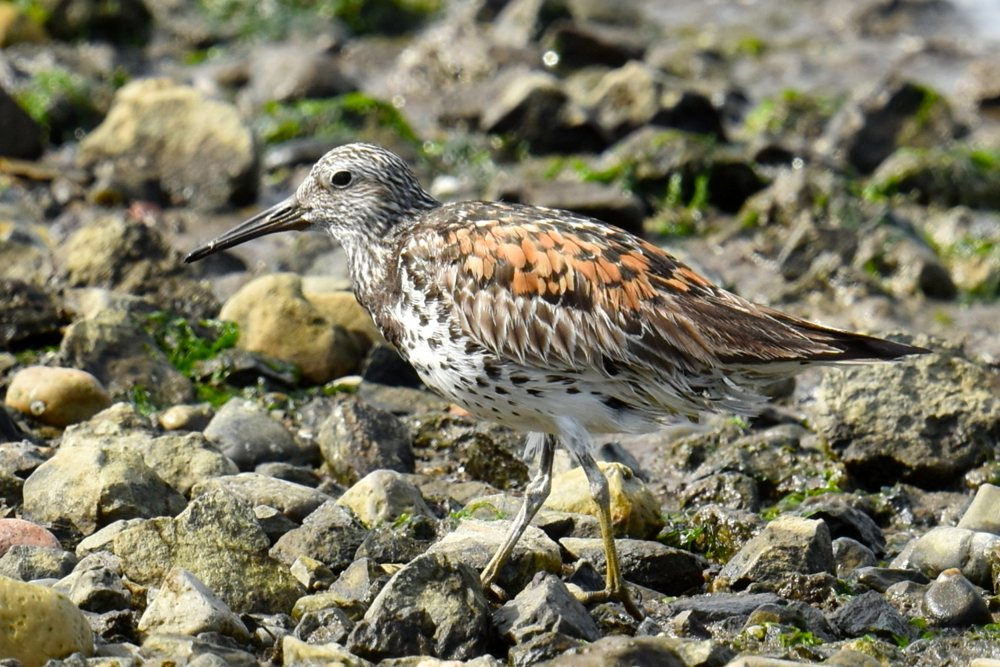
Photo: Original: tcager ; this edit: User:MPF · CC0
Calidris tenuirostris
U.S. national list: unknown
Basic stats
Diet
Mostly molluscs and insects
Habitat
Tundra when breeding; coastal mudflats and beaches otherwise
Range
Breeds in northeastern Siberia; winters along coasts of southern Asia and Australia
Clutch size
About 4 eggs
Weight
Averages about 192g
The Great Knot is a medium-sized shorebird and one of the largest members of Calidris. It has a fairly long bill, dark legs and a sturdy shape. Breeding plumage is strongly marked, with black spotting below and rich chestnut and dark patterning above; non-breeding birds become greyer and paler. A white rump contrasts with the darker tail in flight (Wikipedia, general species account).
The species nests on northeastern Siberian tundra and makes a long migration to coasts from southern Asia to Australia. About four eggs are placed in a simple ground scrape. Outside the breeding season, birds often assemble in immense flocks on coastal mudflats and beaches, where they probe or pick visible prey. Published accounts identify molluscs and insects as its main foods (Wikipedia, general species account).
Quick answers
- What does the Great Knot eat?
- Mostly molluscs and insects
- What habitat does the Great Knot live in?
- Tundra when breeding; coastal mudflats and beaches otherwise
- Where is the Great Knot found?
- Breeds in northeastern Siberia; winters along coasts of southern Asia and Australia
- How many eggs does the Great Knot lay?
- About 4 eggs
- How much does the Great Knot weigh?
- Averages about 192g