
 Wildlife
of USA
Far Eastern Curlew
Shorebirds & Sandpipers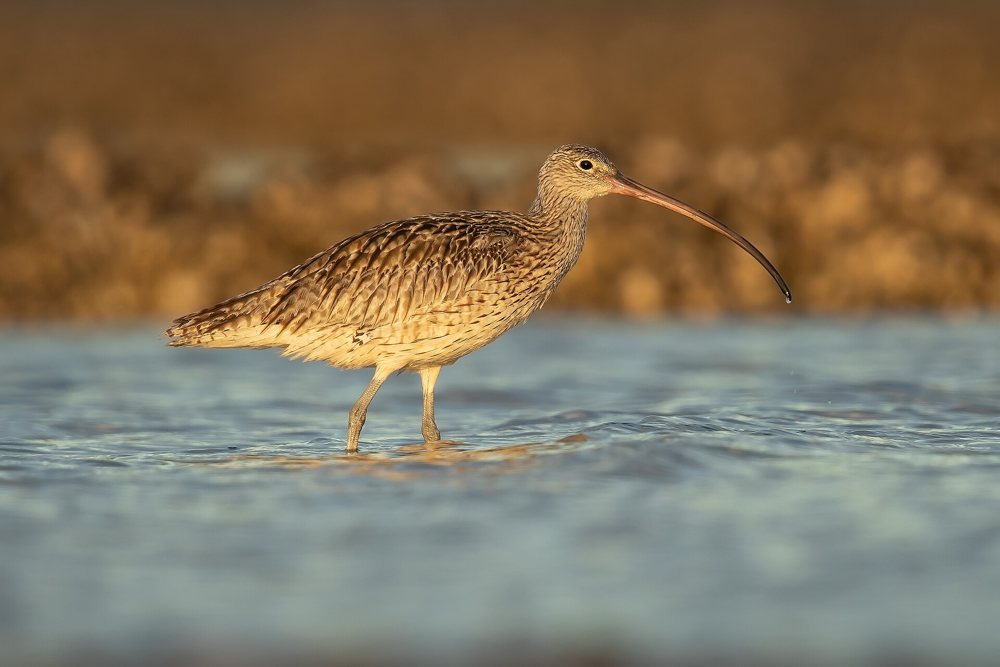
Photo: JJ Harrison ( https://www.jjharrison.com.au/ ) · CC BY-SA 4.0 (May be cropped or resized)
Numenius madagascariensis
U.S. national list: unknown
Basic stats
Diet
Mostly insects and other invertebrates when breeding; chiefly crabs, molluscs and marine worms at other seasons
Habitat
Marshy inland wetlands and lakeshores when breeding; estuaries, beaches, salt marshes and tidal flats at other seasons
Range
Breeds in northeastern Asia; winters mainly in Australia, with smaller numbers in Southeast Asia and New Zealand
Size
60–66cm
Wingspan
About 110cm
Weight
Averages about 792g
The Far Eastern Curlew is an exceptionally large shorebird with very long legs and an extremely long downcurved bill. Its plumage is mainly brown, including the rump, lower back and underwings, a useful distinction from the Eurasian Curlew where their ranges overlap. Females average larger and longer-billed than males. The species measures 60–66 cm, spans about 110 cm and averages about 792 g (Wikipedia, general species account; AVONET, Tobias et al. 2022).
Across its range, the species breeds around marshes, swamps and lakeshores in northeastern Asia. Most birds migrate through East Asian tidal flats to coastal Australia, while smaller numbers winter in Southeast Asia and New Zealand. The long bill probes mud for prey. Beetle and fly larvae, amphipods and other invertebrates are eaten on the breeding grounds; crabs, molluscs, crustaceans and marine worms dominate at other seasons. Birds often gather in large migrating or roosting flocks (Wikipedia, general species account; EltonTraits, Wilman et al. 2014).
Quick answers
- What does the Far Eastern Curlew eat?
- Mostly insects and other invertebrates when breeding; chiefly crabs, molluscs and marine worms at other seasons
- What habitat does the Far Eastern Curlew live in?
- Marshy inland wetlands and lakeshores when breeding; estuaries, beaches, salt marshes and tidal flats at other seasons
- Where is the Far Eastern Curlew found?
- Breeds in northeastern Asia; winters mainly in Australia, with smaller numbers in Southeast Asia and New Zealand
- How big is the Far Eastern Curlew?
- 60–66cm
- What is the wingspan of the Far Eastern Curlew?
- About 110cm
- How much does the Far Eastern Curlew weigh?
- Averages about 792g