
 Wildlife
of USA
Greater Sand-Plover
Shorebirds & Sandpipers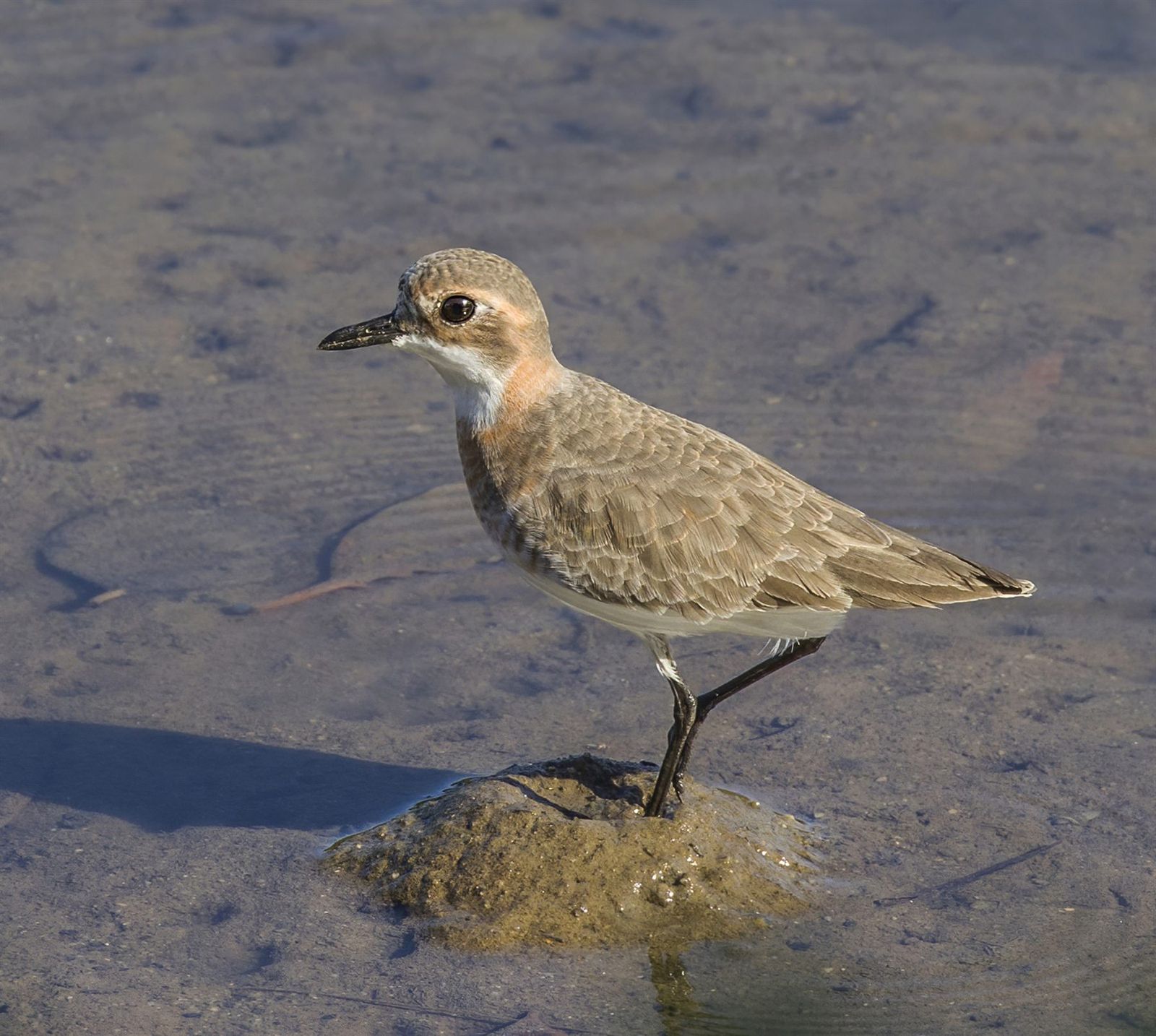
Photo: Charles J. Sharp · CC BY-SA 4.0 (May be cropped or resized)
Anarhynchus leschenaultii
U.S. national list: unknown
Basic stats
Diet
Mostly insects, crustaceans and marine worms
Habitat
Semi-desert breeding ground and sandy coasts outside the breeding season
Range
Breeds from Turkey across Central Asia; winters along coasts of East Africa, southern Asia and Australasia
Size
19–22cm
Weight
Averages about 75g
The Greater Sand-Plover is a chunky, long-legged plover, 19–22 cm long, with a thick black bill. Breeding males have sandy upperparts, white underparts, a dark mask and variable orange across the forehead, nape and breast. Females are duller, while juveniles and non-breeding adults appear browner. Its close relatives can look extremely similar, making body proportions and bill structure useful identification features (Wikipedia, general species account).
The species nests in bare scrapes across semi-desert from Turkey through Central Asia. It is a strong migrant, spending the non-breeding season on sandy coasts from East Africa through southern Asia to Australasia. Feeding birds alternate quick runs with pauses to take prey from the surface instead of probing steadily. Insects, crustaceans and annelid worms provide most food, consistent with the dataset's invertebrate-dominated profile (Wikipedia, general species account; EltonTraits, Wilman et al. 2014).
Records of Greater Sand-Plover in the USA
This bird's natural range lies outside the USA (AviList v2026), so these are records of wandering, escaped or introduced birds, not places to expect it.
GBIF records grouped by protected area. They show where the species has been reported, not that it is there now, and they are not population counts.
Recorded in 5 protected areas (2001–2009).
- Timucuan Ecological and Historic Preserve: 122 records (2009)
- Huguenot Memorial Park: 120 records (2009)
- Bolinas Lagoon Preserve: 90 records (2001)
- Golden Gate National Recreation Area: 42 records (2001)
- Stinson Beach (GGNRA): 4 records (2001)
Quick answers
- What does the Greater Sand-Plover eat?
- Mostly insects, crustaceans and marine worms
- What habitat does the Greater Sand-Plover live in?
- Semi-desert breeding ground and sandy coasts outside the breeding season
- Where is the Greater Sand-Plover found?
- Breeds from Turkey across Central Asia; winters along coasts of East Africa, southern Asia and Australasia
- How big is the Greater Sand-Plover?
- 19–22cm
- How much does the Greater Sand-Plover weigh?
- Averages about 75g