
 Wildlife
of USA
Little Curlew
Shorebirds & Sandpipers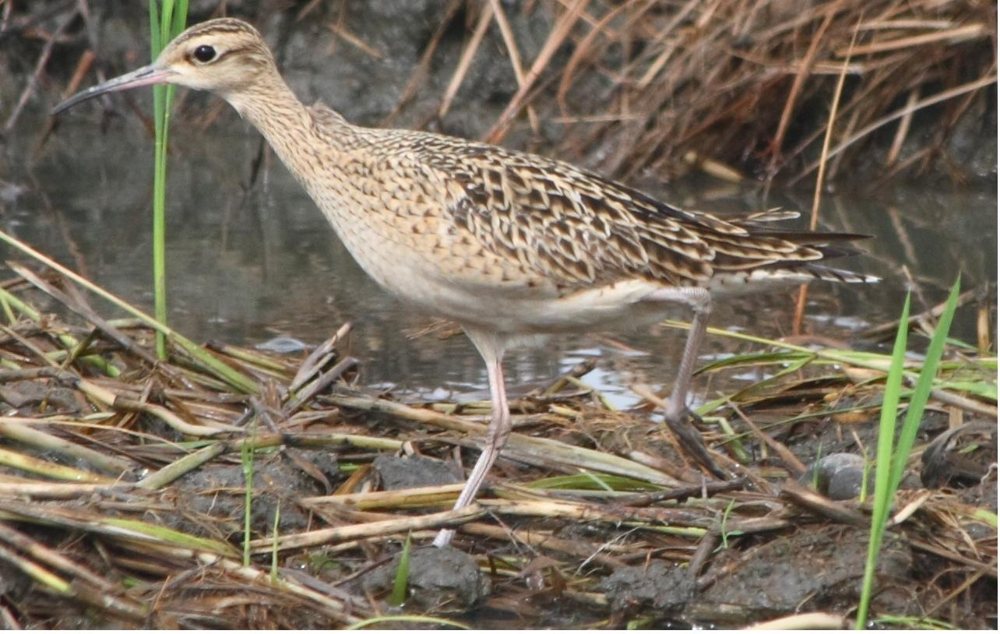
Photo: Wayne Cheng · CC BY 2.0 (May be cropped or resized)
Numenius minutus
U.S. national list: unknown
Basic stats
Diet
Small invertebrates
Habitat
Forest clearings and river valleys when breeding; inland grassland, cultivation and freshwater margins outside breeding
Range
Breeds in far northern Siberia; winters mainly in northern Australia
Size
28–31cm
Wingspan
68–71cm
Weight
Averages about 173g
The Little Curlew is the smallest curlew, with a comparatively short curved bill and a patterned head recalling a Whimbrel. Its plumage is chiefly grey-brown, including the underwings, with a contrasting white belly and crown and eyebrow stripes. The repetitive whistle is characteristic, and the compact proportions separate it from larger curlews. Adults measure 28–31 cm, span 68–71 cm and average about 173 g (Wikipedia, general species account; AVONET, Tobias et al. 2022).
Across its range, the species breeds in loose colonies in forest clearings along river valleys of far northern Siberia, using a simple ground scrape. It migrates strongly to Australasia and winters mainly in northern Australia, where grassland, cultivation and areas beside fresh water are occupied. Birds form sizeable flocks and probe soft mud and soil for small invertebrates, which dominate the diet (Wikipedia, general species account; EltonTraits, Wilman et al. 2014).
Quick answers
- What does the Little Curlew eat?
- Small invertebrates
- What habitat does the Little Curlew live in?
- Forest clearings and river valleys when breeding; inland grassland, cultivation and freshwater margins outside breeding
- Where is the Little Curlew found?
- Breeds in far northern Siberia; winters mainly in northern Australia
- How big is the Little Curlew?
- 28–31cm
- What is the wingspan of the Little Curlew?
- 68–71cm
- How much does the Little Curlew weigh?
- Averages about 173g