
 Wildlife
of USA
Broad-billed Sandpiper
Shorebirds & Sandpipers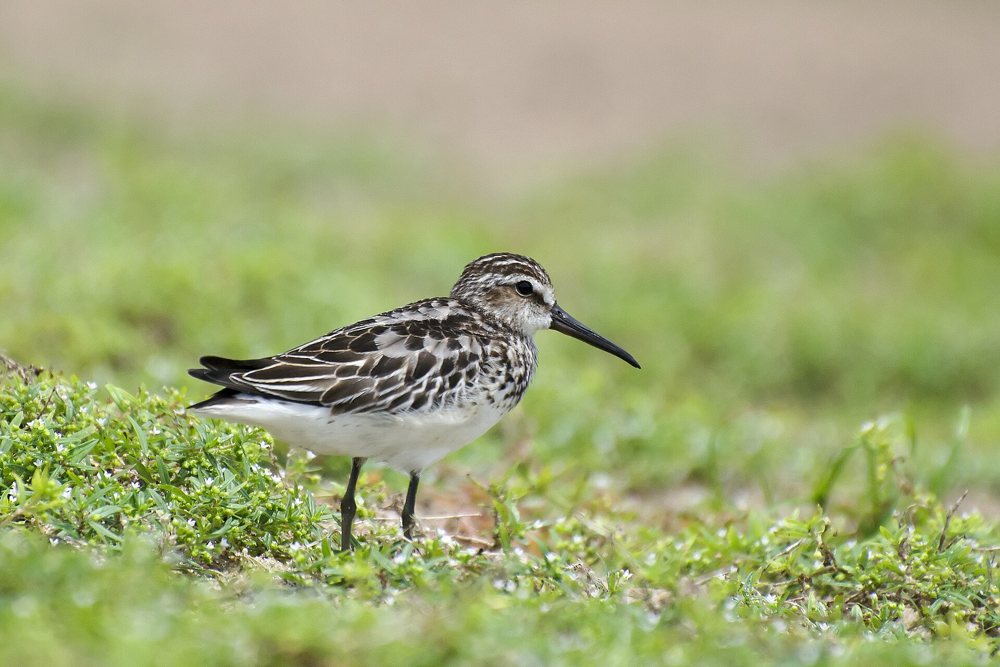
Photo: Sreedev Puthur · CC BY-SA 4.0 (May be cropped or resized)
Calidris falcinellus
U.S. national list: unknown
Basic stats
Diet
Mostly insects and other small invertebrates, with some seeds
Habitat
Wet taiga bogs when breeding; soft mud on marshes and coasts otherwise
Range
Breeds in northern Scandinavia and Siberia; winters from eastern Africa through southern Asia to Australasia
Clutch size
4 eggs
Size
16–18cm
Weight
Averages about 37g
The Broad-billed Sandpiper is a small wader, 16–18 cm long, with short legs and a fairly long bill whose tip bends slightly downward. Breeding birds have dark patterned upperparts, marked breasts, a pale central crown stripe and a conspicuously divided eyebrow. Winter plumage is greyer and paler, yet the head pattern remains evident. Juveniles show pale lines along the mantle and streaking across the breast (Wikipedia, general species account).
Nesting occurs in wet taiga bogs of northern Scandinavia and Siberia, where pairs use ground scrapes and lay four eggs. The species migrates southeast to non-breeding areas extending from eastern Africa through southern Asia to Australasia. It searches soft mud on inland marshes during summer and coastal flats later in the year, taking food chiefly by sight. Insects and other invertebrates dominate, with some seeds also recorded (Wikipedia, general species account; EltonTraits, Wilman et al. 2014).
Quick answers
- What does the Broad-billed Sandpiper eat?
- Mostly insects and other small invertebrates, with some seeds
- What habitat does the Broad-billed Sandpiper live in?
- Wet taiga bogs when breeding; soft mud on marshes and coasts otherwise
- Where is the Broad-billed Sandpiper found?
- Breeds in northern Scandinavia and Siberia; winters from eastern Africa through southern Asia to Australasia
- How many eggs does the Broad-billed Sandpiper lay?
- 4 eggs
- How big is the Broad-billed Sandpiper?
- 16–18cm
- How much does the Broad-billed Sandpiper weigh?
- Averages about 37g