
 Wildlife
of USA
King Eider
Waterfowl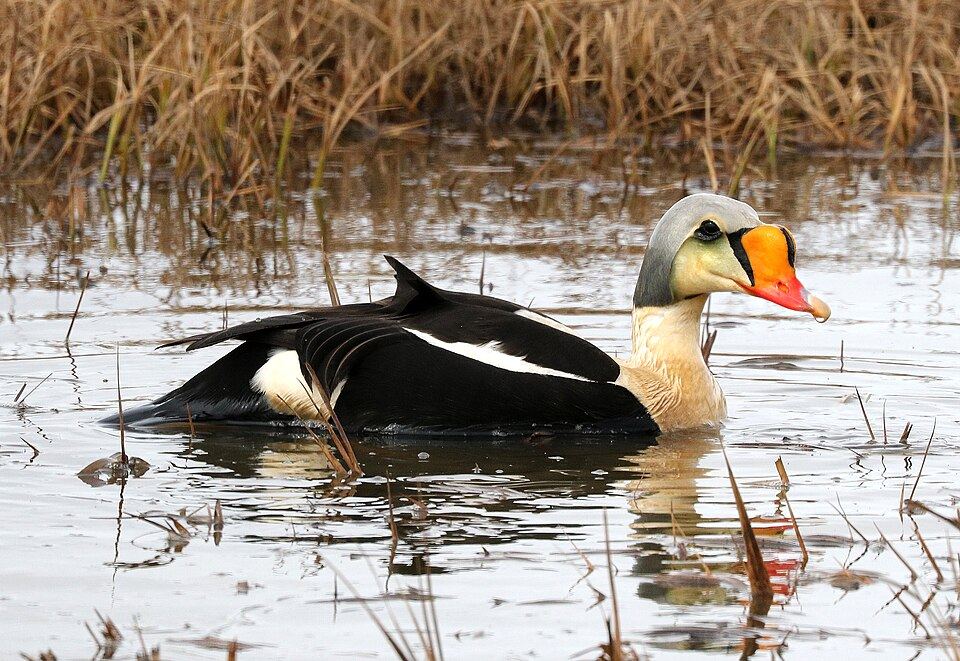
Photo: ALAN SCHMIERER · CC0
Somateria spectabilis
U.S. national list: unknown
The king eider (Somateria spectabilis) breeds along Arctic shores in northeastern Europe, North America and Asia. It spends most of the year in high-latitude coastal seas, then heads to Arctic tundra for breeding in June and July. Females lay four to seven eggs in a ground scrape lined with grass and down. Body length is 50–70 cm, and the wingspan measures 86–102 cm. (Wikipedia, general species account)
As in other eiders, the sexes differ in appearance, and males are slightly larger. Breeding males are much more colorful than females, with a mainly black body, white breast washed with buff, and multicolored head. Pale bluish gray extends over the head, nape and neck. (Wikipedia, general species account)
Where to see King Eider in the USA
GBIF records grouped by protected area. They show where the species has been reported, not that it is there now, and they are not population counts.
Recorded in 153 protected areas (1882–2026). The 8 with the most records:
- National Petroleum Reserve–Alaska: 13,313 records (1882–2026)
- Arctic National Wildlife Refuge: 1,473 records (1989–2023)
- Pinelands National Reserve: 1,295 records (1924–2024)
- Parker River National Wildlife Refuge: 483 records (1965–2024)
- Halibut Point State Park: 389 records (1962–2024)
- Sandy Hook Unit: 355 records (1986–2022)
- Gateway National Recreation Area: 271 records (1975–2024)
- Scusset Beach State Reservation: 262 records (1997–2025)