
 Wildlife
of USA
Western Kingbird
Other Songbirds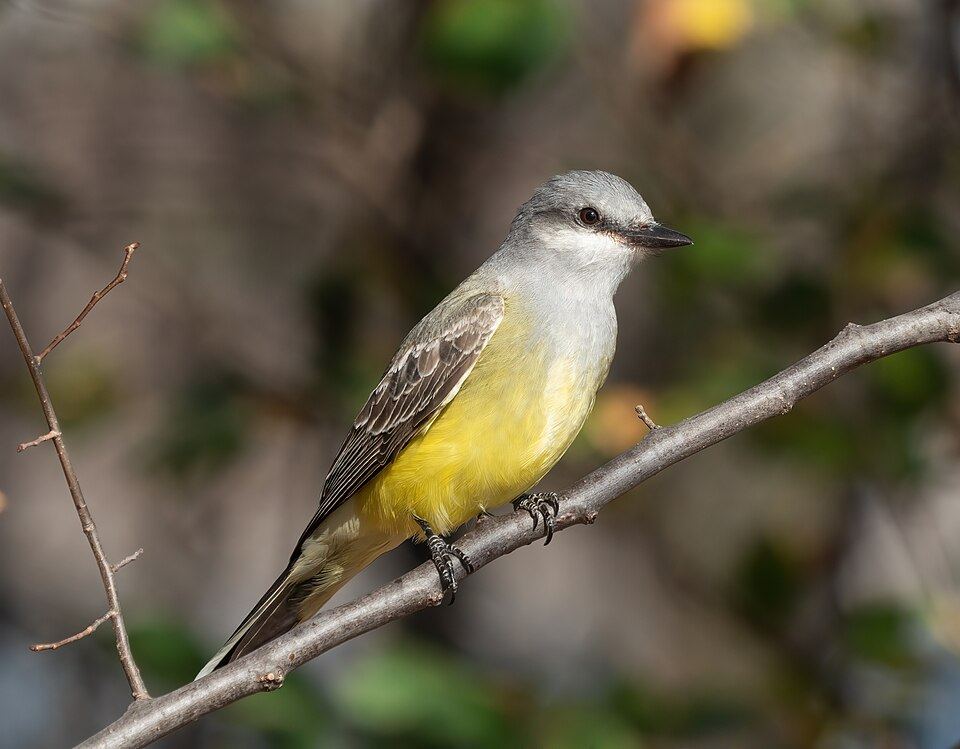
Photo: Rhododendrites · CC BY-SA 4.0 (May be cropped or resized)
Tyrannus verticalis
U.S. national list: unknown
Basic stats
Habitat
Open areas, grassland, sagebrush and towns with trees
Range
Western North America to Mexico
Clutch size
3–5 eggs
Incubation period
12–14 days
Western Kingbird ranges across western North America and extends south into Mexico. Its breeding grounds are open country, and tree growth across the Great Plains has accompanied expansion of its range. Grey and yellow dominate adult plumage, while crimson crown feathers stay hidden until courtship or encounters with intruders. A black, squared tail with white edges helps distinguish it from similar yellow kingbirds. (Wikipedia, general species account)
This flycatcher aggressively guards its territory, even driving at ravens or hawks that approach a nest. It builds a firm cup in a tree, shrub or human-made structure; clutches contain three to five pale eggs and incubation lasts 12–14 days. From an exposed perch, it launches after insects including bees, ants and grasshoppers, and also eats berries and seeds. Flocks move toward Florida and the Pacific side of southern Mexico and Central America. (Wikipedia, general species account)
Where to see Western Kingbird in the USA
GBIF records grouped by protected area. They show where the species has been reported, not that it is there now, and they are not population counts.
Recorded in 3,036 protected areas (1875–2026). The 8 with the most records:
- Coronado National Forest: 11,489 records (1901–2026)
- Rocky Mountain Arsenal National Wildlife Refuge: 8,990 records (1966–2026)
- Great Salt Lake State Park: 7,047 records (1968–2026)
- Malheur National Wildlife Refuge: 6,397 records (1915–2025)
- Utah Lake State Park: 6,235 records (1987–2026)
- Cherry Creek State Park: 5,687 records (1963–2026)
- Bosque del Apache National Wildlife Refuge: 5,621 records (1974–2025)
- San Pedro Riparian National Conservation Area: 4,615 records (1924–2026)
Quick answers
- What habitat does the Western Kingbird live in?
- Open areas, grassland, sagebrush and towns with trees
- Where is the Western Kingbird found?
- Western North America to Mexico
- How many eggs does the Western Kingbird lay?
- 3–5 eggs
- How long are the eggs of the Western Kingbird incubated?
- 12–14 days