
 Wildlife
of USA
Surf Scoter
Waterfowl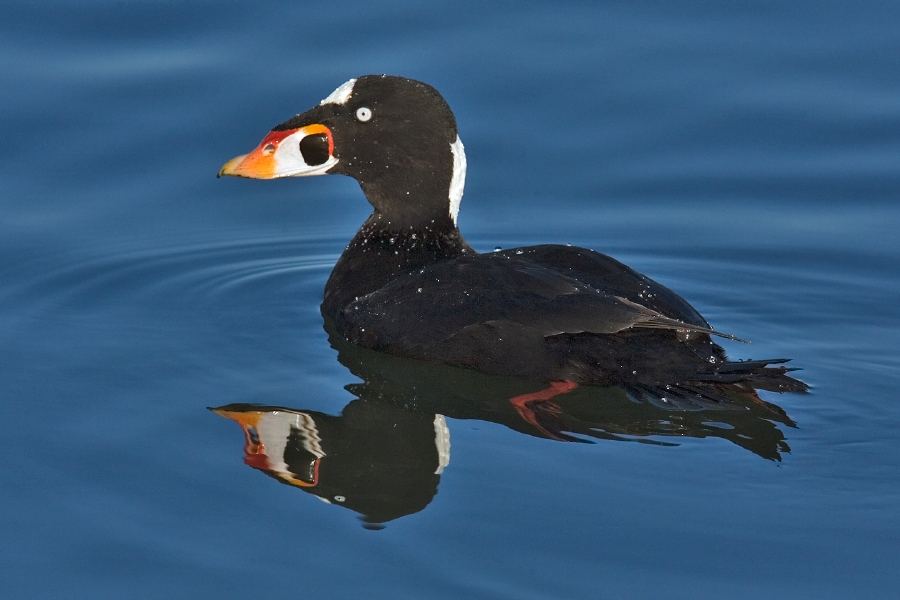
Photo: Alan D. Wilson · CC BY-SA 2.5 (May be cropped or resized)
Melanitta perspicillata
U.S. national list: unknown
Basic stats
Diet
Bottom-dwelling invertebrates, especially mussels
Habitat
Northern freshwater lakes for breeding; nearshore marine waters in winter
Range
Breeds in northern Canada and Alaska; winters mainly along North American coasts
Clutch size
5–9 eggs
Wingspan
76–77cm
Weight
Averages about 1096g
The male Surf Scoter is a black sea duck with white patches on its forehead and nape and a swollen, brightly patterned bill. Females are browner with paler cheek patches and a dark bill. The wings are entirely dark in flight. Its wingspan is 76–77 cm and its average mass is about 1,096 g (Wikipedia, general species account; AVONET, Tobias et al. 2022).
It breeds near freshwater lakes in northern Canada and Alaska and winters mainly along the Atlantic and Pacific coasts of North America. The scoter dives for bottom-dwelling invertebrates, including mussels. Females make a ground nest lined with debris and down, usually near water, and lay about five to nine eggs. Pairs generally form before reaching their breeding grounds (Wikipedia, general species account).
Where to see Surf Scoter in the USA
GBIF records grouped by protected area. They show where the species has been reported, not that it is there now, and they are not population counts.
Recorded in 1,505 protected areas (1870–2026). The 8 with the most records:
- Monterey Bay National Marine Sanctuary: 70,925 records (1893–2026)
- Greater Farallones National Marine Sanctuary: 27,668 records (1927–2026)
- Golden Gate National Recreation Area: 17,724 records (1870–2026)
- Point Reyes National Seashore: 16,848 records (1870–2026)
- Asilomar State Marine Reserve: 13,509 records (1978–2024)
- Pacific Grove Marine Gardens State Marine Conservation Area: 13,472 records (1970–2024)
- Bolsa Chica Ecological Reserve: 9,913 records (1899–2026)
- Southeast Farallon Island State Marine Reserve: 8,522 records (1968–2024)
Quick answers
- What does the Surf Scoter eat?
- Bottom-dwelling invertebrates, especially mussels
- What habitat does the Surf Scoter live in?
- Northern freshwater lakes for breeding; nearshore marine waters in winter
- Where is the Surf Scoter found?
- Breeds in northern Canada and Alaska; winters mainly along North American coasts
- How many eggs does the Surf Scoter lay?
- 5–9 eggs
- What is the wingspan of the Surf Scoter?
- 76–77cm
- How much does the Surf Scoter weigh?
- Averages about 1096g