
 Wildlife
of USA
Snow Goose
Waterfowl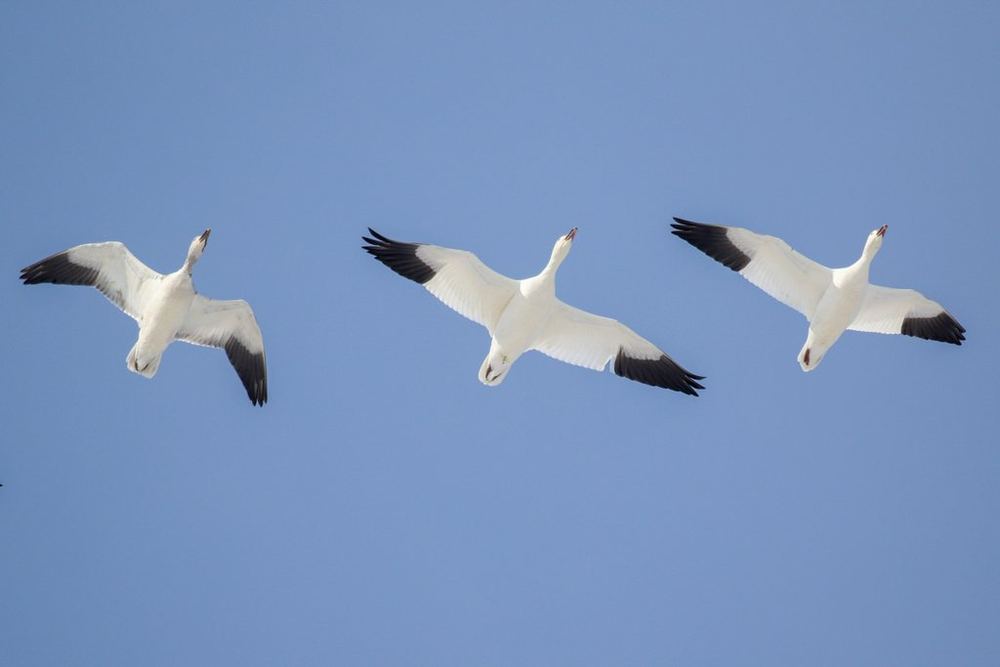
Photo: (c) Tom Field, some rights reserved (CC BY) · CC BY 4.0 (May be cropped or resized)
Anser caerulescens
U.S. national list: unknown
Basic stats
Diet
Mostly plant material
Habitat
Arctic tundra near water; winter farmland, pasture and coastal marsh
Range
Breeds in Greenland, northern Canada, Alaska and northeastern Siberia; winters across temperate North America to Mexico
Clutch size
Usually 3–5 eggs
Incubation period
About 22–25 days
Size
64–79cm
Wingspan
135–165cm
Weight
Averages about 2636g
The Snow Goose occurs in white and dark blue-grey forms. White birds retain black wingtips, while dark birds have a white head, neck and tail tip; both forms have pink legs and a pink bill edged in black. The smaller subspecies stands 64–79 cm, and wingspan across the species is 135–165 cm. AVONET records an average mass of about 2,636 g (Wikipedia, general species account; AVONET, Tobias et al. 2022).
It breeds beyond the tree line in Greenland, northern Canada, Alaska and northeastern Siberia, then winters across temperate North America south to Mexico. Tundra close to water is used for nesting, while winter flocks graze farmland, pasture and coastal marshes. Other plant material supplies 90% of the EltonTraits diet profile. The female lines a shallow ground nest with vegetation and down, lays three to five eggs and incubates them for 22–25 days (Wikipedia, general species account; EltonTraits, Wilman et al. 2014; Collins Birds of the World).
Where to see Snow Goose in the USA
GBIF records grouped by protected area. They show where the species has been reported, not that it is there now, and they are not population counts.
Recorded in 3,326 protected areas (1875–2026). The 8 with the most records:
- Pinelands National Reserve: 21,208 records (1925–2026)
- Jacques Cousteau National Estuarine Research Reserve: 19,385 records (1955–2026)
- Brigantine National Wildlife Refuge: 19,266 records (1955–2026)
- Edwin B. Forsythe National Wildlife Refuge: 19,249 records (1955–2026)
- Bosque del Apache National Wildlife Refuge: 16,365 records (1963–2026)
- Bombay Hook National Wildlife Refuge: 12,696 records (1884–2026)
- State Game Lands Number 46: 10,636 records (1971–2026)
- Middle Creek Wildlife Management Area: 10,613 records (1971–2026)
Quick answers
- What does the Snow Goose eat?
- Mostly plant material
- What habitat does the Snow Goose live in?
- Arctic tundra near water; winter farmland, pasture and coastal marsh
- Where is the Snow Goose found?
- Breeds in Greenland, northern Canada, Alaska and northeastern Siberia; winters across temperate North America to Mexico
- How many eggs does the Snow Goose lay?
- Usually 3–5 eggs
- How long are the eggs of the Snow Goose incubated?
- About 22–25 days
- How big is the Snow Goose?
- 64–79cm
- What is the wingspan of the Snow Goose?
- 135–165cm
- How much does the Snow Goose weigh?
- Averages about 2636g