
 Wildlife
of USA
Short-eared Owl
Owls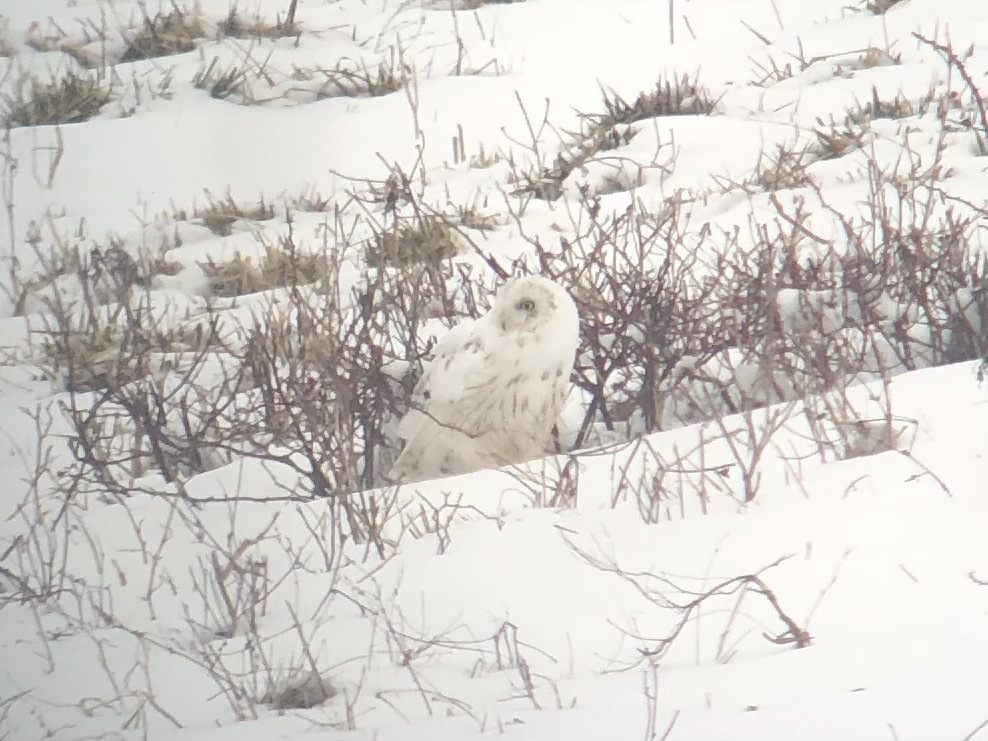
Photo: (c) ecovore, some rights reserved (CC BY) · CC BY 4.0 (May be cropped or resized)
Asio flammeus
U.S. national list: unknown
Basic stats
Diet
Mostly rodents, especially voles, with other small mammals and occasional birds
Habitat
Open grassland, tundra, marshes, savanna and meadow
Range
Widespread across every continent except Antarctica and Australia
Clutch size
Usually 4–7 eggs
Incubation period
21–37 days
Size
34–43cm
Wingspan
85–110cm
Weight
Averages about 323g
The Short-eared Owl is a medium-sized, long-winged owl of open country. Its plumage is mottled tawny-brown, with a streaked upper breast, barred wings and tail, pale facial discs and yellow eyes enclosed by dark markings. The tiny ear tufts usually remain hidden. Loose, irregular wingbeats give its low hunting flight a buoyant quality. It measures 34–43 cm, spans 85–110 cm and averages about 323 g (Wikipedia, general species account; AVONET, Tobias et al. 2022).
Across its nearly worldwide range, the species occupies grassland, tundra, marsh, savanna and meadow, moving nomadically when rodent numbers change. Hunting occurs by day, at dusk and at night, with birds quartering low over open ground before dropping onto prey. Voles and other rodents dominate the diet, supplemented by other small mammals and occasional birds. The ground nest is hidden in low growth; four to seven eggs are usual, and incubation lasts 21–37 days (Wikipedia, general species account; EltonTraits, Wilman et al. 2014).
Where to see Short-eared Owl in the USA
GBIF records grouped by protected area. They show where the species has been reported, not that it is there now, and they are not population counts.
Recorded in 1,313 protected areas (1849–2026). The 8 with the most records:
- Shawangunk Grasslands National Wildlife Refuge: 2,755 records (1976–2026)
- Pinelands National Reserve: 2,516 records (1915–2026)
- Parker River National Wildlife Refuge: 2,214 records (1969–2026)
- Samish River Wildlife Area: 1,729 records (1996–2026)
- Brigantine National Wildlife Refuge: 1,542 records (1966–2026)
- Edwin B. Forsythe National Wildlife Refuge: 1,529 records (1966–2026)
- Kaʻohe State Lease: 1,426 records (1983–2024)
- Jacques Cousteau National Estuarine Research Reserve: 1,417 records (1966–2026)
Quick answers
- What does the Short-eared Owl eat?
- Mostly rodents, especially voles, with other small mammals and occasional birds
- What habitat does the Short-eared Owl live in?
- Open grassland, tundra, marshes, savanna and meadow
- Where is the Short-eared Owl found?
- Widespread across every continent except Antarctica and Australia
- How many eggs does the Short-eared Owl lay?
- Usually 4–7 eggs
- How long are the eggs of the Short-eared Owl incubated?
- 21–37 days
- How big is the Short-eared Owl?
- 34–43cm
- What is the wingspan of the Short-eared Owl?
- 85–110cm
- How much does the Short-eared Owl weigh?
- Averages about 323g