
 Wildlife
of USA
Lesser Scaup
Waterfowl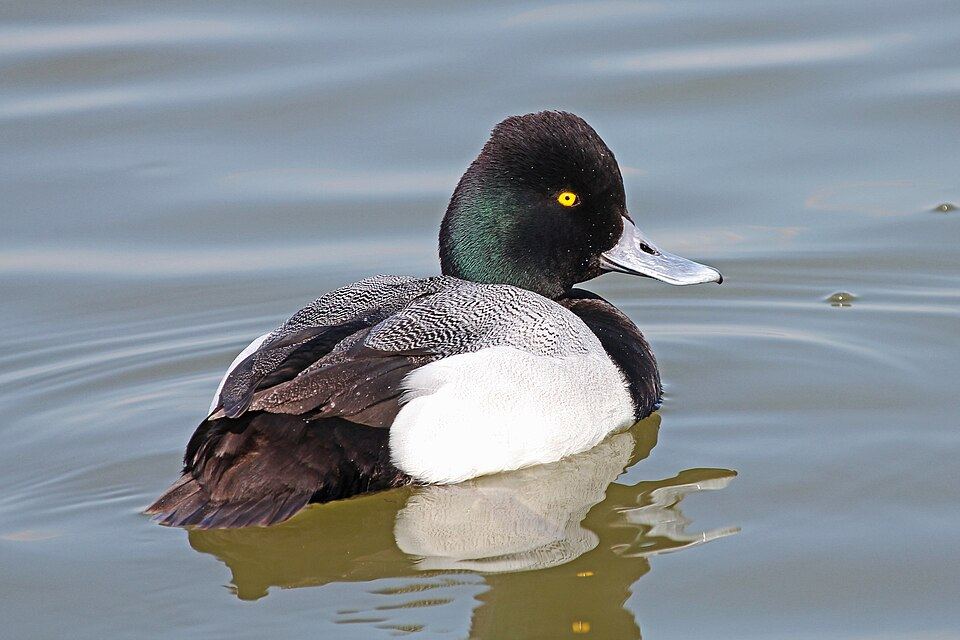
Photo: Judy Gallagher · CC BY 2.0 (May be cropped or resized)
Aythya affinis
U.S. national list: unknown
Basic stats
Diet
Other plant material, seeds and invertebrates
Habitat
Freshwater breeding lakes and pools; winter lakes, estuaries and sheltered coasts
Range
Breeds across Alaska and western Canada; winters south through North America to Central America and northern South America
Clutch size
About 10 eggs
Incubation period
About 24 days
Size
38–48cm
Wingspan
68–78cm
Weight
Averages about 820g
The Lesser Scaup is a 38–48 cm diving duck with a 68–78 cm wingspan and broad blue-grey bill. Males have a dark iridescent head, black breast, pale finely patterned back and white flanks. Females are dark brown with white around the bill base. AVONET records an average mass of about 820 g, close to its male mean and slightly above AnAge (Wikipedia, general species account; AVONET, Tobias et al. 2022; AnAge).
It breeds on inland lakes and Arctic marsh pools across Alaska and western Canada, wintering south through North America to Central America and northern South America. Winter habitat includes lakes, rivers, estuaries and sheltered coasts. Other plant matter supplies 50%, seeds 30% and invertebrates 20% in EltonTraits. Birds obtain food by diving and often gather in flocks. AnAge reports a clutch near ten eggs and incubation of about 24 days (Wikipedia, general species account; EltonTraits, Wilman et al. 2014; AnAge).
Where to see Lesser Scaup in the USA
GBIF records grouped by protected area. They show where the species has been reported, not that it is there now, and they are not population counts.
Recorded in 4,309 protected areas (1874–2026). The 8 with the most records:
- Bolsa Chica Ecological Reserve: 13,553 records (1898–2026)
- Merritt Island National Wildlife Refuge: 11,774 records (1967–2025)
- Hornsby Bend Ecological Research Area: 7,579 records (1959–2026)
- Saint Marks National Wildlife Refuge (Panacea Unit): 7,491 records (1926–2026)
- St. Marks National Wildlife Refuge: 7,463 records (1926–2026)
- Minnesota Valley National Wildlife Refuge: 6,968 records (1967–2025)
- Yellowstone National Park: 6,758 records (1958–2026)
- Patagonia Lake State Park: 6,168 records (1971–2025)
Quick answers
- What does the Lesser Scaup eat?
- Other plant material, seeds and invertebrates
- What habitat does the Lesser Scaup live in?
- Freshwater breeding lakes and pools; winter lakes, estuaries and sheltered coasts
- Where is the Lesser Scaup found?
- Breeds across Alaska and western Canada; winters south through North America to Central America and northern South America
- How many eggs does the Lesser Scaup lay?
- About 10 eggs
- How long are the eggs of the Lesser Scaup incubated?
- About 24 days
- How big is the Lesser Scaup?
- 38–48cm
- What is the wingspan of the Lesser Scaup?
- 68–78cm
- How much does the Lesser Scaup weigh?
- Averages about 820g