
 Wildlife
of USA
American Black Duck
Waterfowl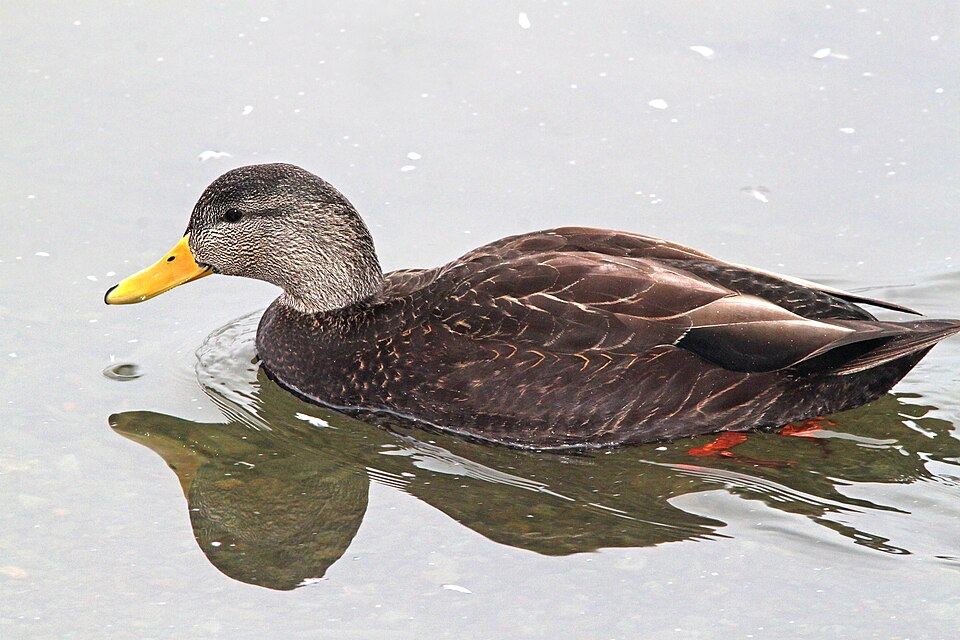
Photo: ALAN SCHMIERER · CC0
Anas rubripes
U.S. national list: unknown
Basic stats
Diet
Wetland plants, seeds and invertebrates
Habitat
Freshwater and coastal wetlands, marshes, ponds, swamps and fields
Range
Eastern North America
Clutch size
About 9 eggs
Incubation period
28 days
Size
54–59cm
Wingspan
88–95cm
Weight
Averages about 1241g
The American Black Duck is a large dabbling duck with dark plumage, a brown head and a violet-blue speculum bordered mostly in black. The male has a yellow bill, while the female's bill is dull green with dark marks. It is native to eastern North America, ranging from northeastern Canada through the Great Lakes and Atlantic states, with seasonal movement toward eastern and coastal wintering areas (Wikipedia, general species account).
Tidal and freshwater marshes, brackish edges, estuaries, ponds, bogs, forested swamps and agricultural wetlands are all used. Feeding combines wetland grasses and sedges, aquatic plant parts, seeds and animal foods such as mollusks, insects and small fish. The bird dabbles in shallow water and grazes on land. AnAge gives a clutch estimate of nine eggs and 28 days of incubation; AVONET records an average mass of about 1241 g (EltonTraits, Wilman et al. 2014; AnAge; AVONET, Tobias et al. 2022).
Where to see American Black Duck in the USA
GBIF records grouped by protected area. They show where the species has been reported, not that it is there now, and they are not population counts.
Recorded in 2,734 protected areas (1883–2026). The 8 with the most records:
- Pinelands National Reserve: 61,462 records (1901–2026)
- Brigantine National Wildlife Refuge: 43,964 records (1883–2026)
- Parker River National Wildlife Refuge: 43,819 records (1955–2026)
- Jacques Cousteau National Estuarine Research Reserve: 43,513 records (1883–2026)
- Edwin B. Forsythe National Wildlife Refuge: 43,439 records (1883–2026)
- Gateway National Recreation Area: 26,105 records (1957–2026)
- Jamaica Bay Unit: 25,442 records (1957–2026)
- Bombay Hook National Wildlife Refuge: 20,161 records (1939–2026)
Quick answers
- What does the American Black Duck eat?
- Wetland plants, seeds and invertebrates
- What habitat does the American Black Duck live in?
- Freshwater and coastal wetlands, marshes, ponds, swamps and fields
- Where is the American Black Duck found?
- Eastern North America
- How many eggs does the American Black Duck lay?
- About 9 eggs
- How long are the eggs of the American Black Duck incubated?
- 28 days
- How big is the American Black Duck?
- 54–59cm
- What is the wingspan of the American Black Duck?
- 88–95cm
- How much does the American Black Duck weigh?
- Averages about 1241g