
 Wildlife
of USA
Greater Yellowlegs
Shorebirds & Sandpipers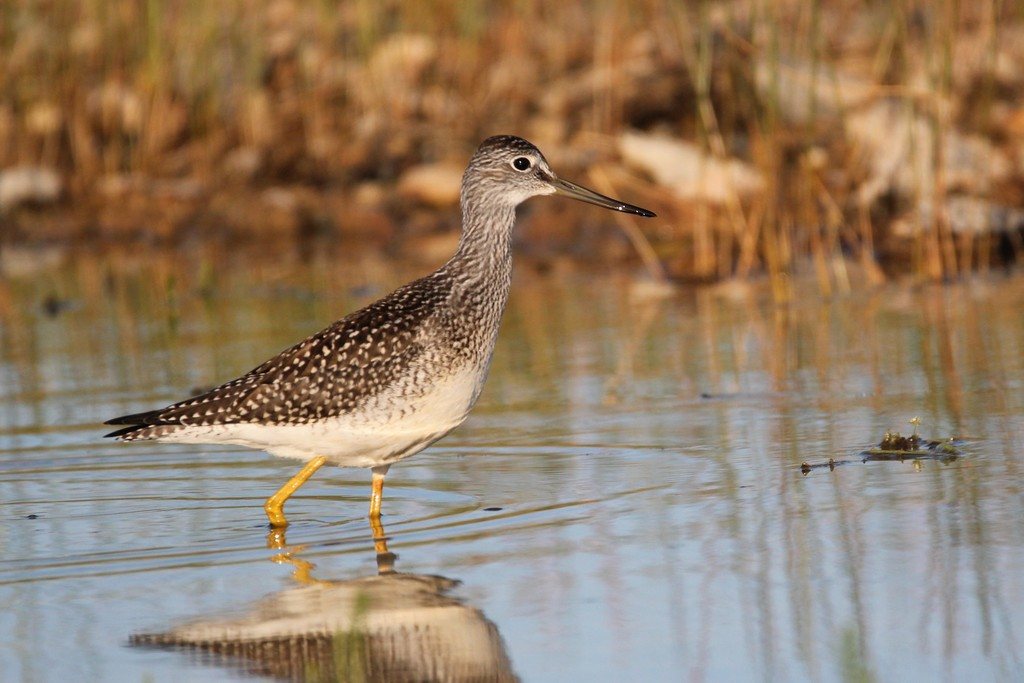
Photo: (c) Quinten Wiegersma, some rights reserved (CC BY) · CC BY 4.0 (May be cropped or resized)
Tringa melanoleuca
U.S. national list: unknown
Basic stats
Diet
Mostly aquatic invertebrates, with fish
Habitat
Breeds around forest bogs; winters on freshwater and brackish wetlands
Range
Breeds in Alaska and Canada; winters from the southern United States to South America
Size
29–33cm
Weight
Averages about 162g
The Greater Yellowlegs is a tall shorebird, 29–33 cm long, resembling the smaller Lesser Yellowlegs. In flight it shows unpatterned wings, a square white rump and toes projecting well beyond the tail. AVONET records an average mass of about 162 g and classifies it as a migratory wetland aquatic predator with a terrestrial lifestyle (AVONET, Tobias et al. 2022; Collins Birds of the World).
The species breeds around forest bogs from southern Alaska across Canada and winters from the southern United States through South America. Outside the breeding season it uses many freshwater and brackish wetlands. Aquatic invertebrates form 80% of its EltonTraits diet profile and fish 20%. It feeds by wading and taking prey from shallow water and exposed wet substrates (EltonTraits, Wilman et al. 2014; Collins Birds of the World).
Where to see Greater Yellowlegs in the USA
GBIF records grouped by protected area. They show where the species has been reported, not that it is there now, and they are not population counts.
Recorded in 4,422 protected areas (1882–2026). The 8 with the most records:
- Pinelands National Reserve: 40,540 records (1923–2026)
- Parker River National Wildlife Refuge: 34,067 records (1955–2026)
- Jacques Cousteau National Estuarine Research Reserve: 25,703 records (1923–2026)
- Bombay Hook National Wildlife Refuge: 24,984 records (1939–2026)
- Brigantine National Wildlife Refuge: 24,862 records (1940–2026)
- Edwin B. Forsythe National Wildlife Refuge: 24,805 records (1940–2026)
- Montezuma National Wildlife Refuge: 19,242 records (1942–2025)
- Merritt Island National Wildlife Refuge: 18,357 records (1921–2026)
Quick answers
- What does the Greater Yellowlegs eat?
- Mostly aquatic invertebrates, with fish
- What habitat does the Greater Yellowlegs live in?
- Breeds around forest bogs; winters on freshwater and brackish wetlands
- Where is the Greater Yellowlegs found?
- Breeds in Alaska and Canada; winters from the southern United States to South America
- How big is the Greater Yellowlegs?
- 29–33cm
- How much does the Greater Yellowlegs weigh?
- Averages about 162g