
 Wildlife
of USA
Lesser Yellowlegs
Shorebirds & Sandpipers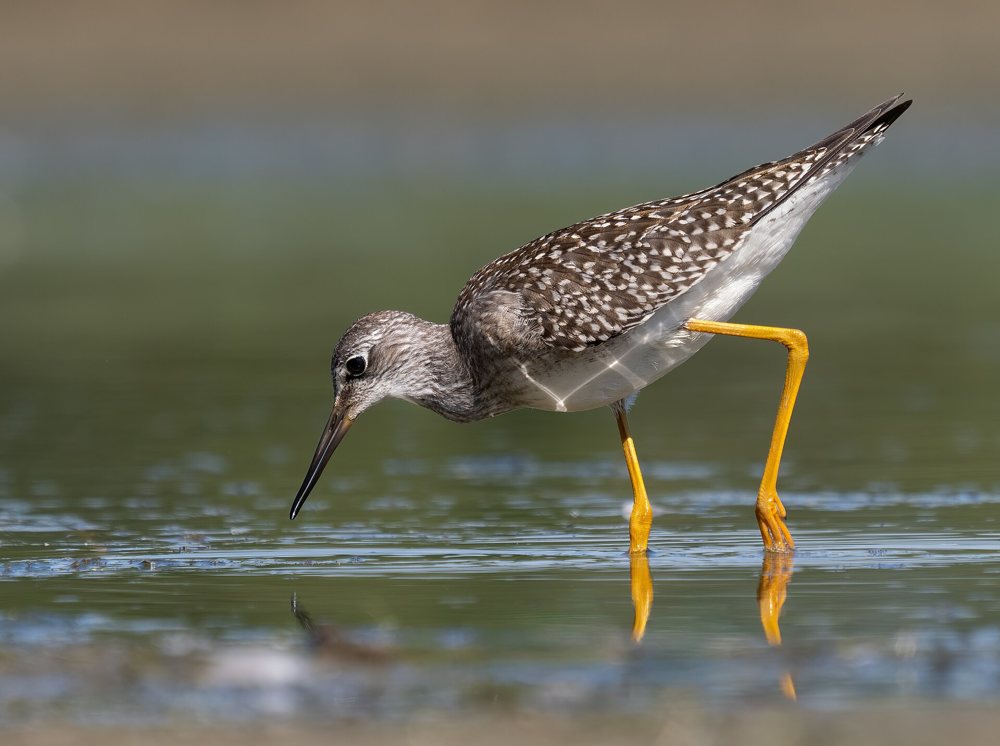
Photo: Rhododendrites · CC BY-SA 4.0 (May be cropped or resized)
Tringa flavipes
U.S. national list: unknown
Basic stats
Diet
Aquatic invertebrates
Habitat
Marshes, mudflats, ponds and shallow wetlands
Range
Breeds in boreal North America; winters from coastal North America through Central America to South America
Clutch size
Averages about 2 eggs
Incubation period
Averages about 23 days
Size
23–25cm
Wingspan
59–64cm
Weight
Averages about 78g
The Lesser Yellowlegs is a slender shorebird, 23–25 cm long with a 59–64 cm wingspan. Bright yellow legs, a straight dark bill about as long as the head and finely patterned grey-brown upperparts distinguish it from the bulkier Greater Yellowlegs. The sexes look alike. AVONET gives an average body mass of about 78 g (Wikipedia, general species account; AVONET, Tobias et al. 2022).
It breeds around bogs and pond clearings in boreal North America and winters from southern North America through Central America and the Caribbean to South America. Birds forage actively in shallow water or on wet ground, taking invertebrates with quick pecks and occasional probing or sweeping movements. Both parents incubate and tend the mobile young. Incubation averages about 23 days (Wikipedia, general species account; EltonTraits, Wilman et al. 2014; AnAge).
Where to see Lesser Yellowlegs in the USA
GBIF records grouped by protected area. They show where the species has been reported, not that it is there now, and they are not population counts.
Recorded in 3,668 protected areas (1887–2026). The 8 with the most records:
- Pinelands National Reserve: 20,426 records (1925–2026)
- Bombay Hook National Wildlife Refuge: 19,358 records (1951–2026)
- Montezuma National Wildlife Refuge: 18,101 records (1942–2026)
- Parker River National Wildlife Refuge: 16,571 records (1963–2025)
- Merritt Island National Wildlife Refuge: 14,774 records (1921–2026)
- Jacques Cousteau National Estuarine Research Reserve: 13,621 records (1928–2026)
- Brigantine National Wildlife Refuge: 13,433 records (1940–2026)
- Edwin B. Forsythe National Wildlife Refuge: 13,386 records (1940–2026)
Quick answers
- What does the Lesser Yellowlegs eat?
- Aquatic invertebrates
- What habitat does the Lesser Yellowlegs live in?
- Marshes, mudflats, ponds and shallow wetlands
- Where is the Lesser Yellowlegs found?
- Breeds in boreal North America; winters from coastal North America through Central America to South America
- How many eggs does the Lesser Yellowlegs lay?
- Averages about 2 eggs
- How long are the eggs of the Lesser Yellowlegs incubated?
- Averages about 23 days
- How big is the Lesser Yellowlegs?
- 23–25cm
- What is the wingspan of the Lesser Yellowlegs?
- 59–64cm
- How much does the Lesser Yellowlegs weigh?
- Averages about 78g