
 Wildlife
of USA
Glaucous Gull
Gulls, Terns & Jaegers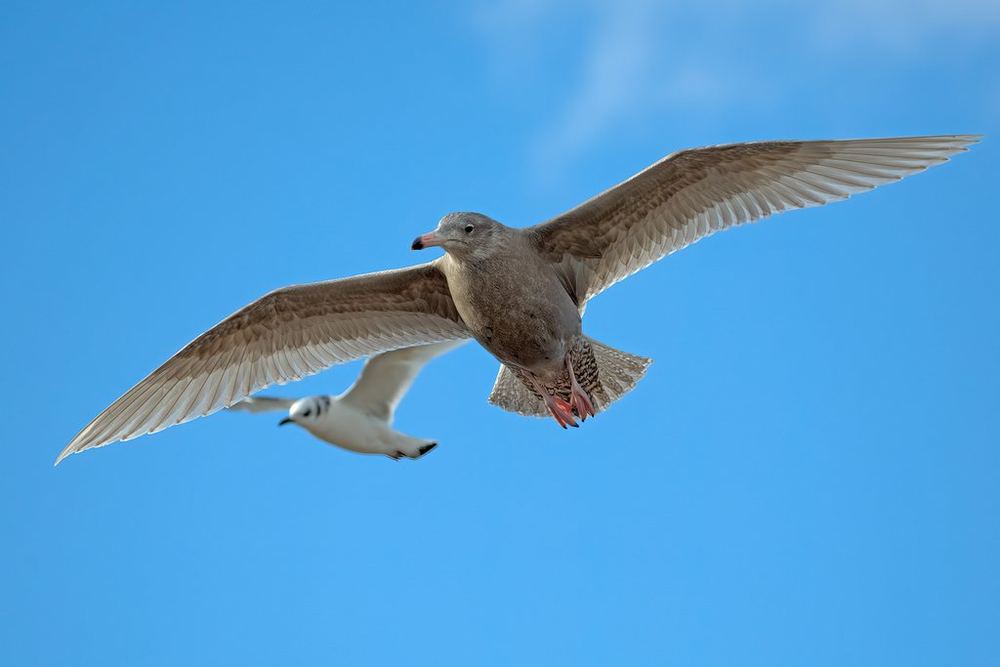
Photo: (c) Nigel Voaden, some rights reserved (CC BY) · CC BY 4.0 (May be cropped or resized)
Larus hyperboreus
U.S. national list: unknown
Basic stats
Diet
Fish, invertebrates, small vertebrates and carrion
Habitat
Coastal cliffs and islands, open shoreland and winter harbours
Range
Northern coasts of Eurasia and North America
Clutch size
3 eggs
Incubation period
About 27 days
Size
64–77cm
Weight
Averages about 1529g
The Glaucous Gull is a massive, broad-winged gull, 64–77 cm long, with a slower, more lumbering flight than the smaller Iceland Gull. AVONET records an average mass of about 1,529 g and classifies it as a migratory coastal omnivore. It is an assertive scavenger and generally quiet outside breeding areas (AVONET, Tobias et al. 2022; Collins Birds of the World).
Across northern Eurasian and North American coasts, it breeds on sea and inland cliffs, offshore islands and open coastal land. Winter birds frequent shores, harbours and inland refuse sites. Fish form 30% of its EltonTraits diet profile; invertebrates, endothermic vertebrates and carrion each contribute 20%. AnAge records three eggs and approximately 27 days of incubation (EltonTraits, Wilman et al. 2014; AnAge).
Where to see Glaucous Gull in the USA
GBIF records grouped by protected area. They show where the species has been reported, not that it is there now, and they are not population counts.
Recorded in 616 protected areas (1893–2026). The 8 with the most records:
- National Petroleum Reserve–Alaska: 25,335 records (1897–2024)
- Yukon Delta National Wildlife Refuge: 8,546 records (1950–2024)
- Arctic National Wildlife Refuge: 3,620 records (1976–2024)
- Alaska Maritime National Wildlife Refuge: 1,105 records (1913–2024)
- Monterey Bay National Marine Sanctuary: 812 records (1893–2024)
- Niagara Falls State Park: 727 records (1979–2024)
- Marquette Underwater Preserve: 578 records (2003–2024)
- Greater Farallones National Marine Sanctuary: 528 records (1969–2024)
Quick answers
- What does the Glaucous Gull eat?
- Fish, invertebrates, small vertebrates and carrion
- What habitat does the Glaucous Gull live in?
- Coastal cliffs and islands, open shoreland and winter harbours
- Where is the Glaucous Gull found?
- Northern coasts of Eurasia and North America
- How many eggs does the Glaucous Gull lay?
- 3 eggs
- How long are the eggs of the Glaucous Gull incubated?
- About 27 days
- How big is the Glaucous Gull?
- 64–77cm
- How much does the Glaucous Gull weigh?
- Averages about 1529g