
 Wildlife
of USA
Parasitic Jaeger
Gulls, Terns & Jaegers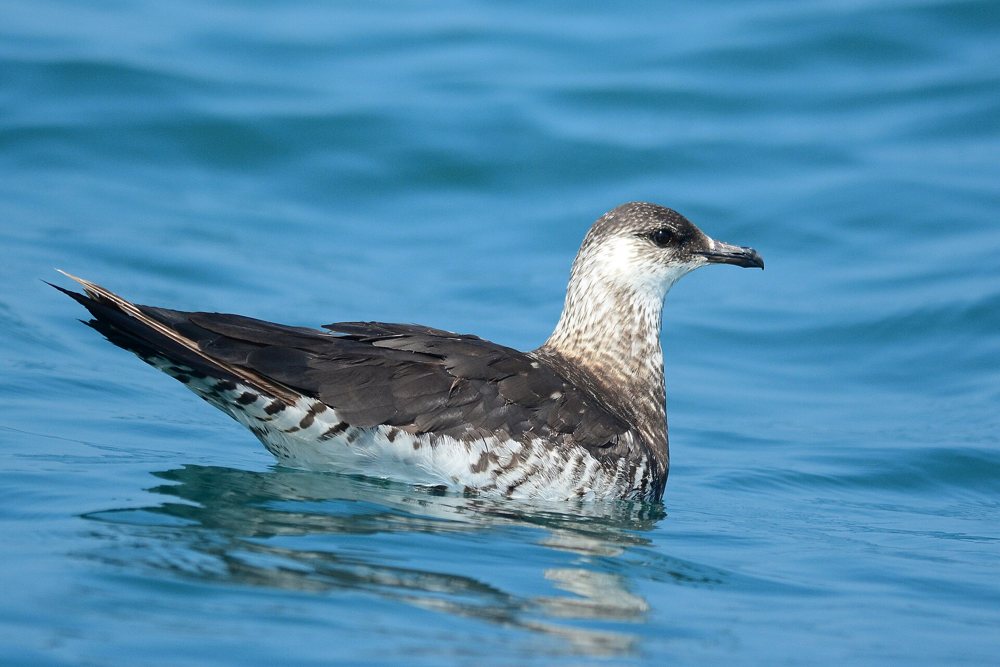
Photo: Jinesh PS · CC BY-SA 4.0 (May be cropped or resized)
Stercorarius parasiticus
U.S. national list: unknown
Basic stats
Diet
Fish obtained by piracy, plus small birds, eggs, rodents and insects
Habitat
Dry tundra and northern islands when breeding; chiefly marine waters at other seasons
Range
Breeds across northern Eurasia and North America; winters over tropical and Southern Hemisphere seas
Clutch size
Usually 2 eggs
Incubation period
About 26 days
Size
41–48cm
Wingspan
107–125cm
Weight
Averages about 444g
The Parasitic Jaeger is a relatively small skua occurring in light, dark and intermediate colour forms. Light adults show a brown back, pale underparts, a dark cap and pointed central tail feathers, while dark birds are mostly deep brown. Every morph has a white flash across the primaries. Juveniles are especially difficult to separate from other jaegers. Adults measure 41–48 cm, span 107–125 cm and average about 444 g (Wikipedia, general species account; AVONET, Tobias et al. 2022).
Across its range, the species breeds on tundra, uplands and northern islands in Eurasia and North America, then migrates over tropical and southern oceans. During migration and winter it often chases gulls and terns until they surrender captured food. On the breeding grounds it also takes rodents, insects, eggs, chicks and small birds. The usual clutch is two eggs, with incubation averaging about 26 days (Wikipedia, general species account; AnAge).
Where to see Parasitic Jaeger in the USA
GBIF records grouped by protected area. They show where the species has been reported, not that it is there now, and they are not population counts.
Recorded in 452 protected areas (1874–2026). The 8 with the most records:
- Monterey Bay National Marine Sanctuary: 19,447 records (1910–2026)
- National Petroleum Reserve–Alaska: 7,958 records (1898–2024)
- Greater Farallones National Marine Sanctuary: 2,364 records (1972–2024)
- Arctic National Wildlife Refuge: 1,929 records (1983–2024)
- Pacific Grove Marine Gardens State Marine Conservation Area: 1,921 records (1910–2024)
- Asilomar State Marine Reserve: 1,893 records (1971–2024)
- Cape May Point State Park: 1,609 records (1976–2024)
- Yukon Delta National Wildlife Refuge: 1,565 records (1968–2024)
Quick answers
- What does the Parasitic Jaeger eat?
- Fish obtained by piracy, plus small birds, eggs, rodents and insects
- What habitat does the Parasitic Jaeger live in?
- Dry tundra and northern islands when breeding; chiefly marine waters at other seasons
- Where is the Parasitic Jaeger found?
- Breeds across northern Eurasia and North America; winters over tropical and Southern Hemisphere seas
- How many eggs does the Parasitic Jaeger lay?
- Usually 2 eggs
- How long are the eggs of the Parasitic Jaeger incubated?
- About 26 days
- How big is the Parasitic Jaeger?
- 41–48cm
- What is the wingspan of the Parasitic Jaeger?
- 107–125cm
- How much does the Parasitic Jaeger weigh?
- Averages about 444g