
 Wildlife
of USA
Black-legged Kittiwake
Gulls, Terns & Jaegers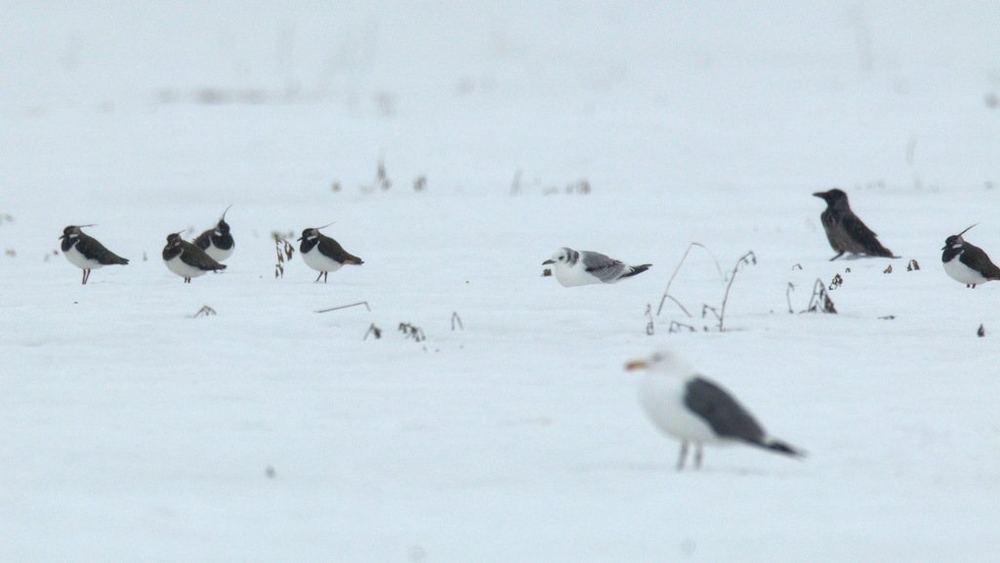
Photo: (c) Вячеслав Юсупов, some rights reserved (CC BY) · CC BY 4.0 (May be cropped or resized)
Rissa tridactyla
U.S. national list: unknown
Basic stats
Diet
Fish, marine invertebrates and other small animals
Habitat
Open sea and coastal nesting cliffs
Range
Arctic and subarctic North Atlantic and North Pacific, dispersing farther south in winter
Clutch size
Averages about 2 eggs
Incubation period
Averages about 27 days
Size
37–41cm
Wingspan
91–105cm
Weight
Averages about 416g
The Black-legged Kittiwake is a compact oceanic gull, 37–41 cm long with a 91–105 cm wingspan and an average AVONET mass of 416 g. Adults have a white head and body, grey back and wings, solid black wingtips, black legs and a yellow bill. In winter, a grey mark appears behind the eye and the hindneck becomes greyer (Wikipedia, general species account; AVONET, Tobias et al. 2022).
Across Arctic and subarctic North Atlantic and North Pacific waters, it spends most of the year at sea and comes ashore mainly to breed on steep coastal cliffs. Fish and marine invertebrates dominate the diet, with other small animals also substantial. Birds nest colonially on narrow ledges, where their carrying calls create a noisy breeding colony. Clutches average two eggs and incubation about 27 days (Wikipedia, general species account; EltonTraits, Wilman et al. 2014; AnAge).
Where to see Black-legged Kittiwake in the USA
GBIF records grouped by protected area. They show where the species has been reported, not that it is there now, and they are not population counts.
Recorded in 444 protected areas (1897–2026). The 8 with the most records:
- Monterey Bay National Marine Sanctuary: 4,750 records (1910–2025)
- Alaska Maritime National Wildlife Refuge: 3,347 records (1931–2026)
- Glacier Bay National Park and Preserve: 3,043 records (1968–2026)
- National Petroleum Reserve–Alaska: 2,872 records (1897–2024)
- Tongass National Forest: 1,997 records (1941–2026)
- Asilomar State Marine Reserve: 1,637 records (1970–2024)
- Pacific Grove Marine Gardens State Marine Conservation Area: 1,605 records (1970–2024)
- Greater Farallones National Marine Sanctuary: 1,382 records (1969–2024)
Quick answers
- What does the Black-legged Kittiwake eat?
- Fish, marine invertebrates and other small animals
- What habitat does the Black-legged Kittiwake live in?
- Open sea and coastal nesting cliffs
- Where is the Black-legged Kittiwake found?
- Arctic and subarctic North Atlantic and North Pacific, dispersing farther south in winter
- How many eggs does the Black-legged Kittiwake lay?
- Averages about 2 eggs
- How long are the eggs of the Black-legged Kittiwake incubated?
- Averages about 27 days
- How big is the Black-legged Kittiwake?
- 37–41cm
- What is the wingspan of the Black-legged Kittiwake?
- 91–105cm
- How much does the Black-legged Kittiwake weigh?
- Averages about 416g