
 Wildlife
of USA
Northern Red-backed Vole
Rats, Mice, Voles & Pocket Gophers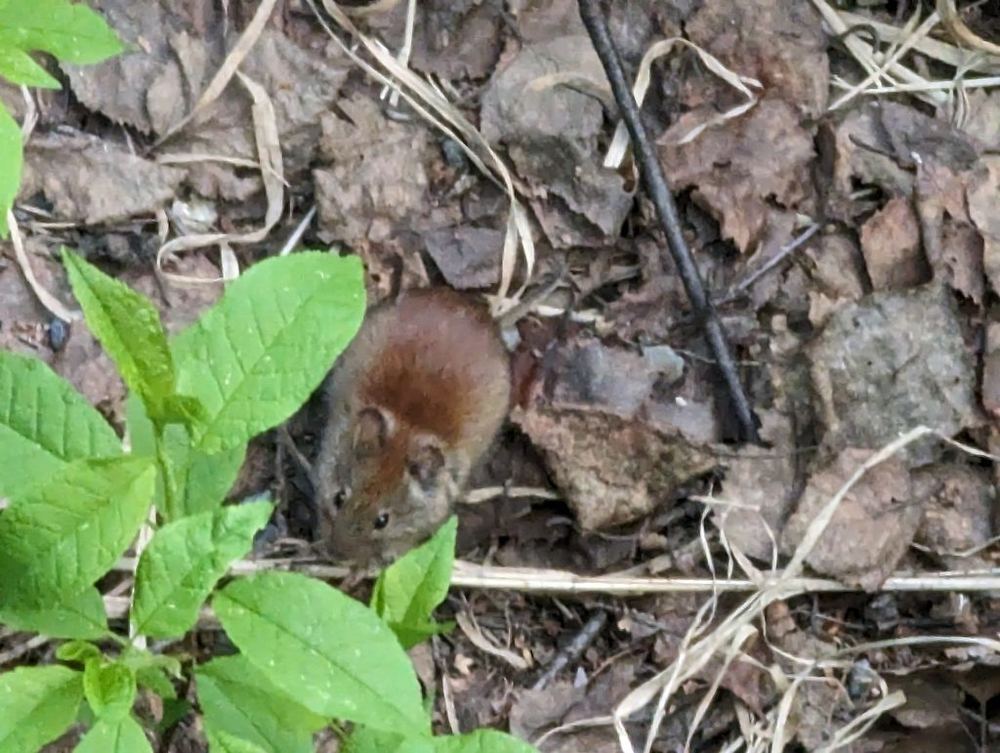
Photo: Matt Muir · CC BY 4.0 (May be cropped or resized)
Clethrionomys rutilus
U.S. national list: unknown
Basic stats
Diet
Berries, fungi and varied plant matter; occasional insects
Habitat
Northern forest, shrubland and tundra with dense ground cover
Size
About 14 cm, plus a 3.5 cm tail
Weight
About 30–40 g
The northern red-backed vole is a small, slender vole with a conspicuous rust-coloured band along the back. Its sides and underparts are light brown, the tail is short and thick, and its small ears remain visible through the fur. Adults are about 14 centimetres long with a tail near 3.5 centimetres and commonly weigh 30–40 grams. The warm dorsal stripe, compact body and visible ears help distinguish it from more uniformly coloured northern voles. (Wikipedia, northern red-backed vole account)
This vole inhabits northern shrubland, open taiga, mature forest and tundra, favouring dense moss or vegetation that provides shelter. It remains active all winter, using runways beneath snow and nesting under roots, rocks or thick moss. Berries are important foods, supplemented by fungi, green plants, mosses, lichens and occasional insects. Breeding generally runs from May to August, when females may produce two or three litters. The species occurs in Mongolia. (Wikipedia, northern red-backed vole account)
Where to see Northern Red-backed Vole in the USA
GBIF records grouped by protected area. They show where the species has been reported, not that it is there now, and they are not population counts.
Recorded in 43 protected areas (1896–2025). The 8 with the most records:
- Gates of the Arctic National Park and Preserve: 340 records (1948–2014)
- Glacier Bay National Park and Preserve: 298 records (1943–2006)
- Glacier Bay Wilderness: 277 records (1943–1988)
- Arctic National Wildlife Refuge: 253 records (1952–2017)
- Kobuk Valley National Park: 186 records (2014)
- Gates of the Arctic Wilderness: 150 records (1948–2014)
- National Petroleum Reserve–Alaska: 102 records (1931–1967)
- Tongass National Forest: 88 records (1936–2023)
Quick answers
- What does the Northern Red-backed Vole eat?
- Berries, fungi and varied plant matter; occasional insects
- What habitat does the Northern Red-backed Vole live in?
- Northern forest, shrubland and tundra with dense ground cover
- How big is the Northern Red-backed Vole?
- About 14 cm, plus a 3.5 cm tail
- How much does the Northern Red-backed Vole weigh?
- About 30–40 g