
 Wildlife
of USA
Common Muskrat
Rats, Mice, Voles & Pocket Gophers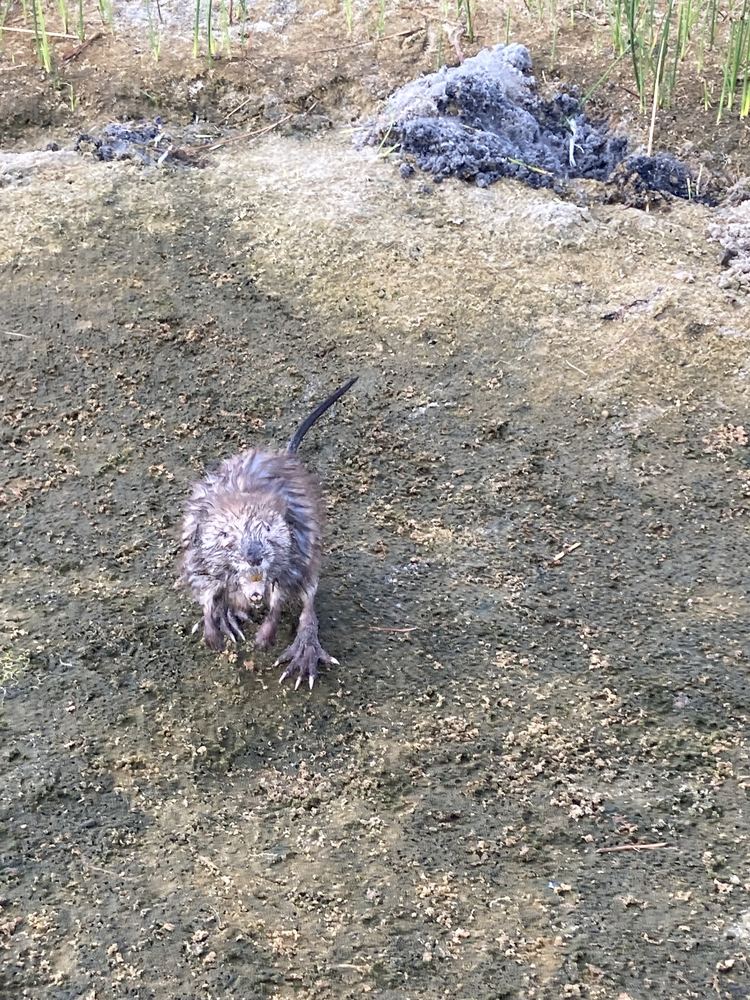
Photo: Katie Gipson · CC BY 4.0 (May be cropped or resized)
Ondatra zibethicus
U.S. national list: unknown
Basic stats
Diet
Aquatic vegetation, roots, stems, tubers, mollusks, fish, and other small animals
Habitat
Marshes, ponds, lakes, canals, and slow-moving rivers
Range
Native to North America; introduced widely in Europe and Asia
Muskrats are semiaquatic rodents native to North America and introduced widely across Eurasia. They inhabit marshes, ponds, lakes, canals, and slow rivers with abundant emergent vegetation. Dense waterproof fur, partially webbed hind feet, and a vertically flattened tail support swimming. Muskrats construct bank burrows or conspicuous vegetation lodges containing dry nesting chambers above water level, and they establish feeding platforms within their aquatic home ranges. (Animal Diversity Web)
Their diet consists chiefly of aquatic vegetation, including stems, roots, and tubers, but mollusks, fish, and other small animals may supplement plant foods. Muskrats reproduce rapidly, and females can bear several litters within a favorable season. Gestation lasts approximately twenty-five to thirty days, producing one to fourteen young per litter. Newborns are initially blind and nearly hairless, remaining in the nest while the mother nurses and protects them until they can swim and forage. (Animal Diversity Web)
Where to see Common Muskrat in the USA
GBIF records grouped by protected area. They show where the species has been reported, not that it is there now, and they are not population counts.
Recorded in 153 protected areas (1894–2026). The 8 with the most records:
- Stillwater National Wildlife Refuge: 250 records (1952–2024)
- Mohonk Preserve: 170 records (1897–2013)
- Cuyahoga Valley National Park: 56 records (1926–2026)
- Huntley Meadows Park: 46 records (2004–2026)
- Minnesota Valley National Wildlife Refuge: 29 records (1942–2026)
- Fish Springs National Wildlife Refuge: 27 records (1934–2016)
- Humboldt National Forest: 27 records (1927–1928)
- Great Meadows National Wildlife Refuge: 26 records (2009–2026)
Quick answers
- What does the Common Muskrat eat?
- Aquatic vegetation, roots, stems, tubers, mollusks, fish, and other small animals
- What habitat does the Common Muskrat live in?
- Marshes, ponds, lakes, canals, and slow-moving rivers
- Where is the Common Muskrat found?
- Native to North America; introduced widely in Europe and Asia