
 Wildlife
of USA
Root Vole
Rats, Mice, Voles & Pocket Gophers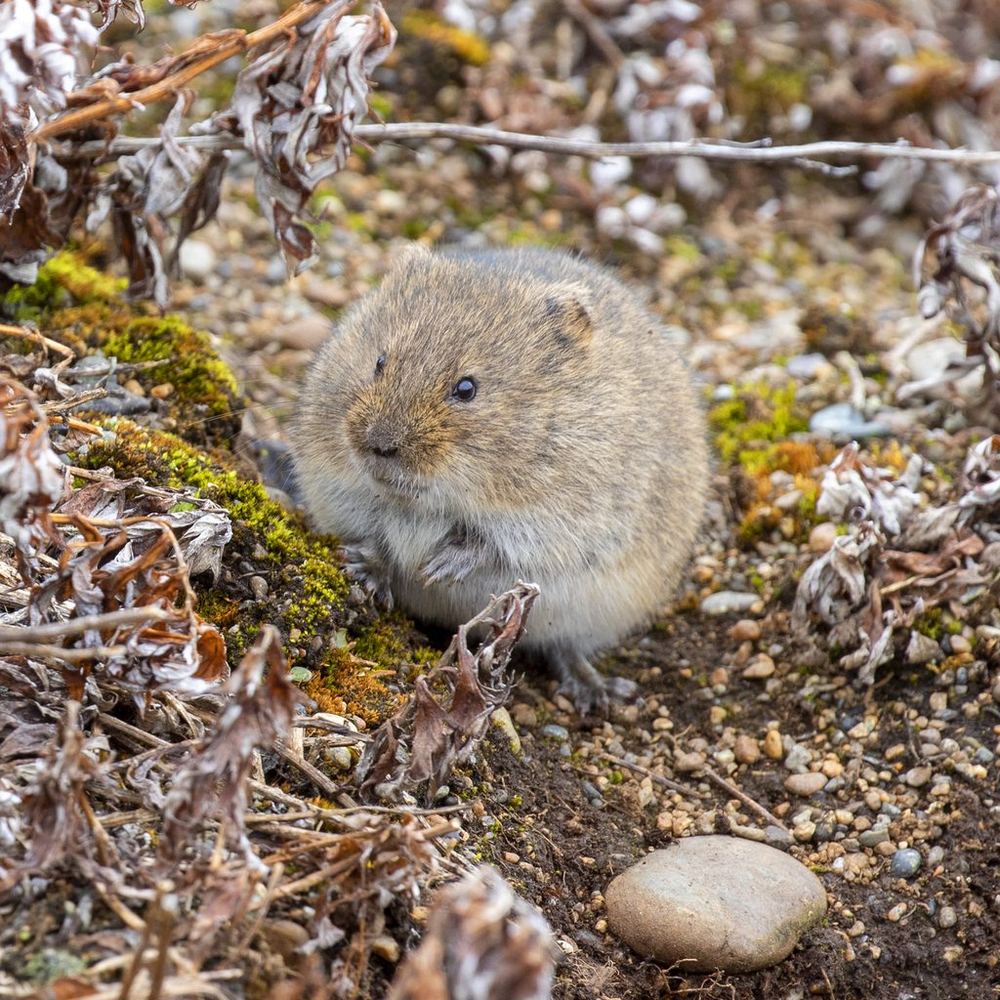
Photo: Dan Vickers · CC BY 4.0 (May be cropped or resized)
Alexandromys oeconomus
U.S. national list: unknown
Basic stats
Diet
Grasses, sedges and seeds
Habitat
Damp tundra and moist meadows near water
Size
About 18 cm, plus a 4 cm tail
Weight
About 50 g
The root vole, also called the tundra vole, is a medium-sized vole with short ears and a short tail. Its coat is yellowish brown above, becoming paler along the sides, while the underparts are white. A typical animal measures about 18 centimetres overall with a tail near 4 centimetres and weighs roughly 50 grams. Adult males are noticeably larger than females. These proportions and colours are useful field clues, although close vole identification may still require careful examination. (Wikipedia, tundra vole account)
Root voles occupy damp tundra and moist meadows, usually close to water, across northern Eurasia and northwestern North America. They remain active throughout the year, making surface runways in summer and travelling in tunnels beneath winter snow. Their food includes grasses, sedges and seeds, while burrows hold caches of roots and seeds for colder months. Females can produce three to six litters of three to nine young, with reproduction strongest in May and June in the studied Trans-Ural population. (Wikipedia, tundra vole account)
Where to see Root Vole in the USA
GBIF records grouped by protected area. They show where the species has been reported, not that it is there now, and they are not population counts.
Recorded in 33 protected areas (1896–2017). The 8 with the most records:
- National Petroleum Reserve–Alaska: 412 records (1947–1977)
- Arctic National Wildlife Refuge: 401 records (1912–2017)
- Glacier Bay National Park and Preserve: 131 records (1965–1977)
- Tongass National Forest: 111 records (1936–2013)
- Mollie Beattie Wilderness: 94 records (1912–2015)
- Glacier Bay Wilderness: 80 records (1965–1977)
- Gates of the Arctic National Park and Preserve: 57 records (1951–2014)
- Kenai National Wildlife Refuge: 55 records (1954–1991)
Quick answers
- What does the Root Vole eat?
- Grasses, sedges and seeds
- What habitat does the Root Vole live in?
- Damp tundra and moist meadows near water
- How big is the Root Vole?
- About 18 cm, plus a 4 cm tail
- How much does the Root Vole weigh?
- About 50 g