
 Wildlife
of USA
Northern Raccoon
Other Mammals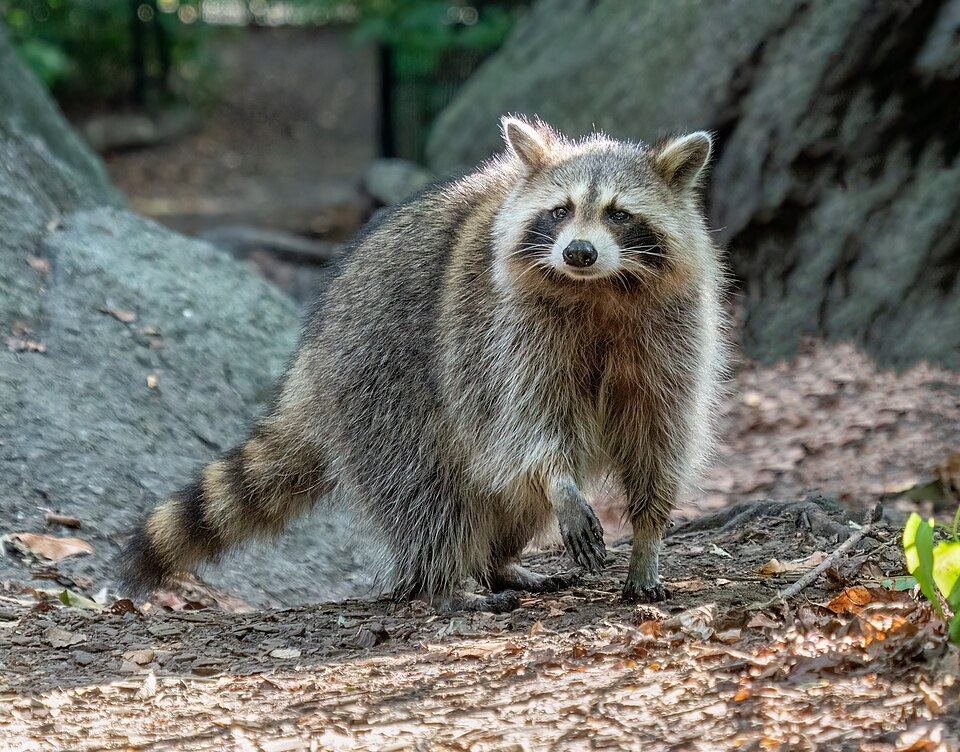
Photo: Rhododendrites · CC BY-SA 4.0 (May be cropped or resized)
Procyon lotor
U.S. national list: unknown
Basic stats
Diet
Roughly 40% invertebrates, 33% plants, 27% vertebrates
Habitat
Deciduous and mixed forest, mountains, coastal marshes and towns
Range
North America; introduced to central Europe, the Caucasus and Japan
Litter size
2–5
Gestation period
About 65 days
Size
Body 40–70cm, tail 20–40cm
Weight
5–26kg, usually 5–12kg
The northern raccoon, also called the common or North American raccoon, is the largest member of the Procyonidae family, with a body length of 40–70cm and a weight of 5–26kg. Its grey coat has dense underfur, and it has extremely dexterous front paws, a facial mask and a ringed tail. Shoulder height is 23–30cm. Animals in southern Florida are the smallest, whereas those at the northern edge of the range are the largest. The species is noted for its intelligence, and studies show it can remember how to solve tasks for at least three years (Wikipedia, general species account).
Originally a species of deciduous and mixed forest, it has spread into mountains, coastal marshes and urban areas, and escapes and introductions in the mid-20th century led to populations in central Europe, the Caucasus and Japan. It is usually nocturnal and omnivorous, eating about 40% invertebrates, 33% plants and 27% vertebrates. Related females often share an area, while unrelated males may live in groups of up to four during the mating season. Home ranges vary from 3ha for females in cities to 5000ha for males on prairies. After a gestation of about 65 days, two to five kits are born in spring and raised until dispersal in late autumn (Wikipedia, general species account).
Where to see Northern Raccoon in the USA
GBIF records grouped by protected area. They show where the species has been reported, not that it is there now, and they are not population counts.
Recorded in 369 protected areas (1860–2026). The 8 with the most records:
- Mohonk Preserve: 1,039 records (1901–2023)
- Reelfoot Lake State Park: 228 records (1967–2025)
- West Tennessee National Wildlife Refuge Complex: 228 records (1978–2025)
- Reelfoot State Wildlife Management Area: 227 records (1967–2025)
- Reelfoot National Wildlife Refuge: 225 records (1984–2025)
- Lincoln National Forest: 154 records (1973–2022)
- Land Between the Lakes National Recreation Area: 114 records (1980–2025)
- Florida Keys National Marine Sanctuary: 87 records (1878–2026)
Quick answers
- What does the Northern Raccoon eat?
- Roughly 40% invertebrates, 33% plants, 27% vertebrates
- What habitat does the Northern Raccoon live in?
- Deciduous and mixed forest, mountains, coastal marshes and towns
- Where is the Northern Raccoon found?
- North America; introduced to central Europe, the Caucasus and Japan
- What is the litter size of the Northern Raccoon?
- 2–5
- How long is the gestation period of the Northern Raccoon?
- About 65 days
- How big is the Northern Raccoon?
- Body 40–70cm, tail 20–40cm
- How much does the Northern Raccoon weigh?
- 5–26kg, usually 5–12kg