
 Wildlife
of USA
Northern Jacana
Shorebirds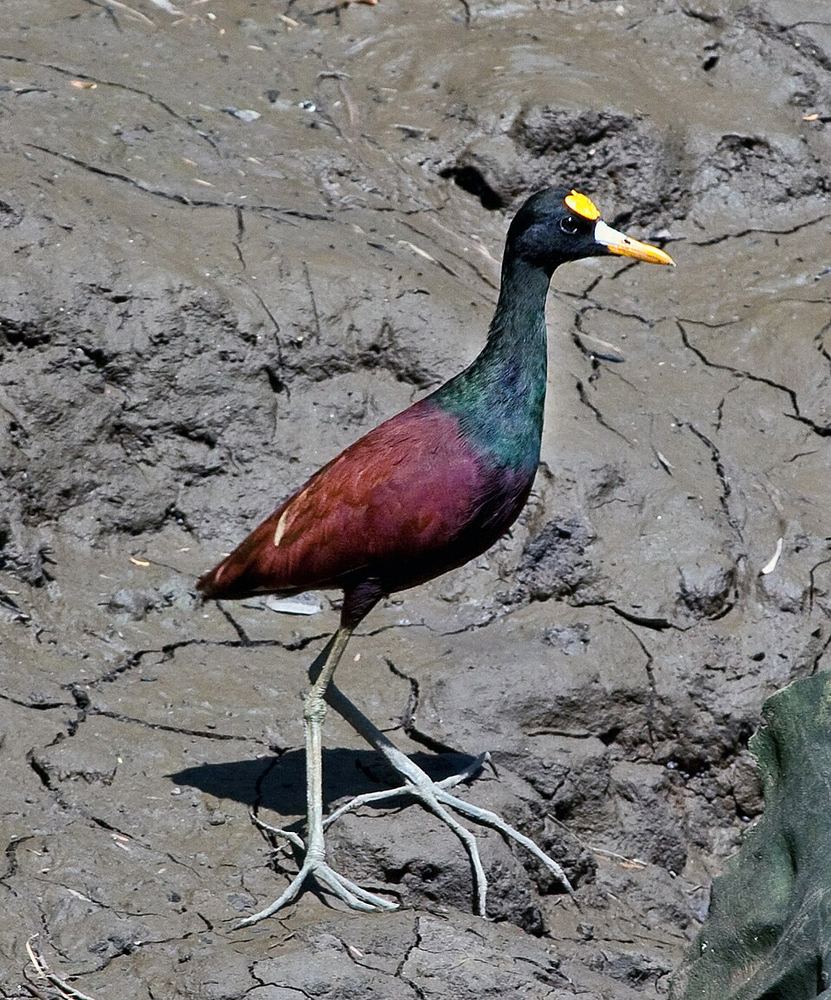
Photo: Paul Kehrer · CC BY 2.0 (May be cropped or resized)
Jacana spinosa
U.S. national list: unknown
Basic stats
Diet
Insects, other invertebrates, seeds and small fish
Habitat
Floating vegetation in swamps, marshes and ponds
Range
Mexico to western Panama and parts of the Caribbean
Clutch size
4 eggs
Incubation period
About 28 days
Size
21.5–24cm
Weight
Averages about 94g
The Northern Jacana is a wetland bird with elongated toes that spread its weight over floating plants. It has a chestnut body, black head and breast, and a bright yellow bill and frontal shield. Yellow-green flight feathers and wing spurs become visible when it flies. Females are considerably larger than males. The species measures 21.5–24 cm and averages about 94 g (Wikipedia, general species account; AVONET, Tobias et al. 2022).
It ranges from Mexico to western Panama and also breeds on Cuba, Jamaica and Hispaniola. In marshes, ponds and swamps it takes insects, seeds, snails and other small animals from vegetation and water. A male builds a floating nest and incubates four marked brown eggs for about 28 days. Females often maintain territories encompassing several males; the male leads and broods the chicks after hatching (Wikipedia, general species account).
Where to see Northern Jacana in the USA
GBIF records grouped by protected area. They show where the species has been reported, not that it is there now, and they are not population counts.
Recorded in 11 protected areas (1972–2023). The 8 with the most records:
- Santa Cruz River Park: 2,130 records (2020–2021)
- Santa Ana National Wildlife Refuge: 688 records (1974–2016)
- James E Daughtrey Wildlife Management Area: 411 records (2009–2015)
- Choke Canyon State Park: 402 records (2009–2015)
- Estero Llano Grande State Park: 349 records (2006–2019)
- Raul M. Grijalva Canoa Ranch Conservation Park: 226 records (2020)
- Tres Rios Wetlands: 61 records (2023)
- Coronado National Forest: 22 records (1998)
Quick answers
- What does the Northern Jacana eat?
- Insects, other invertebrates, seeds and small fish
- What habitat does the Northern Jacana live in?
- Floating vegetation in swamps, marshes and ponds
- Where is the Northern Jacana found?
- Mexico to western Panama and parts of the Caribbean
- How many eggs does the Northern Jacana lay?
- 4 eggs
- How long are the eggs of the Northern Jacana incubated?
- About 28 days
- How big is the Northern Jacana?
- 21.5–24cm
- How much does the Northern Jacana weigh?
- Averages about 94g