
 Wildlife
of USA
Pacific Loon
Seabirds & Cormorants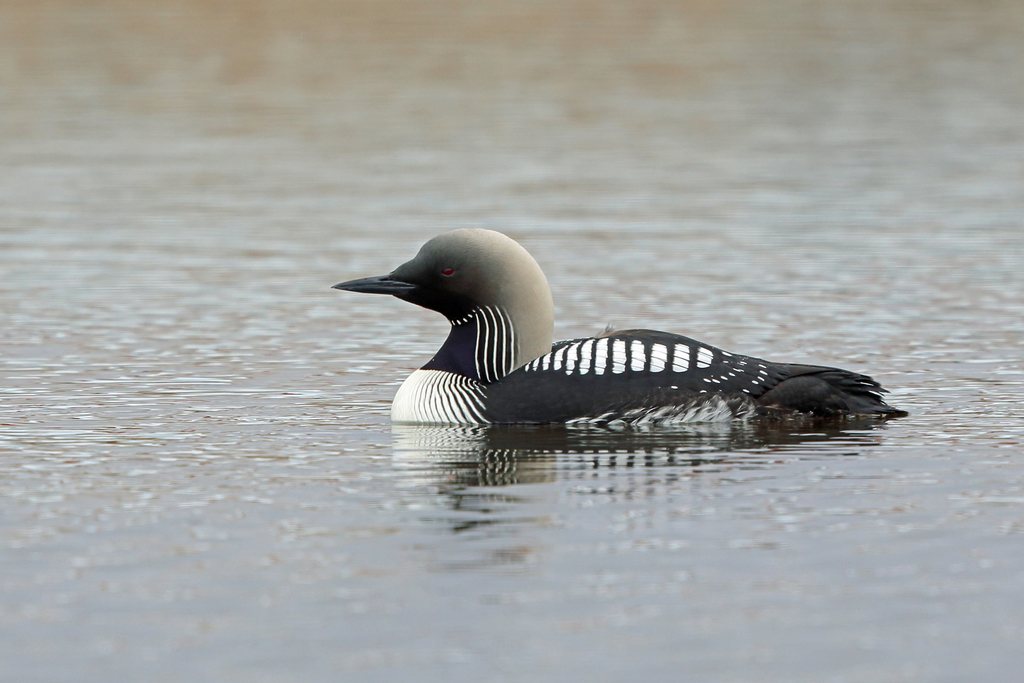
Photo: (c) Nigel Voaden, some rights reserved (CC BY) · CC BY 4.0 (May be cropped or resized)
Gavia pacifica
U.S. national list: unknown
Basic stats
Diet
Fish and aquatic invertebrates
Habitat
Tundra lakes and marine waters
Range
Northern Canada and eastern Siberia to the Pacific coast
Clutch size
1–2 eggs
Incubation period
23–25 days
Size
58–74cm
Wingspan
110–128cm
Weight
Average 2,251g
The Pacific Loon breeds on tundra lakes in northern Canada and eastern Siberia and winters on the ocean and large lakes. It is 58–74 cm long, with a 110–128 cm wingspan. Breeding adults have a grey head, dark throat and patterned black-and-white back; winter plumage is more subdued. AVONET gives an average mass of 2,251 g (Wikipedia, general species account; AVONET, Tobias et al. 2022).
Its rear-set legs aid underwater foraging but make walking difficult. EltonTraits describes a diet dominated by fish, with aquatic invertebrates also represented. Pairs build a shoreline nest of vegetation and mud. One or two eggs are incubated for 23–25 days, and parents may carry young on their backs while swimming. Parents protect chicks from cold and predators (Wikipedia, general species account; EltonTraits, Wilman et al. 2014).
Where to see Pacific Loon in the USA
GBIF records grouped by protected area. They show where the species has been reported, not that it is there now, and they are not population counts.
Recorded in 791 protected areas (1897–2026). The 8 with the most records:
- Monterey Bay National Marine Sanctuary: 35,570 records (1903–2026)
- National Petroleum Reserve–Alaska: 27,593 records (1897–2025)
- Greater Farallones National Marine Sanctuary: 14,055 records (1951–2026)
- Pacific Grove Marine Gardens State Marine Conservation Area: 13,512 records (1970–2024)
- Asilomar State Marine Reserve: 13,503 records (1958–2025)
- Point Reyes National Seashore: 6,756 records (1951–2026)
- Southeast Farallon Island State Marine Reserve: 6,473 records (1968–2024)
- Yukon Delta National Wildlife Refuge: 6,149 records (1950–2024)
Quick answers
- What does the Pacific Loon eat?
- Fish and aquatic invertebrates
- What habitat does the Pacific Loon live in?
- Tundra lakes and marine waters
- Where is the Pacific Loon found?
- Northern Canada and eastern Siberia to the Pacific coast
- How many eggs does the Pacific Loon lay?
- 1–2 eggs
- How long are the eggs of the Pacific Loon incubated?
- 23–25 days
- How big is the Pacific Loon?
- 58–74cm
- What is the wingspan of the Pacific Loon?
- 110–128cm
- How much does the Pacific Loon weigh?
- Average 2,251g