
 Wildlife
of USA
Neotropic Cormorant
Seabirds & Alcids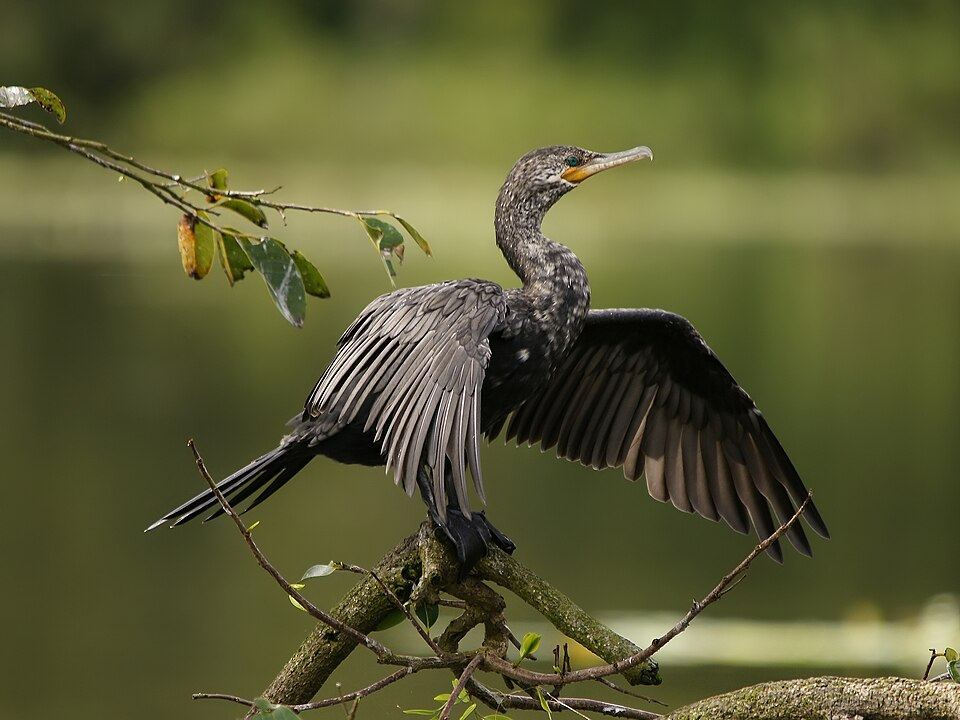
Photo: Hans Hillewaert · CC BY-SA 3.0 (May be cropped or resized)
Nannopterum brasilianum
U.S. national list: unknown
Basic stats
Diet
Mostly small fish, also aquatic invertebrates and amphibians
Habitat
Coasts, mangroves and inland waters
Range
Southern United States through Central America to southern South America, also Bahamas, Cuba and Trinidad
Clutch size
Usually 3 eggs
Incubation period
About 25–30 days
Size
About 64cm
Wingspan
About 100cm
Weight
Averages about 1239g
The Neotropic Cormorant is a slender waterbird with a long tail and a neck often held in an S shape. Adults are mainly black with a yellow-brown throat patch; breeding birds acquire white tufts and a white border around the patch. Juveniles are brownish. It is about 64 cm long with a wingspan near 100 cm, and its AVONET average mass is about 1,239 g (Wikipedia, general species account; AVONET, Tobias et al. 2022).
Its range reaches from the southern United States through Central America to southern South America, with breeding populations on several Caribbean islands. It uses coastal and inland waters, diving with its feet for small fish, tadpoles, frogs and aquatic invertebrates. Groups sometimes drive fish into shallow water. Colonies nest in trees or bushes on stick platforms. Most pairs lay three eggs, and both parents incubate for roughly 25–30 days and feed the young (Wikipedia, general species account).
Where to see Neotropic Cormorant in the USA
GBIF records grouped by protected area. They show where the species has been reported, not that it is there now, and they are not population counts.
Recorded in 501 protected areas (1924–2026). The 8 with the most records:
- Smith Oaks Bird Sanctuary: 14,113 records (1964–2026)
- Estero Llano Grande State Park: 12,531 records (1991–2026)
- Jocelyn Nungaray National Wildlife Refuge: 12,186 records (1967–2026)
- Patagonia Lake State Park: 11,191 records (1976–2026)
- Port Aransas Nature Preserve: 11,087 records (1989–2026)
- Bolivar Flats Shorebird Sanctuary: 8,723 records (1973–2026)
- Mitchell Lake Audubon Center: 8,558 records (1980–2026)
- Santa Ana National Wildlife Refuge: 7,537 records (1962–2025)
Quick answers
- What does the Neotropic Cormorant eat?
- Mostly small fish, also aquatic invertebrates and amphibians
- What habitat does the Neotropic Cormorant live in?
- Coasts, mangroves and inland waters
- Where is the Neotropic Cormorant found?
- Southern United States through Central America to southern South America, also Bahamas, Cuba and Trinidad
- How many eggs does the Neotropic Cormorant lay?
- Usually 3 eggs
- How long are the eggs of the Neotropic Cormorant incubated?
- About 25–30 days
- How big is the Neotropic Cormorant?
- About 64cm
- What is the wingspan of the Neotropic Cormorant?
- About 100cm
- How much does the Neotropic Cormorant weigh?
- Averages about 1239g