
 Wildlife
of USA
Great Cormorant
Seabirds & Alcids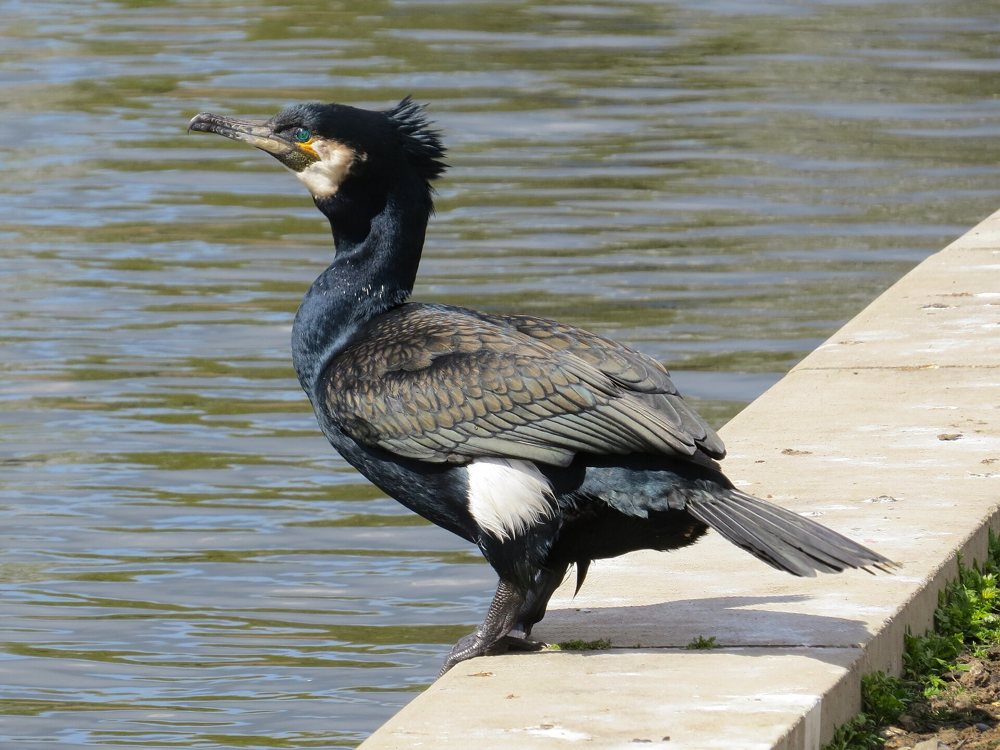
Photo: MPF · CC BY-SA 4.0 (May be cropped or resized)
Phalacrocorax carbo
U.S. national list: unknown
Basic stats
Diet
Mostly fish, with some aquatic invertebrates and vertebrates
Habitat
Inshore seas, estuaries, lakes and rivers
Range
Europe, Asia, Africa, Australasia and Atlantic North America
Clutch size
4 eggs
Incubation period
30 days
Size
70–102cm
Wingspan
121–160cm
Weight
Averages about 2529g
The Great Cormorant is a large, heavy waterbird with mostly black plumage, a stout hook-tipped bill, greenish adult eyes and a fairly long tail. Its wings and tail can show bronze-green iridescence while the body has a purple gloss. Breeding adults develop white feathering on the thighs and parts of the head and neck. Across a variable range, birds measure 70–102 cm and span 121–160 cm (Wikipedia, general species account).
The species feeds in coastal shallows, estuaries, lakes and rivers across much of the Old World, Australasia and Atlantic North America. Fish dominate the diet, and prey is pursued below the surface (EltonTraits, Wilman et al. 2014). Northern populations move south when inland waters freeze, while warmer-region birds disperse locally. Colonies occur beside wetlands or sheltered coasts, with stick nests placed in trees, on cliffs or on predator-free rocky islands (Wikipedia, general species account).
Where to see Great Cormorant in the USA
GBIF records grouped by protected area. They show where the species has been reported, not that it is there now, and they are not population counts.
Recorded in 302 protected areas (1931–2026). The 8 with the most records:
- Maine Coastal Islands National Wildlife Refuge: 6,331 records (1959–2026)
- Pinelands National Reserve: 4,999 records (1931–2026)
- Acadia National Park: 4,352 records (1970–2025)
- Seal Island National Wildlife Refuge: 4,247 records (1987–2026)
- Gateway National Recreation Area: 4,180 records (1973–2025)
- Jamaica Bay Unit: 4,075 records (1973–2025)
- Delaware Seashore State Park: 3,172 records (1984–2026)
- Monhegan Lobster Conservation Area: 2,157 records (1978–2024)
Quick answers
- What does the Great Cormorant eat?
- Mostly fish, with some aquatic invertebrates and vertebrates
- What habitat does the Great Cormorant live in?
- Inshore seas, estuaries, lakes and rivers
- Where is the Great Cormorant found?
- Europe, Asia, Africa, Australasia and Atlantic North America
- How many eggs does the Great Cormorant lay?
- 4 eggs
- How long are the eggs of the Great Cormorant incubated?
- 30 days
- How big is the Great Cormorant?
- 70–102cm
- What is the wingspan of the Great Cormorant?
- 121–160cm
- How much does the Great Cormorant weigh?
- Averages about 2529g