
 Wildlife
of USA
Indian White-eye
Other Songbirds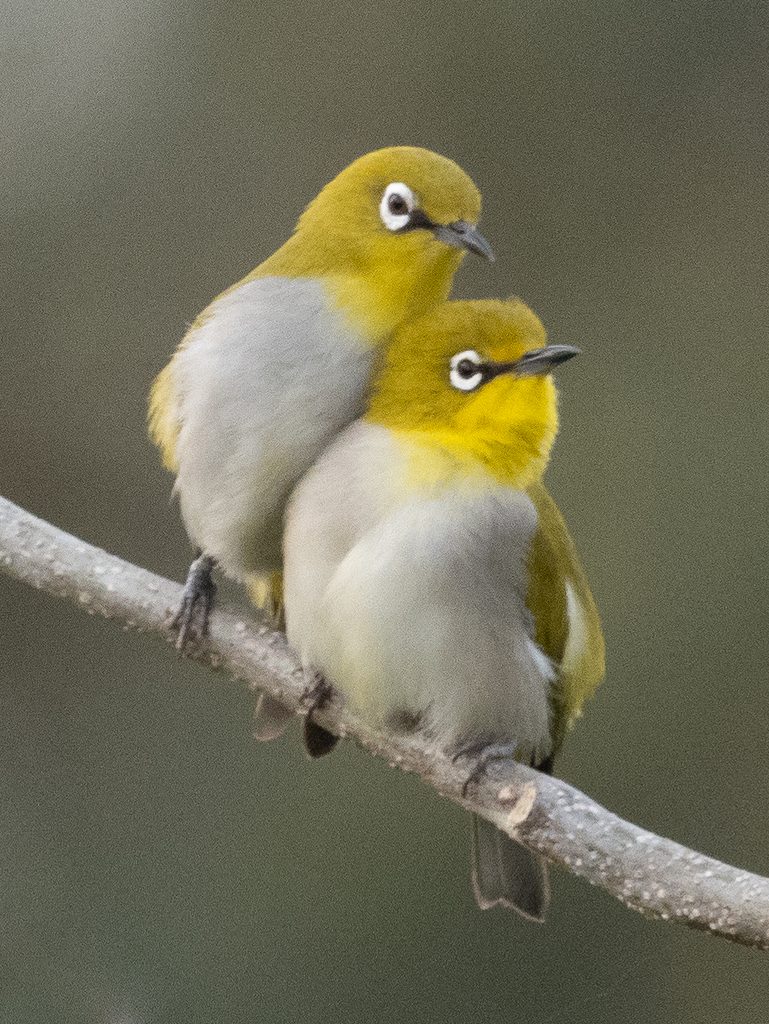
Photo: William Stephens · CC BY 4.0 (May be cropped or resized)
Zosterops palpebrosus
U.S. national list: unknown
Basic stats
Diet
Insects, fruit and other plant foods
Habitat
Scrub, open woodland, moist forest, mangroves and gardens
Range
The Indian subcontinent and adjoining parts of western Asia and southern China
Clutch size
2 eggs
Incubation period
About 10 days
Size
8–9cm
Weight
Averages about 9g
The Indian White-eye is a tiny yellow-green passerine with a conspicuous white ring around each eye, yellow throat and pale belly. The sexes look alike. Adults measure about 8–9 cm and average roughly 9 g. Taxonomic revisions have narrowed the species from the formerly broader Oriental White-eye, leaving its principal range on the Indian subcontinent and adjoining parts of western Asia and southern China (Wikipedia, general species account; AVONET, Tobias et al. 2022).
Across its range, the species uses scrub, open woodland, moist forest, mangroves and gardens. Sociable flocks forage actively among foliage and flowers, taking insects, fruit and other plant foods; the birds may also transfer pollen while visiting blossoms. Breeding pairs weave a compact cup from plant fibre, lichen and cobweb, suspending it in a branch fork. Two pale blue eggs hatch after about 10 days, and both adults care for the young (Wikipedia, general species account; EltonTraits, Wilman et al. 2014).
Quick answers
- What does the Indian White-eye eat?
- Insects, fruit and other plant foods
- What habitat does the Indian White-eye live in?
- Scrub, open woodland, moist forest, mangroves and gardens
- Where is the Indian White-eye found?
- The Indian subcontinent and adjoining parts of western Asia and southern China
- How many eggs does the Indian White-eye lay?
- 2 eggs
- How long are the eggs of the Indian White-eye incubated?
- About 10 days
- How big is the Indian White-eye?
- 8–9cm
- How much does the Indian White-eye weigh?
- Averages about 9g