
 Wildlife
of USA
Sperm Whale
Whales, Dolphins & Dugong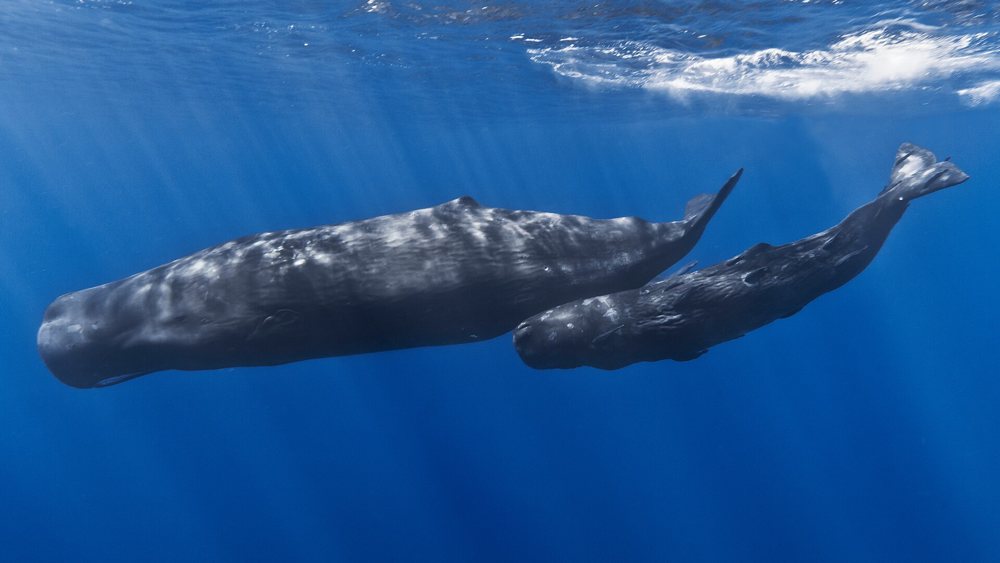
Photo: Gabriel Barathieu · CC BY-SA 2.0 (May be cropped or resized)
Physeter macrocephalus
U.S. national list: unknown
Basic stats
Habitat
Deep, ice-free ocean waters worldwide
Range
Worldwide; migrates seasonally
Size
Mature males about 16m; females about 10.6–11m
Notable features include the largest brain on Earth, more than five times heavier than a human's, and the longest intestinal system in the world, exceeding 300 m in large animals. Sperm whales can live 70 years or more (Wikipedia, general species account). Females and young males live together in groups and the females cooperate to protect and nurse the young, while mature bulls live alone outside the mating season. (Wikipedia, general species account).
The sperm whale, or cachalot, is the largest of the toothed whales and the largest toothed predator, a pelagic species with a worldwide range that migrates seasonally for feeding and breeding. It hunts squid on deep dives, using echolocation clicks to search for prey (Wikipedia, general species account). The species is a pelagic mammal with a worldwide range, and will migrate seasonally for feeding and breeding. The teeth are functional, but do not appear to be necessary for capturing or eating squid, as well-fed animals have been found without teeth or even with deformed jaws. (Wikipedia, general species account).
Where to see Sperm Whale in the USA
GBIF records grouped by protected area. They show where the species has been reported, not that it is there now, and they are not population counts.
Recorded in 10 protected areas (1917–2026). The 8 with the most records:
- Monterey Bay National Marine Sanctuary: 15 records (1961–2026)
- Papahānaumokuākea National Marine Sanctuary: 14 records
- Northeast Canyons and Seamounts Marine National Monument: 11 records (2001–2010)
- Florida Keys National Marine Sanctuary: 9 records (1922–1994)
- Greater Farallones National Marine Sanctuary: 7 records (1962–2023)
- Tongass National Forest: 7 records (1917–2013)
- Phillip Burton Wilderness: 4 records (1991–2009)
- Channel Islands National Marine Sanctuary: 3 records (1992–2018)
Quick answers
- What habitat does the Sperm Whale live in?
- Deep, ice-free ocean waters worldwide
- Where is the Sperm Whale found?
- Worldwide; migrates seasonally
- How big is the Sperm Whale?
- Mature males about 16m; females about 10.6–11m