
 Wildlife
of USA
Harbor Porpoise
Whales, Dolphins & Dugong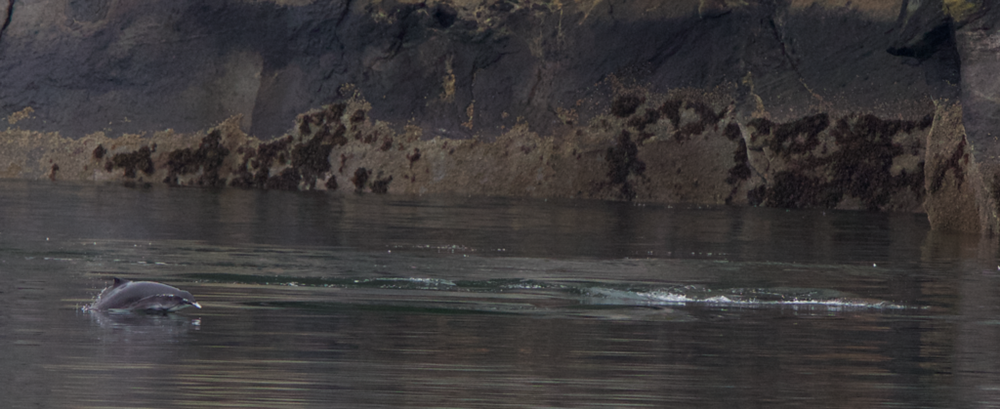
Photo: (c) Nodnarb Nedloh, some rights reserved (CC BY-SA) · CC BY-SA 4.0 (May be cropped or resized)
Phocoena phocoena
U.S. national list: unknown
Basic stats
Diet
Herring, pollock, hake, sardines, cod, squid, shrimp, and other small marine prey
Habitat
Shallow coastal, estuarine, brackish, and occasional riverine waters
Range
North Atlantic, Arctic, and North Pacific, plus the Mediterranean and Black seas
Litter size
1 calf
Gestation period
About 11 months
Size
1.5–2 m
Weight
45–65 kg
The harbor porpoise is a small cetacean measuring 1.5–2 m and weighing approximately 45–65 kg, with females generally slightly larger than males. Its dark gray or black back grades into a paler underside, while the flippers, triangular dorsal fin, and tail remain dark. A black stripe extends from the mouth or eye toward each flipper. The head lacks a prominent forehead or beak and instead ends in a short, cone-shaped snout. Its small teeth are characteristically flattened and spade-shaped. (Animal Diversity Web)
Harbor porpoises inhabit shallow coastal waters of the North Atlantic, Arctic, and North Pacific, as well as parts of the Mediterranean and Black seas. They frequently enter bays, estuaries, and river mouths and occasionally move farther upriver. Individuals usually travel in pairs or groups of five to ten, although feeding concentrations may be much larger. They hunt using echolocation and consume herring, pollock, hake, sardines, cod, squid, shrimp, and other soft-bodied or non-spiny prey. Some populations move seasonally to avoid expanding sea ice. (Animal Diversity Web)
Where to see Harbor Porpoise in the USA
GBIF records grouped by protected area. They show where the species has been reported, not that it is there now, and they are not population counts.
Recorded in 61 protected areas (1915–2026). The 8 with the most records:
- Monterey Bay National Marine Sanctuary: 172 records (1963–2026)
- Golden Gate National Recreation Area: 70 records (1915–2025)
- Greater Farallones National Marine Sanctuary: 60 records (1926–2025)
- Point Reyes National Seashore: 48 records (1964–2023)
- Chugach National Forest: 38 records (1988–1995)
- Back Bay National Wildlife Refuge: 37 records (1985–2001)
- Pea Island National Wildlife Refuge: 35 records (1977–1999)
- Western Gulf of Maine Closure Area: 34 records (1979–2008)
Quick answers
- What does the Harbor Porpoise eat?
- Herring, pollock, hake, sardines, cod, squid, shrimp, and other small marine prey
- What habitat does the Harbor Porpoise live in?
- Shallow coastal, estuarine, brackish, and occasional riverine waters
- Where is the Harbor Porpoise found?
- North Atlantic, Arctic, and North Pacific, plus the Mediterranean and Black seas
- What is the litter size of the Harbor Porpoise?
- 1 calf
- How long is the gestation period of the Harbor Porpoise?
- About 11 months
- How big is the Harbor Porpoise?
- 1.5–2 m
- How much does the Harbor Porpoise weigh?
- 45–65 kg