
 Wildlife
of USA
Northern Yellow Bat
Bats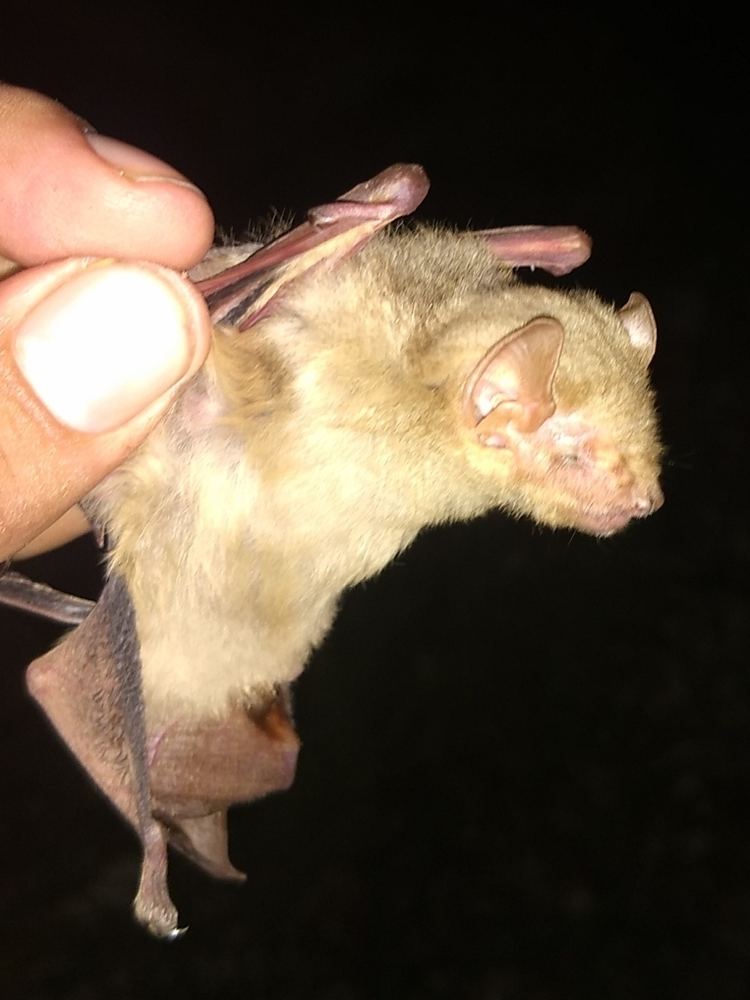
Photo: Juan Cruzado Cortés · CC BY-SA 4.0 (May be cropped or resized)
Lasiurus intermedius
U.S. national list: unknown
Basic stats
Habitat
Wooded areas near permanent water or the coast, with Spanish moss or palms
Range
Coastal south-eastern United States, eastern Texas, Cuba, coastal Mexico and Central America
Litter size
Typically twins
Size
Average body length about 14cm, wingspan 35–41cm
Weight
14–31g
The northern yellow bat is a non-migratory vesper bat, larger than the southern yellow bat, with an average body length of about 14cm, a weight of 14–31g and a wingspan of 35–41cm. Its fur ranges from yellow-orange to grey-brown and is dark tipped, and its wing membranes are generally darker than the body. Unusually for lasiurine bats, only the front half of its tail membrane is furred, and it lacks white markings on the shoulders and wrists. It remains active through the year and can enter torpor during abnormally cold winter weather (Wikipedia, general species account).
It is found mainly along the coasts of the south-eastern United States and eastern Texas, in Cuba, coastal Mexico, and Belize, Costa Rica, El Salvador, Guatemala and Honduras, and it is the most abundant bat in parts of Florida. It usually inhabits wooded areas near permanent water or the coast, with Spanish moss or palms, and roosts within the moss or under dead fan palm fronds. Mating occurs in flight during autumn, and typically twins are born in late May or early June. Young become able to fly between June and August, and females form evening feeding groups while males stay solitary (Wikipedia, general species account).
Quick answers
- What habitat does the Northern Yellow Bat live in?
- Wooded areas near permanent water or the coast, with Spanish moss or palms
- Where is the Northern Yellow Bat found?
- Coastal south-eastern United States, eastern Texas, Cuba, coastal Mexico and Central America
- What is the litter size of the Northern Yellow Bat?
- Typically twins
- How big is the Northern Yellow Bat?
- Average body length about 14cm, wingspan 35–41cm
- How much does the Northern Yellow Bat weigh?
- 14–31g