
 Wildlife
of USA
Northern Gray Fox
Wolves, Coyotes & Foxes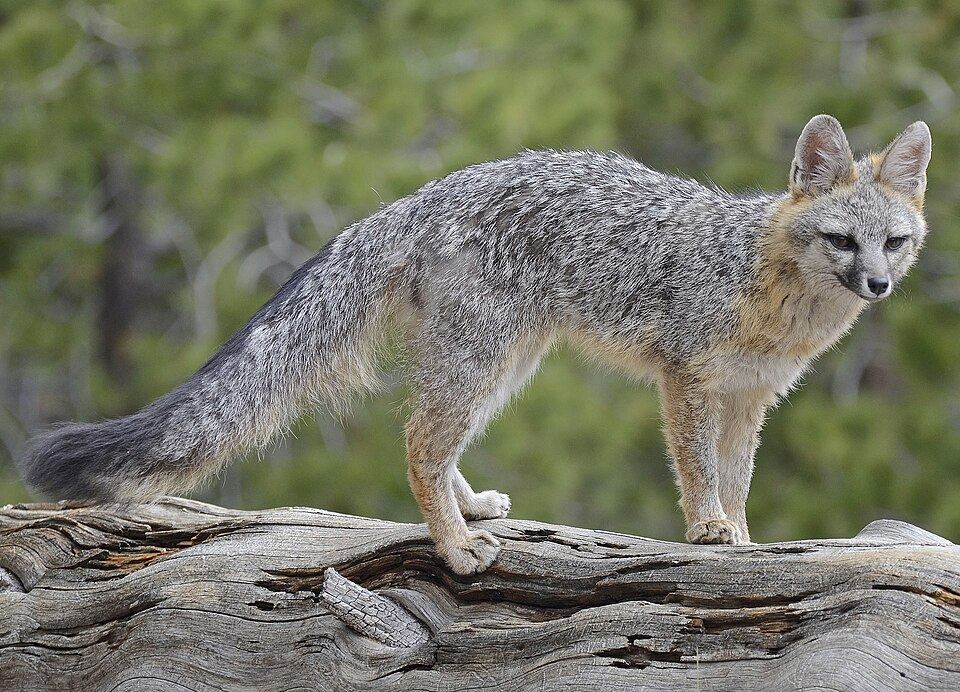
Photo: VJAnderson · CC BY-SA 4.0 (May be cropped or resized)
Urocyon cinereoargenteus
U.S. national list: unknown
Basic stats
Diet
Omnivorous: small animals, fruit, seeds and plants
Habitat
Wooded and dry habitats; also urban areas
Range
North and Central America
Litter size
About 4 (AnAge, COMBINE)
Gestation period
57–61 days
Size
Total length 76–112.5cm; tail 27.5–44.3cm
Weight
3.6–7kg
The gray fox is an omnivorous canid widespread across North and Central America. It is mainly distinguished by its grizzled upper parts, a black stripe down the tail ending in a black tip, and a strong neck. It ranges from 76 to 112.5cm in total length, with a tail of 27.5–44.3cm, and typically weighs 3.6–7kg. It has white on the ears, throat, chest, belly and hind legs, and reddish coloration on the legs, sides, feet, chest and back of the head and neck. Unlike true foxes, it has oval pupils (Wikipedia, general species account).
It was once the most common fox in the eastern United States, and still thrives in urban and suburban areas, particularly in southern Florida. In the Pacific States and Great Lakes region it remains the prevailing fox. It is one of the few canids that can climb trees. In Costa Rica it was occasionally recorded in dry habitats, and in Louisiana it occurs everywhere except the southern marshes. Gestation is 57–61 days (Wikipedia, general species account; Fonda 2025, ZooKeys).
Where to see Northern Gray Fox in the USA
GBIF records grouped by protected area. They show where the species has been reported, not that it is there now, and they are not population counts.
Recorded in 106 protected areas (1886–2026). The 8 with the most records:
- Mohonk Preserve: 166 records (1906–2015)
- Lincoln National Forest: 72 records (1968–2021)
- Los Padres National Forest: 51 records (1904–2025)
- Coronado National Forest: 34 records (1903–2026)
- Point Reyes National Seashore: 30 records (1951–2026)
- Rancho San Antonio Open Space Preserve: 27 records (2014–2016)
- Cleveland National Forest: 25 records (1904–2026)
- Monterey Bay National Marine Sanctuary: 25 records (1905–2025)
Quick answers
- What does the Northern Gray Fox eat?
- Omnivorous: small animals, fruit, seeds and plants
- What habitat does the Northern Gray Fox live in?
- Wooded and dry habitats; also urban areas
- Where is the Northern Gray Fox found?
- North and Central America
- What is the litter size of the Northern Gray Fox?
- About 4 (AnAge, COMBINE)
- How long is the gestation period of the Northern Gray Fox?
- 57–61 days
- How big is the Northern Gray Fox?
- Total length 76–112.5cm; tail 27.5–44.3cm
- How much does the Northern Gray Fox weigh?
- 3.6–7kg