
 Wildlife
of USA
Gray Wolf
Wolves, Coyotes & Foxes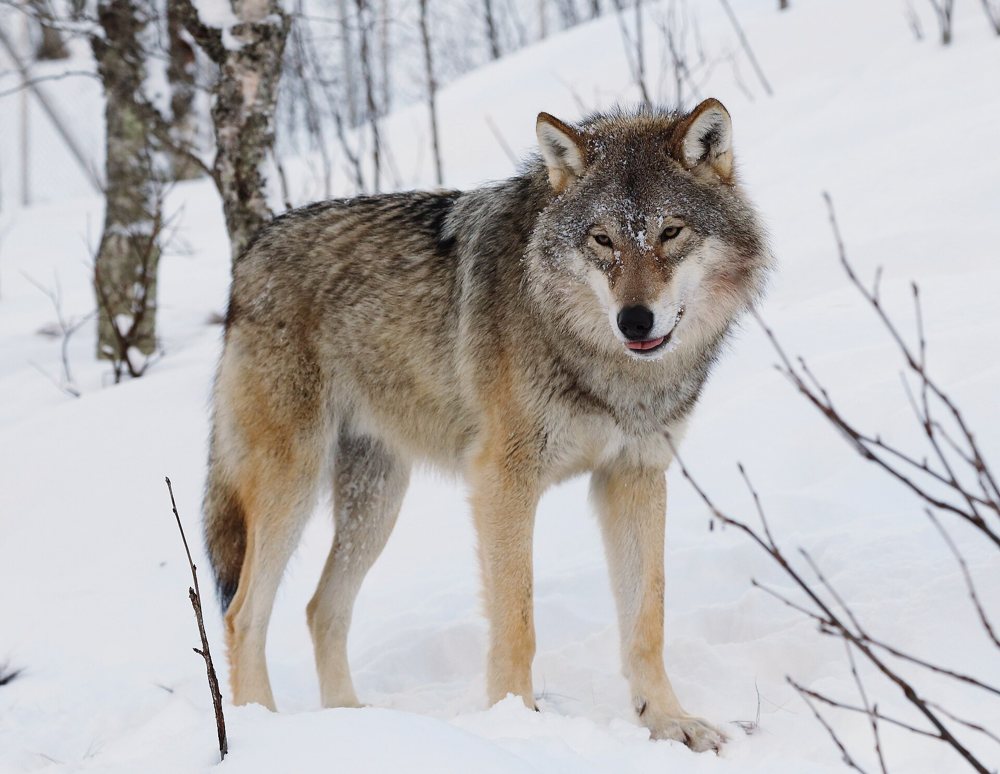
Photo: User:Mas3cf · CC BY-SA 4.0 (May be cropped or resized)
Canis lupus
U.S. national list: unknown
Basic stats
Diet
Mostly hoofed mammals; also smaller mammals and carrion
Habitat
Forests, tundra, mountains, shrublands and open country
Range
Alaska and parts of the northern and western contiguous United States
Litter size
Usually 4–6 pups
The gray wolf is the largest wild member of the dog family. Long legs, a deep chest, broad paws and a tail usually carried low distinguish it from most domestic dogs; coat colour ranges from nearly white to black. Wolves live in family packs and communicate with scent, posture and howls.
In the United States its strongest populations are in Alaska and the western Great Lakes, with restored populations in parts of the northern Rockies and scattered recolonisation elsewhere. Wolves are best watched from a distance at dawn and dusk; approaching or feeding them is unsafe and disrupts natural behaviour.
Where to see Gray Wolf in the USA
GBIF records grouped by protected area. They show where the species has been reported, not that it is there now, and they are not population counts.
Recorded in 70 protected areas (1898–2026). The 8 with the most records:
- Wrangell – Saint Elias Wilderness: 83 records (1966–2003)
- Wrangell-Saint Elias National Preserve: 70 records (1966–2003)
- Gates of the Arctic National Park and Preserve: 69 records (1950–1962)
- McDowell Mountain Regional Park: 59 records (2000–2022)
- Anza-Borrego Desert State Park: 55 records (2001–2022)
- Wrangell–St. Elias National Park and Preserve: 44 records (1982–2003)
- National Petroleum Reserve–Alaska: 44 records (1936–2022)
- Wrangell-Saint Elias National Park: 40 records (1982–2003)
Quick answers
- What does the Gray Wolf eat?
- Mostly hoofed mammals; also smaller mammals and carrion
- What habitat does the Gray Wolf live in?
- Forests, tundra, mountains, shrublands and open country
- Where is the Gray Wolf found?
- Alaska and parts of the northern and western contiguous United States
- What is the litter size of the Gray Wolf?
- Usually 4–6 pups