
 Wildlife
of USA
Green Heron
Herons, Ibises & Pelicans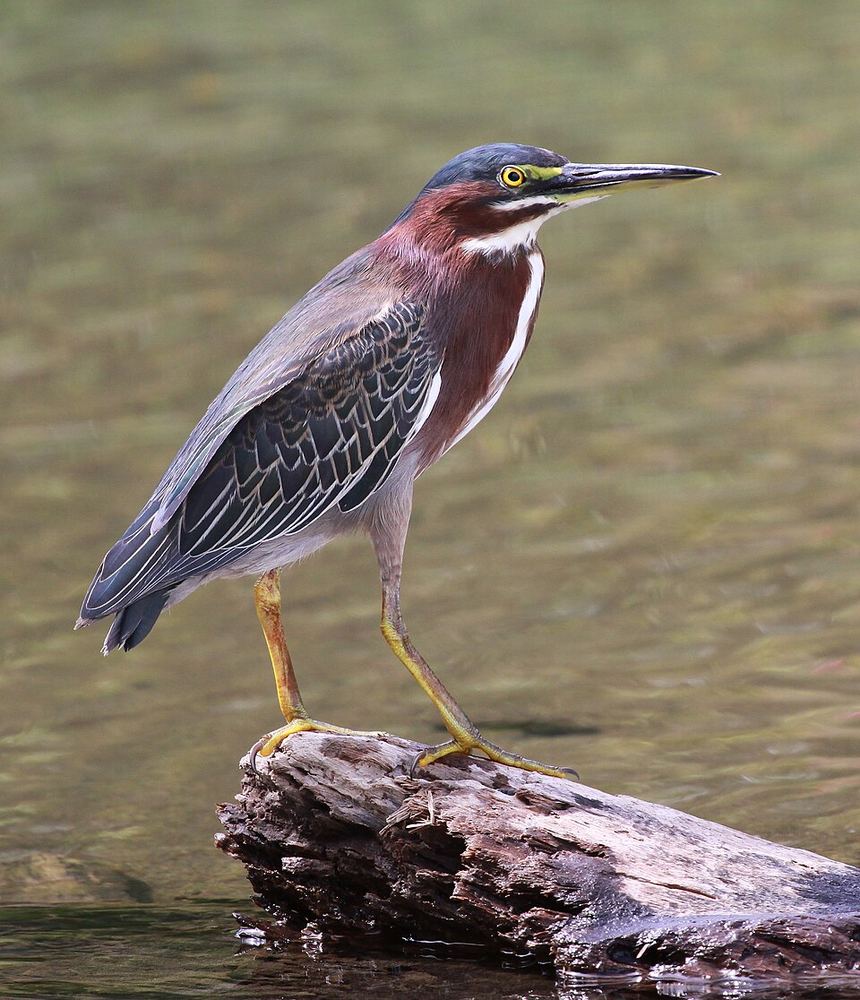
Photo: Basar · CC BY-SA 3.0 (May be cropped or resized)
Butorides virescens
U.S. national list: unknown
Basic stats
Diet
Fish, frogs and aquatic arthropods
Habitat
Riparian zones, wetlands, ponds, lakes, canals and ditches
Range
North and Central America
Clutch size
About 4 eggs
Incubation period
20 days
Size
About 44cm
Weight
Averages about 202g
The Green Heron is a small heron with a glossy greenish-black cap, iridescent dark back and wings, chestnut neck, gray underparts and short yellow legs. Its bill is dark, long and sharply pointed. The species occurs across North and Central America. Adults often draw the neck tightly against the body, giving the bird a compact outline when it is standing (Wikipedia, general species account).
Riparian zones, wetlands, ponds, lakes, canals and ditches provide feeding places. Small fish, frogs and aquatic arthropods are prominent foods, with other invertebrates and small vertebrates also recorded. A bird may stand motionless in shallow water, perch, hover briefly or use an object as a lure. The nest holds about four eggs, with incubation lasting roughly 20 days (EltonTraits, Wilman et al. 2014; AnAge).
Where to see Green Heron in the USA
GBIF records grouped by protected area. They show where the species has been reported, not that it is there now, and they are not population counts.
Recorded in 5,603 protected areas (1885–2026). The 8 with the most records:
- Lake Apopka Restoration Area: 19,854 records (1974–2026)
- Merritt Island National Wildlife Refuge: 19,626 records (1928–2026)
- Everglades & Dry Tortugas: 16,195 records (1918–2026)
- Paynes Prairie: 15,803 records (1988–2026)
- Everglades National Park: 15,258 records (1918–2026)
- Montgomery County Agricultural Reserve: 10,487 records (1963–2026)
- Huntley Meadows Park: 9,792 records (1980–2026)
- JN "Ding" Darling National Wildlife Refuge: 9,444 records (1960–2026)
Quick answers
- What does the Green Heron eat?
- Fish, frogs and aquatic arthropods
- What habitat does the Green Heron live in?
- Riparian zones, wetlands, ponds, lakes, canals and ditches
- Where is the Green Heron found?
- North and Central America
- How many eggs does the Green Heron lay?
- About 4 eggs
- How long are the eggs of the Green Heron incubated?
- 20 days
- How big is the Green Heron?
- About 44cm
- How much does the Green Heron weigh?
- Averages about 202g