
 Wildlife
of USA
Gadwall
Waterfowl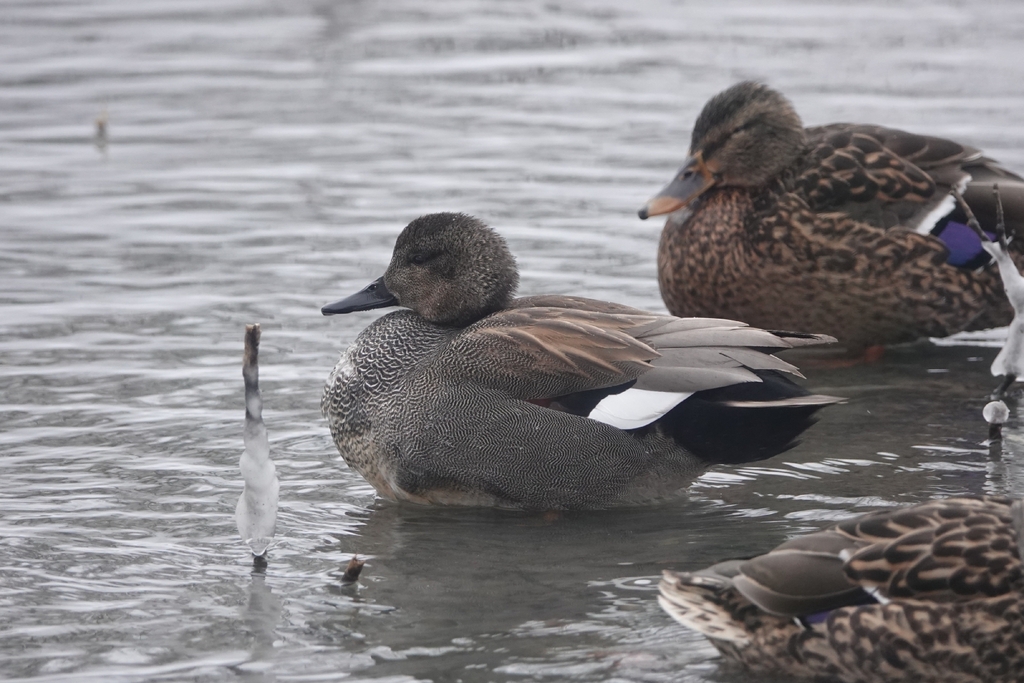
Photo: (c) Валерия Ковалева, some rights reserved (CC BY) · CC BY 4.0 (May be cropped or resized)
Mareca strepera
U.S. national list: unknown
Basic stats
Diet
Mostly aquatic vegetation
Habitat
Open lakes, marshes, wet grassland and other wetlands with fringing vegetation
Range
Breeds across northern Europe, Asia and central North America; winters farther south across the Northern Hemisphere
Clutch size
Usually 7–12 eggs
Incubation period
24–27 days
Size
47–58cm
Wingspan
78–85cm
Weight
Averages about 916g
The Gadwall is a medium-sized dabbling duck. Breeding males have finely patterned grey plumage, a black rear, chestnut in the wing and a brilliant white speculum. Females are mottled light brown with orange along the sides of the bill, while eclipse males become more female-like but retain their wing pattern. Both sexes show the white speculum. The species measures 47–58 cm, spans 78–85 cm and averages about 916 g (Wikipedia, general species account; AVONET, Tobias et al. 2022).
Across its range, the species breeds on open lakes, marshes and wet grassland in northern Europe, Asia and central North America. Most populations migrate south for winter, using freshwater wetlands and some coastal waters. Birds feed mainly by dabbling for aquatic vegetation with the head submerged, though they can dive and may take food brought up by other waterbirds. A ground nest hidden among plants holds seven to twelve eggs, and incubation lasts 24–27 days (Wikipedia, general species account).
Where to see Gadwall in the USA
GBIF records grouped by protected area. They show where the species has been reported, not that it is there now, and they are not population counts.
Recorded in 4,614 protected areas (1860–2026). The 8 with the most records:
- Parker River National Wildlife Refuge: 27,342 records (1966–2026)
- Cape May Point State Park: 22,663 records (1975–2025)
- Pinelands National Reserve: 19,934 records (1928–2026)
- Brigantine National Wildlife Refuge: 17,788 records (1951–2026)
- Edwin B. Forsythe National Wildlife Refuge: 17,778 records (1957–2026)
- Montezuma National Wildlife Refuge: 17,379 records (1950–2026)
- Jacques Cousteau National Estuarine Research Reserve: 17,358 records (1951–2026)
- Gateway National Recreation Area: 17,147 records (1961–2026)
Quick answers
- What does the Gadwall eat?
- Mostly aquatic vegetation
- What habitat does the Gadwall live in?
- Open lakes, marshes, wet grassland and other wetlands with fringing vegetation
- Where is the Gadwall found?
- Breeds across northern Europe, Asia and central North America; winters farther south across the Northern Hemisphere
- How many eggs does the Gadwall lay?
- Usually 7–12 eggs
- How long are the eggs of the Gadwall incubated?
- 24–27 days
- How big is the Gadwall?
- 47–58cm
- What is the wingspan of the Gadwall?
- 78–85cm
- How much does the Gadwall weigh?
- Averages about 916g