
 Wildlife
of USA
Eurasian Collared-Dove
Pigeons, Doves & Sandgrouse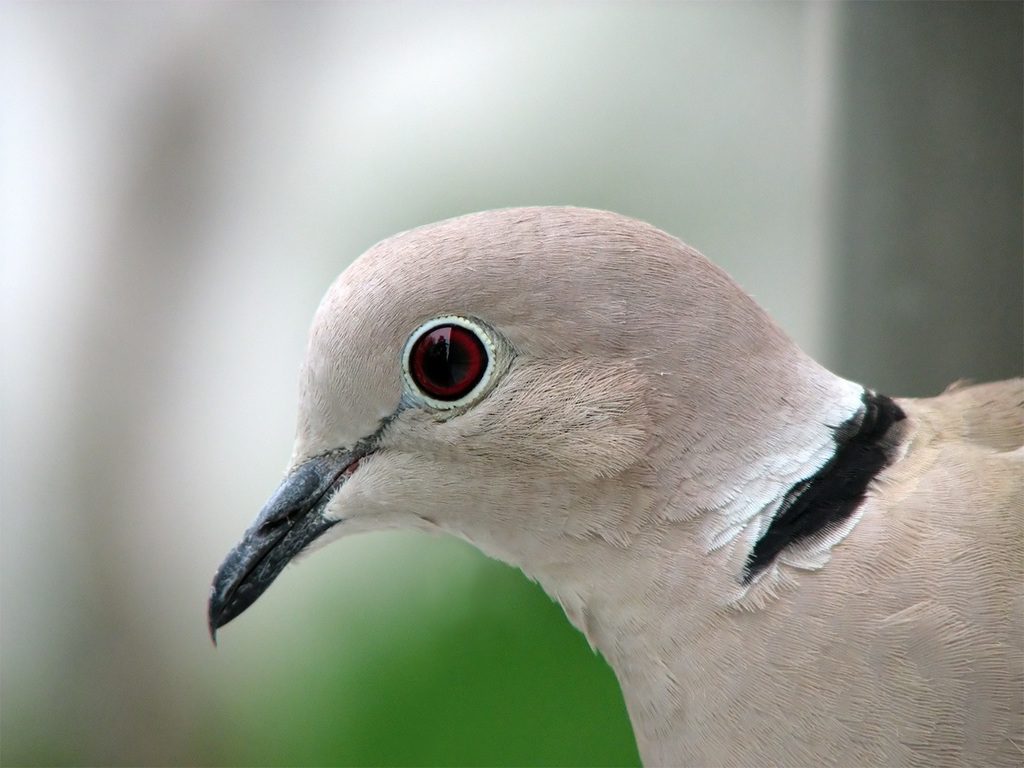
Photo: Iruka · CC BY-SA 4.0 (May be cropped or resized)
Streptopelia decaocto
U.S. national list: unknown
Basic stats
Diet
Seeds, fruit and other plant material
Habitat
Towns, suburbs, farmland and other human-modified open habitats
Range
Native from Europe and North Africa through central and southern Asia; introduced widely elsewhere
Clutch size
2 eggs
Incubation period
About 15 days
Size
About 32cm
Wingspan
47–55cm
Weight
Averages about 149g
The Eurasian Collared-Dove is a medium-sized, mostly grey-buff dove with a slim black half-collar edged in white across the nape. Its long tail is dark beneath with broad white tips, and the underwing shows blue-grey. Males and females look alike; juveniles have a weaker collar. The familiar voice is a rhythmic three-note coo, accompanied at times by a harsh flight call. It is about 32 cm long, spans 47–55 cm and averages about 149 g (Wikipedia, general species account; AVONET, Tobias et al. 2022).
Originally distributed from parts of Asia westward into southeastern Europe and North Africa, the species expanded rapidly across Europe and has also established introduced populations in several other regions. It thrives around settlements, suburbs and farmland, generally feeding on the ground. Seeds, fruit and other plant material form the main diet. A flimsy platform of twigs supports the usual two eggs, which are incubated for about 15 days. Strong dispersal allows newly fledged birds to colonise areas far beyond established breeding sites (Wikipedia, general species account; EltonTraits, Wilman et al. 2014; AnAge).
Where to see Eurasian Collared-Dove in the USA
GBIF records grouped by protected area. They show where the species has been reported, not that it is there now, and they are not population counts.
Recorded in 3,944 protected areas (1947–2026). The 8 with the most records:
- Florida Keys National Marine Sanctuary: 29,280 records (1983–2026)
- Monterey Bay National Marine Sanctuary: 25,401 records (1998–2026)
- Greater Farallones National Marine Sanctuary: 14,511 records (2005–2026)
- Coronado National Forest: 11,784 records (2001–2024)
- Coconino National Forest: 10,370 records (1995–2026)
- Point Reyes National Seashore: 10,109 records (2005–2025)
- Golden Gate National Recreation Area: 8,350 records (2006–2025)
- Southeast Farallon Island State Marine Reserve: 6,431 records (2005–2024)
Quick answers
- What does the Eurasian Collared-Dove eat?
- Seeds, fruit and other plant material
- What habitat does the Eurasian Collared-Dove live in?
- Towns, suburbs, farmland and other human-modified open habitats
- Where is the Eurasian Collared-Dove found?
- Native from Europe and North Africa through central and southern Asia; introduced widely elsewhere
- How many eggs does the Eurasian Collared-Dove lay?
- 2 eggs
- How long are the eggs of the Eurasian Collared-Dove incubated?
- About 15 days
- How big is the Eurasian Collared-Dove?
- About 32cm
- What is the wingspan of the Eurasian Collared-Dove?
- 47–55cm
- How much does the Eurasian Collared-Dove weigh?
- Averages about 149g