
 Wildlife
of USA
Bluethroat
Other Songbirds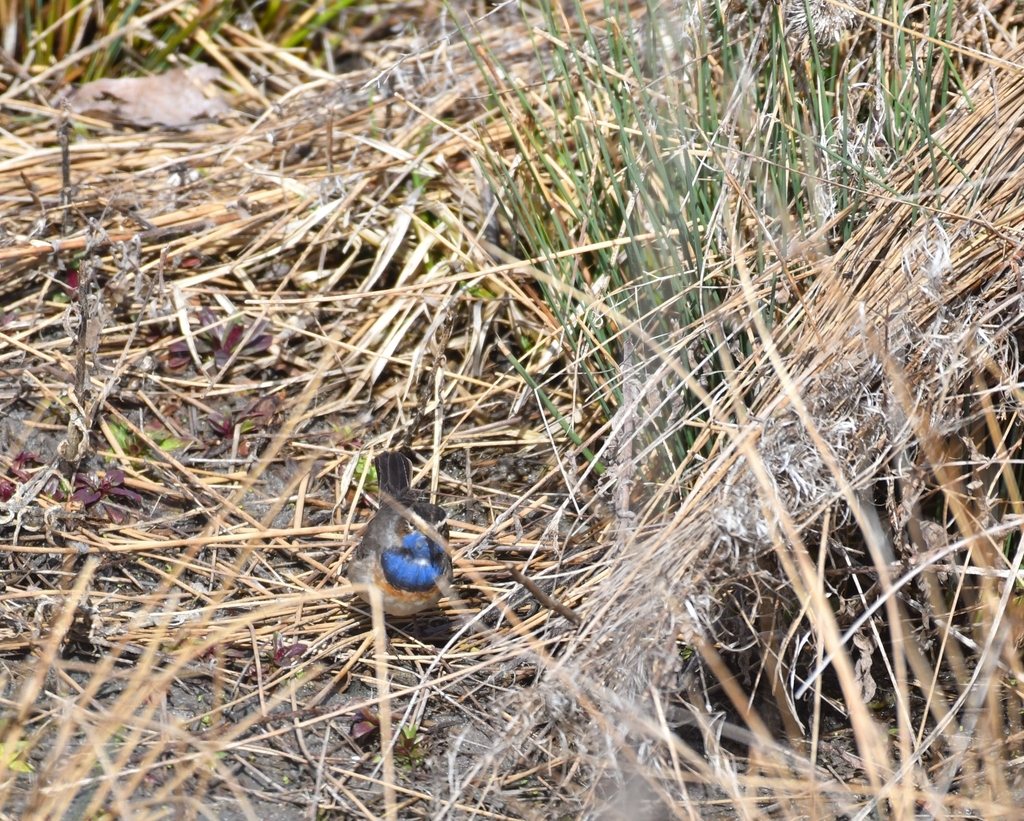
Photo: no rights reserved · CC0 1.0
Luscinia svecica
U.S. national list: unknown
Basic stats
Diet
Mainly invertebrates, with fruit also taken
Habitat
Wet birch woodland, bushy swamp and dense waterside vegetation
Range
Breeds across Europe and northern Asia, with a foothold in western Alaska; winters in southern Europe, northern Africa and southern Asia
Clutch size
About 6 eggs
Incubation period
About 13 days
Size
13–14cm
Weight
Averages about 17g
The Bluethroat is a small chat, brown above with a strong white eyebrow and a tail marked by reddish basal patches and dark outer corners. Breeding males have a vivid blue throat bordered below by black and chestnut bands; the centre of the blue varies among forms. Females are generally much plainer, and juveniles are spotted before their first moult. It measures 13–14 cm and averages about 17 g (Wikipedia, general species account; AVONET, Tobias et al. 2022).
Across its range, the species breeds in wet birch woodland, bushy swamps and dense waterside vegetation from Europe across northern Asia, with a small breeding presence in western Alaska. It migrates to southern Europe, northern Africa and southern Asia. Foraging is mainly for invertebrates, although fruit also contributes to the diet. The nest is hidden in a tussock or low dense bush. Dataset values indicate a clutch of about six eggs and incubation of roughly 13 days (Wikipedia, general species account; EltonTraits, Wilman et al. 2014; AnAge).
Where to see Bluethroat in the USA
GBIF records grouped by protected area. They show where the species has been reported, not that it is there now, and they are not population counts.
Recorded in 11 protected areas (1928–2024). The 8 with the most records:
- Noatak National Preserve: 124 records (1986–2024)
- Noatak Wilderness: 110 records (1986–2024)
- Cape Krusenstern National Monument: 73 records (1987–2024)
- National Petroleum Reserve–Alaska: 54 records (1928–2024)
- Alaska Maritime National Wildlife Refuge: 50 records (1960–2022)
- Arctic National Wildlife Refuge: 30 records (1957–2024)
- Gates of the Arctic National Park and Preserve: 26 records (1990–2023)
- Gates of the Arctic Wilderness: 16 records (1990–2023)
Quick answers
- What does the Bluethroat eat?
- Mainly invertebrates, with fruit also taken
- What habitat does the Bluethroat live in?
- Wet birch woodland, bushy swamp and dense waterside vegetation
- Where is the Bluethroat found?
- Breeds across Europe and northern Asia, with a foothold in western Alaska; winters in southern Europe, northern Africa and southern Asia
- How many eggs does the Bluethroat lay?
- About 6 eggs
- How long are the eggs of the Bluethroat incubated?
- About 13 days
- How big is the Bluethroat?
- 13–14cm
- How much does the Bluethroat weigh?
- Averages about 17g