
 Wildlife
of USA
Red-necked Grebe
Ducks, Geese & Grebes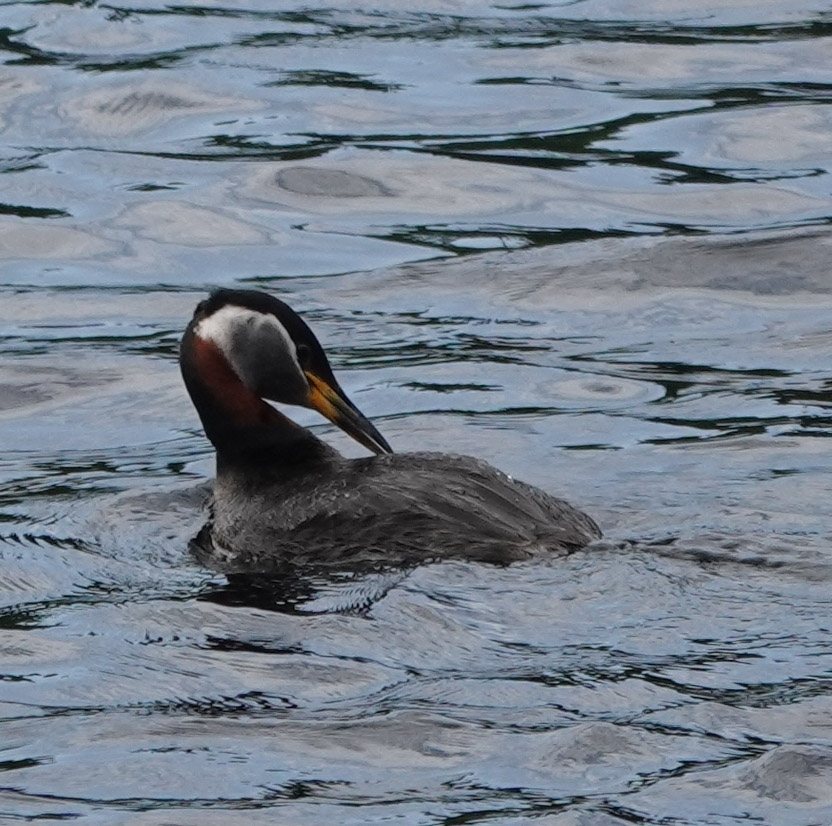
Photo: (c) Roman Titov, some rights reserved (CC BY) · CC BY 4.0 (May be cropped or resized)
Podiceps grisegena
U.S. national list: unknown
Basic stats
Diet
Fish and aquatic invertebrates
Habitat
Shallow freshwater lakes and marshes when breeding; estuaries and sheltered coasts in winter
Range
Temperate northern Eurasia and North America
Clutch size
Averages about 4–5 eggs
Incubation period
Averages about 22 days
Size
40–50cm
Weight
Averages about 1023g
At 40–50 cm long and an average mass of about 1,023 g, the Red-necked Grebe is among the larger northern grebes. Breeding adults have a black cap, pale grey face, rusty-red neck and a long dark bill with a yellow base. Winter birds are duskier grey with a less defined cap. The sexes look similar, though males average heavier (Wikipedia, general species account; AVONET, Tobias et al. 2022; Collins Birds of the World).
Across temperate northern Eurasia and North America, it breeds on shallow freshwater lakes, marshes and fish ponds, often among emergent vegetation, then winters mainly in estuaries and sheltered coastal waters. Birds dive for fish and aquatic invertebrates, which contribute equally in EltonTraits. A floating nest is built from water plants. Clutches average about four or five eggs and incubation about 22 days (Wikipedia, general species account; EltonTraits, Wilman et al. 2014; AnAge).
Where to see Red-necked Grebe in the USA
GBIF records grouped by protected area. They show where the species has been reported, not that it is there now, and they are not population counts.
Recorded in 1,520 protected areas (1891–2026). The 8 with the most records:
- Whitefish Point Underwater Preserve: 5,530 records (1970–2024)
- Seney National Wildlife Refuge: 5,451 records (1970–2024)
- Lake Superior State Forest - Newberry Unit: 5,437 records (1970–2024)
- Anchorage Coastal Wildlife Refuge: 4,227 records (1974–2026)
- Acadia National Park: 3,673 records (1974–2024)
- Greater Farallones National Marine Sanctuary: 3,542 records (1927–2024)
- Parker River National Wildlife Refuge: 3,519 records (1965–2024)
- Monterey Bay National Marine Sanctuary: 3,159 records (1910–2026)
Quick answers
- What does the Red-necked Grebe eat?
- Fish and aquatic invertebrates
- What habitat does the Red-necked Grebe live in?
- Shallow freshwater lakes and marshes when breeding; estuaries and sheltered coasts in winter
- Where is the Red-necked Grebe found?
- Temperate northern Eurasia and North America
- How many eggs does the Red-necked Grebe lay?
- Averages about 4–5 eggs
- How long are the eggs of the Red-necked Grebe incubated?
- Averages about 22 days
- How big is the Red-necked Grebe?
- 40–50cm
- How much does the Red-necked Grebe weigh?
- Averages about 1023g