
 Wildlife
of USA
Pallas's Bunting
Sparrows, Buntings & Finches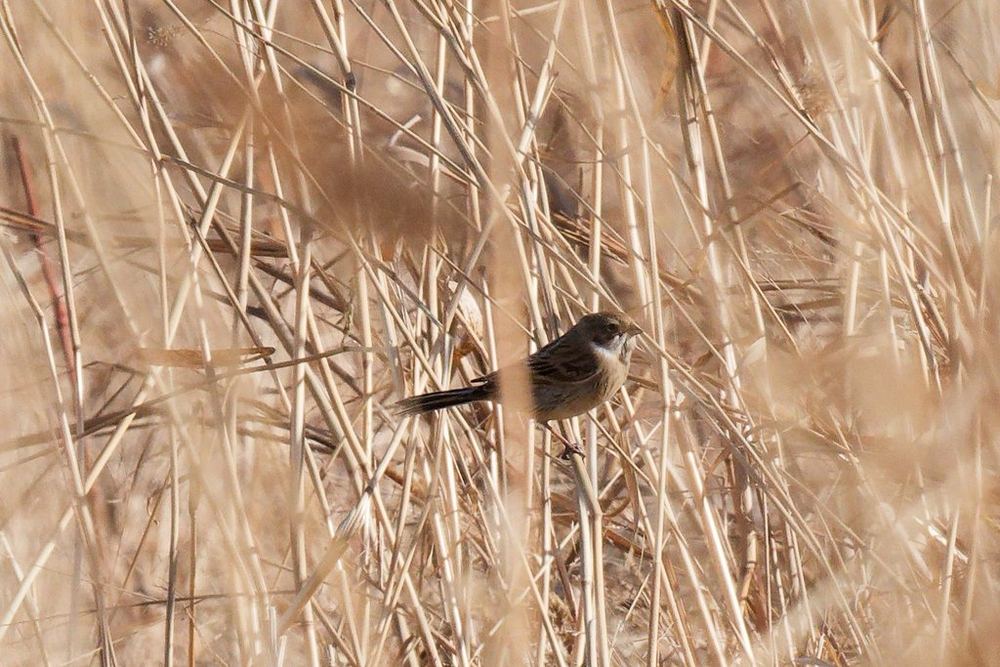
Photo: (c) Zinogre, some rights reserved (CC BY-SA) · CC BY-SA 4.0 (May be cropped or resized)
Emberiza pallasi
U.S. national list: unknown
Basic stats
Diet
Seeds, invertebrates and plant material
Habitat
Tundra scrub and open larch woodland
Range
Eastern Asia
Clutch size
3–5 eggs
Incubation period
11 days
Weight
Average 14g
Pallas's Bunting inhabits eastern Asian tundra scrub and open larch woodland, often near water. Males combine a dark hood and throat with a pale neck-band and grey, heavily streaked upperparts; females instead show mainly brown plumage. AVONET gives an average mass of 14 g. EltonTraits lists seeds, invertebrates and other plant material in its diet (Wikipedia, general species account; Collins Birds of the World; AVONET, Tobias et al. 2022; EltonTraits, Wilman et al. 2014).
The species eats seeds and feeds insects to its young. Its nest is placed in a bush, and three to five eggs are incubated for about 11 days. Breeding occurs from June to August. Its open northern habitats include scrub close to water as well as more sparsely wooded areas with larches (Wikipedia, general species account; Collins Birds of the World).
Quick answers
- What does the Pallas's Bunting eat?
- Seeds, invertebrates and plant material
- What habitat does the Pallas's Bunting live in?
- Tundra scrub and open larch woodland
- Where is the Pallas's Bunting found?
- Eastern Asia
- How many eggs does the Pallas's Bunting lay?
- 3–5 eggs
- How long are the eggs of the Pallas's Bunting incubated?
- 11 days
- How much does the Pallas's Bunting weigh?
- Average 14g