
 Wildlife
of USA
Northern Parula
Warblers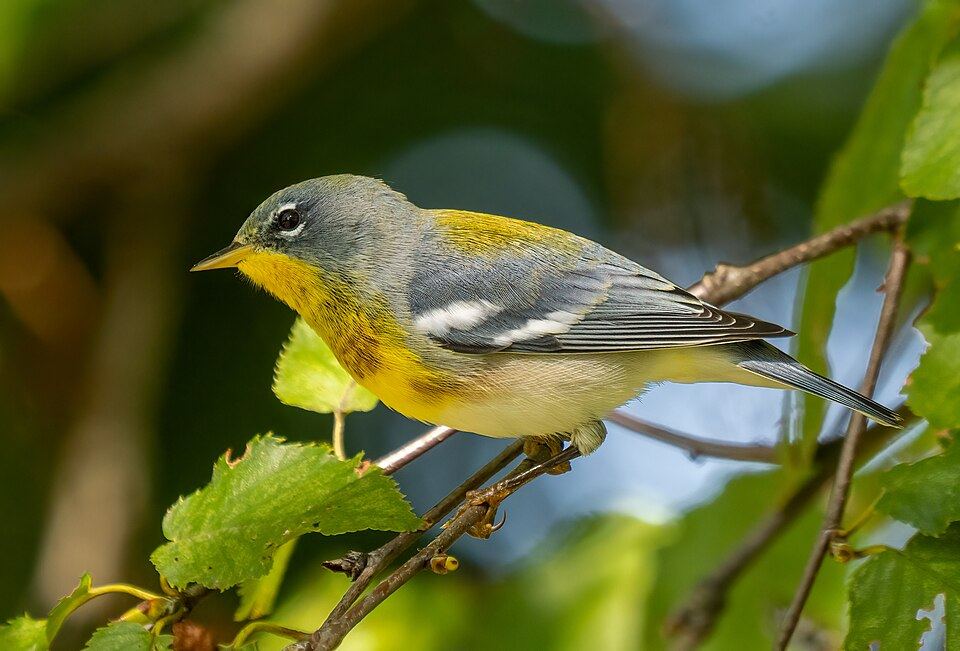
Photo: Rhododendrites · CC BY-SA 4.0 (May be cropped or resized)
Setophaga americana
U.S. national list: unknown
Northern parula (Setophaga americana), a small New World warbler, migrates. Its breeding grounds extend from Florida northward to southern Canada, across eastern North America. Among North American migratory warblers it is one of the smallest, often ranking among the tiniest birds in mixed feeding flocks with kinglets or gnatcatchers. The upperparts are chiefly blue-gray; a greenish patch sits on the back, and a pair of white bars adorns the wings. (Wikipedia, general species account)
The breast is yellowish, fading into the white belly. Summer males have blue and rufous breast bands and clear white crescents around the eyes. After breeding, individuals molt into a duller form of their breeding plumage. This molt changes their appearance. (Wikipedia, general species account)
Where to see Northern Parula in the USA
GBIF records grouped by protected area. They show where the species has been reported, not that it is there now, and they are not population counts.
Recorded in 6,408 protected areas (1848–2026). The 8 with the most records:
- Florida Keys National Marine Sanctuary: 14,727 records (1870–2026)
- Adirondack Park: 14,086 records (1899–2026)
- Acadia National Park: 13,417 records (1958–2026)
- Paynes Prairie: 12,446 records (1980–2026)
- Corkscrew Swamp Sanctuary: 11,426 records (1961–2026)
- Pinelands National Reserve: 11,351 records (1920–2026)
- Higbee Beach Wildlife Management Area: 10,564 records (1923–2024)
- Montgomery County Agricultural Reserve: 9,457 records (1950–2026)