
 Wildlife
of USA
Moose
Deer, Elk, Moose & Caribou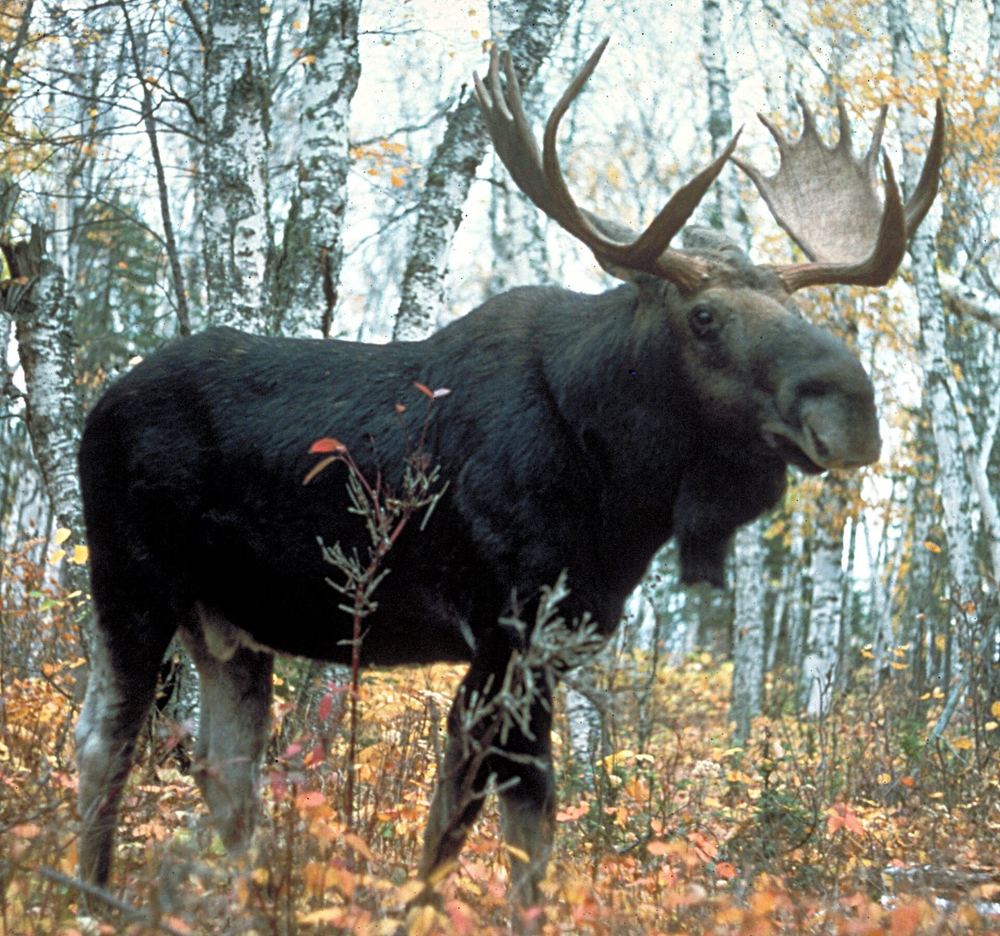
Photo: USDA Forest Service · Public domain
Alces alces
U.S. national list: unknown
Basic stats
Diet
Leaves, shoots and aquatic plants
Habitat
Boreal forest, willow wetlands and cool mountain forest
Range
Alaska, New England, the Great Lakes and northern Rocky Mountains
Litter size
Usually 1 calf, sometimes twins
The moose is the world's largest deer. Its long legs, overhanging muzzle and dangling throat bell are unmistakable, and mature bulls grow broad palmate antlers that are shed after the rut.
Moose browse willow and other woody plants and often wade deeply to feed on aquatic vegetation. They can be unpredictable at close range, especially cows with calves and bulls during autumn, so roadside animals need generous space.
Where to see Moose in the USA
GBIF records grouped by protected area. They show where the species has been reported, not that it is there now, and they are not population counts.
Recorded in 112 protected areas (1850–2026). The 8 with the most records:
- Rocky Mountain National Park: 151 records (2011–2026)
- Green Mountain National Forest: 136 records (1986–2026)
- Grand Teton National Park: 132 records (1948–2026)
- Chugach State Park: 98 records (2012–2026)
- Superior National Forest: 97 records (1984–2026)
- Denali National Park: 86 records (1974–2026)
- Wasatch–Cache National Forest: 75 records (1979–2026)
- Isle Royale National Park: 74 records (2016–2026)
Quick answers
- What does the Moose eat?
- Leaves, shoots and aquatic plants
- What habitat does the Moose live in?
- Boreal forest, willow wetlands and cool mountain forest
- Where is the Moose found?
- Alaska, New England, the Great Lakes and northern Rocky Mountains
- What is the litter size of the Moose?
- Usually 1 calf, sometimes twins